



Hard floors are a popular choice in offices because they look smart, are easy to clean and work well in busy commercial spaces. Tiles, vinyl, laminate, wood and polished concrete can all create a modern and professional finish. However, hard floors can also create a common problem when the wrong mats are used. If the mat does not have the correct backing, it may move, slide, curl or become frustrating to keep in place.
Many people ask which office mats should I use for hard floors because they have already tried a mat that looked suitable but did not stay where it was meant to. This often happens when a mat has the wrong backing for the floor surface. A mat that works well on carpet may not grip properly on a hard floor, while a vinyl-backed mat may move more easily than a rubber-backed option.
The best office mats for hard floors should protect the floor, stay stable, suit the type of traffic in the area and be easy to maintain. Depending on the space, this may mean a flat rubber-backed entrance mat, a clear chair mat for desk areas, or a multi-purpose floor protection mat for areas exposed to chair wheels, shoes, spills or regular movement.
Table of Contents
- Why Hard Floors Need the Right Office Mats
- Common Problems When Office Mats Are Used on Hard Floors
- Why Mat Backing Matters on Hard Floors
- Flat Back vs Gripper Back: Which One Should You Choose?
- Why the Wrong Backing Can Cause Movement
- Office Chair Mats for Hard Floors
- Entrance Mats for Hard Floors in Offices
- What to Look for When Choosing Office Mats for Hard Floors
- Recommended Office Mats for Hard Floors
- Where to Use Office Mats on Hard Floors
- How to Maintain Office Mats on Hard Floors
- Frequently Asked Questions About Office Mats for Hard Floors
Why Hard Floors Need the Right Office Mats

Hard floors are practical, but they can be unforgiving when used with the wrong type of mat. A mat placed on carpet usually has the pile beneath it to help create resistance. On a hard floor, there is less natural grip, so the mat backing becomes much more important.
If the backing does not make enough contact with the floor, the mat can slide when people walk across it, move when a chair rolls over it, or slowly creep out of position during the day. This is not only annoying for staff; it can also make the office look untidy and create extra work for cleaning or facilities teams.
Hard Floors Need Stability
On hard floors, stability should be one of the first things to consider. A mat that shifts every time someone steps on it is not suitable for a busy office. The mat should remain flat, stay in position and provide dependable performance under normal use.
Hard Floors Need Protection
Office chairs, shoes, foot traffic, spills and dirt can all affect hard flooring over time. Chair wheels can create scuffs and wear marks, especially around desks where the same movement happens repeatedly. Entrance areas can also suffer from grit, moisture and dirt being walked in from outside.
Hard Floors Need the Correct Mat Type
Not every office mat is designed for every office area. A desk chair mat has a different purpose from an entrance mat. A floor protection mat may be useful under furniture or in multi-purpose areas, while a textile entrance mat is better for trapping dirt and moisture near the door.
Common Problems When Office Mats Are Used on Hard Floors

The most common issue with office mats on hard floors is movement. This can happen in several different ways, and the cause is usually linked to backing type, mat weight, floor finish, size or placement.
The Mat Slides Across the Floor
A mat that slides on a hard floor usually does not have enough grip. Smooth vinyl-backed mats can be particularly prone to movement on some hard surfaces because they do not always create enough contact or friction with the floor below.
The Mat Creeps Out of Position
Sometimes a mat does not slide dramatically, but it slowly moves throughout the day. By the end of the morning, it may be halfway across the entrance or no longer aligned with the desk. This is often caused by repeated foot traffic or chair movement.
The Corners Start to Curl
Curling corners can happen when a mat is old, poor quality, incorrectly backed or regularly pushed out of shape. On hard floors, curled edges are more noticeable and can create a trip concern if not dealt with.
The Mat Does Not Protect the Right Area
A mat that is too small may not protect the part of the floor that receives the most wear. Under a desk, the mat should cover the area where the chair moves. At an entrance, the mat should cover the natural walking path so shoes make proper contact with the surface.
The Mat Looks Dirty Too Quickly
Hard floors often show dirt, dust and footprints clearly. If the entrance mat is not trapping enough dirt and moisture, the surrounding floor may still need constant cleaning. A mat needs to be suitable for the amount of dirt, moisture and foot traffic in the area.
Why Mat Backing Matters on Hard Floors

The backing is the part of the mat that sits against the floor. It is one of the most important features when choosing office mats for hard floors because it affects how well the mat stays in place.
For hard floors, a flat backing is usually the preferred option. A flat rubber backing gives more surface contact with the floor, helping the mat sit more securely. This is particularly useful in offices with tiles, vinyl, laminate, wood, polished concrete or other smooth surfaces.
More Surface Contact Means Better Stability
A flat back is designed to sit closely against the floor. The more contact the backing has with the surface, the better the chance of the mat staying in place during normal use. This is why flat rubber-backed office mats are often recommended for hard floors.
Rubber Backing Can Offer Better Grip
Rubber-backed mats are commonly used on hard floors because rubber can provide better grip than some smoother backing materials. A good rubber backing also helps the mat lie flat and resist movement during everyday office use.
The Floor Finish Still Matters
Some hard floors are more polished or slippery than others. Extremely smooth floors, highly polished tiles or certain treated surfaces may still need extra grip support. In these cases, an anti-slip underlay may help improve stability if the mat still moves.
Flat Back vs Gripper Back: Which One Should You Choose?

Flat back and gripper back mats are designed for different floor types. Choosing the wrong one is one of the quickest ways to end up with a mat that does not perform properly.
Flat Back for Hard Floors
Flat-backed mats are generally best for hard floors. They are designed to sit smoothly against the surface and provide more contact with the floor underneath. This helps reduce movement and makes them better suited to offices with vinyl, tiles, laminate, wood and similar surfaces.
Gripper Back for Carpets
Gripper-backed mats are designed for carpeted floors. Their backing has small grips or claw-like patterns that hook into the carpet pile. This helps stop the mat moving on carpet, but it is not the correct backing for smooth hard floors.
Why the Difference Matters
A gripper-backed mat placed on a hard floor may not have enough contact to sit securely. The raised backing points may reduce the amount of surface area touching the floor, causing instability. A flat-backed mat placed on carpet may also move because it cannot grip into the carpet pile properly.
Mixed Flooring Areas
Some offices have both carpeted and hard floor areas. In this case, you may need different mat backing options for different parts of the building. A reception entrance with tiles may need a flat-backed mat, while a carpeted corridor may need a gripper-backed mat.
Why the Wrong Backing Can Cause Movement

When customers have problems with office mats moving on hard floors, the issue is often linked to backing material. Vinyl or PVC-backed mats can sometimes have less grip on hard floors, making them more likely to shift during use.
This does not mean every vinyl-backed mat is unsuitable in every setting, but if the main concern is movement on a hard office floor, a flat rubber-backed mat is often the better direction to consider. Rubber backing can provide more grip, better stability and a more secure feel underfoot.
Movement Can Become a Daily Irritation
A moving mat may seem like a small issue at first, but in a busy office it quickly becomes frustrating. Staff may need to keep repositioning it, cleaners may have to straighten it, and visitors may notice it looks untidy. In some areas, movement may also affect safety.
Temporary Fixes Are Not Always Enough
Some businesses try using tape, makeshift grips or repositioning as a quick fix. These may help briefly, but they do not always solve the root problem. It is usually better to choose the correct mat backing from the start.
Anti-Slip Underlay for Extra Grip
In some cases, even a suitable mat can move on a very polished floor or in an area with extremely high footfall. In those situations, a dedicated non-slip underlay can help add grip between the mat and the floor.
Office Chair Mats for Hard Floors
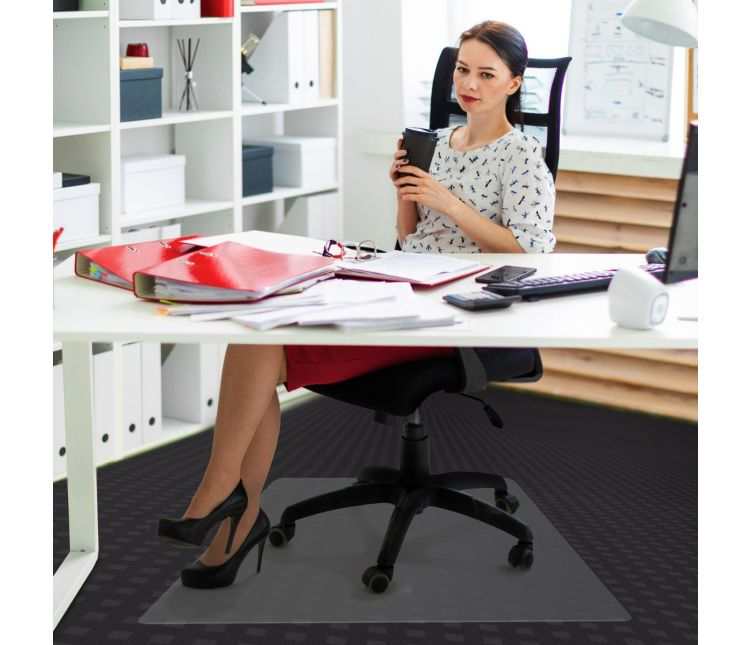
Hard floors can look excellent in office spaces, but office chair wheels can cause wear over time. Repeated rolling in the same area may create scuffs, dull patches or marks around the desk. A chair mat creates a protective layer between the chair and the floor.
Protecting Against Chair Wheel Damage
Office chairs often move in a small repeated pattern throughout the day. The user rolls forward, back, side to side and around the desk area. Over time, this can mark or wear the flooring below, especially if the chair has harder castors or the floor finish is more delicate.
Improving Chair Movement
A suitable chair mat can make it easier for chair wheels to glide smoothly. This can improve comfort during the workday because the user does not have to push as hard against the floor. It can also help reduce strain from repeatedly moving the chair.
Clear Mats for a Minimal Look
Clear chair mats are popular on hard floors because they protect the floor while allowing the original flooring to remain visible. This is useful in modern offices where the floor finish is part of the overall design.
Choosing the Correct Backing
Many chair mats are available with different backing options. For hard floors, choose the hard-floor or smooth/flat backing option. Carpet-backed options are designed differently and may not sit correctly on a smooth surface.
Entrance Mats for Hard Floors in Offices
Office entrance mats have a different purpose from chair mats. Their main job is to trap dirt and moisture before it spreads into the building. On hard floors, they also need to stay in place and sit flat under foot traffic.
Controlling Dirt and Moisture
Entrances are one of the busiest parts of an office. People bring in rainwater, dust, grit and outdoor dirt on their shoes. A good entrance mat helps reduce the amount of this material reaching the surrounding hard floor.
Reducing Wet Footprints
Hard floors often show wet footprints clearly. During rainy weather, an absorbent entrance mat can reduce moisture being walked through the office. This helps keep reception areas, corridors and walkways cleaner and more presentable.
Choosing a Flat Rubber-Backed Entrance Mat
For hard office floors, choose an entrance mat with a flat backing designed for hard surfaces. This improves floor contact and helps reduce movement. In busier offices, a heavy-duty commercial mat is usually more suitable than a lightweight domestic mat.
Making Sure the Mat Is Large Enough
The mat should be large enough for people to take several natural steps across it. A very small mat may not remove enough dirt or moisture before people reach the surrounding floor. Larger mats usually perform better in busy entrances.
What to Look for When Choosing Office Mats for Hard Floors

Choosing the right mat depends on where it will be used. A chair mat, entrance mat and multi-purpose floor protector all serve different roles. Before buying, think about the type of floor, the amount of movement, the level of foot traffic and the main problem you want to solve.
Correct Backing
For hard floors, choose flat backing, smooth backing or the specific hard-floor backing option where available. Avoid choosing a carpet gripper backing for hard floors, as it is designed for a different surface.
Slip Resistance
The mat should help reduce movement rather than create it. Look for a backing and mat construction suitable for hard floors. In very polished areas, consider whether an anti-slip underlay may be needed.
Floor Protection
If the mat is being used under a desk, it should protect against chair wheels, scuffs and repeated movement. If it is being used at an entrance, it should protect against dirt, grit and moisture.
Ease of Cleaning
Office mats should be easy to maintain. Clear chair mats can usually be wiped clean, while textile entrance mats may need vacuuming and occasional deeper cleaning. A mat that is easy to clean is more likely to remain presentable.
Size and Shape
The mat should cover the area that receives the most traffic or movement. For chair mats, this is usually the zone where the chair rolls. For entrance mats, it is the route people naturally walk as they enter the office.
Appearance
Office mats should suit the surrounding space. Clear mats work well where the floor finish should remain visible, while textile mats are useful where colour, presentation and dirt control are important.
Recommended Office Mats for Hard Floors
The following Mats4U products are suitable for different hard-floor office needs. Some are designed for chair movement and floor protection, while others are better for entrance areas where dirt and moisture control are the priority.


For offices with very polished hard floors where mats still move, a dedicated non-slip underlay may also be useful. The right underlay can help add extra grip beneath a mat that otherwise suits the space but needs additional stability.
Where to Use Office Mats on Hard Floors
Different areas of an office need different types of mats. Choosing the right product for the right area helps avoid movement, improves floor protection and creates a more professional workplace.
Desk Areas
Desk areas are one of the most common places to use hard-floor chair mats. The mat should sit under the chair and cover the normal rolling area. This helps protect the floor from castor marks, repeated movement and everyday wear.
Reception Desks
Reception staff often move chairs in a smaller repeated zone, making floor protection important. A clear chair mat can protect the floor while keeping the reception area looking clean and professional.
Office Entrances
Entrance mats should be used where people first walk into the office. On hard floors, choose a mat with a flat backing and good dirt and moisture retention. This helps reduce wet footprints and outdoor dirt being carried into the workplace.
Corridors and Walkways
Corridors and walkways may need mats where dirt, moisture or repeated foot traffic are causing wear. Make sure the mat is positioned correctly, lies flat and does not create an obstacle.
Meeting Rooms
Meeting rooms with hard floors may benefit from chair mats in areas where chairs are frequently moved. This is especially useful if the chairs have castors or if the flooring is prone to scuffs.
Home Offices
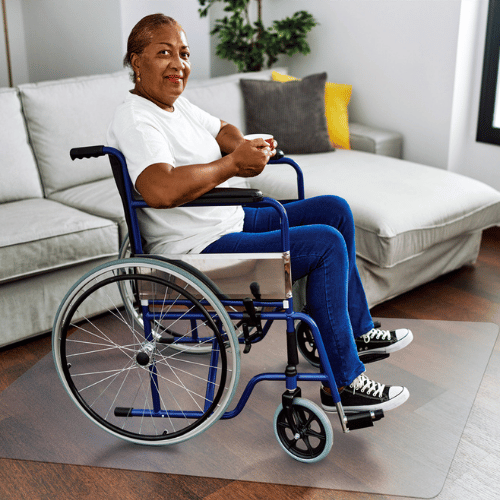
Home offices often use hard floors such as laminate, vinyl or wood. A suitable chair mat can protect the floor while making chair movement easier and reducing wear around the desk.
How to Maintain Office Mats on Hard Floors
Office mats need regular maintenance to remain effective. A mat that is dirty, worn or incorrectly positioned may not protect the floor properly and may become more likely to move.
Clean the Floor Before Placing the Mat
Hard floors should be clean and dry before the mat is placed down. Dust, grit or moisture beneath the mat can affect grip and may also scratch the floor if the mat moves slightly over time.
Vacuum Textile Mats Regularly
Entrance mats should be vacuumed to remove dirt, dust and grit from the pile. This helps the mat keep trapping more debris and reduces the chance of dirt being walked onto the surrounding hard floor.
Wipe Clear Chair Mats
Clear chair mats and floor protection mats can usually be wiped with a damp cloth to remove dust, marks and spills. Mild detergent may be used where appropriate, but harsh chemicals should be avoided if the product guidance says so.
Check for Movement
Inspect mats regularly to make sure they are not creeping, sliding or curling at the edges. If a mat moves frequently, check that it has the correct backing for the floor and consider whether an anti-slip underlay is needed.
Check for Wear
Look for cracks, curling, flattened pile, damaged backing or edges that no longer sit flat. A worn mat may no longer protect the floor properly and should be replaced when necessary.
Use the Correct Cleaning Method
Different mats require different cleaning methods. Textile entrance mats, polycarbonate chair mats, APET chair mats and vinyl multi-purpose mats should all be maintained according to their product-specific guidance.
Frequently Asked Questions About Office Mats for Hard Floors
Q1: Which office mats should I use for hard floors?
A1: For hard floors, choose mats with flat backing, smooth backing or a hard-floor-specific backing option. For desk areas, use a suitable hard-floor chair mat. For entrances, use a flat rubber-backed mat designed to trap dirt and moisture without moving around.
Q2: Why do mats move on hard floors?
A2: Mats often move on hard floors because they have the wrong backing, are too lightweight, are placed on a very polished surface or do not have enough contact with the floor. A flat rubber backing is usually better for hard floors than a carpet gripper backing.
Q3: Should I use gripper backing on hard floors?
A3: No, gripper backing is generally designed for carpeted floors. For hard floors, choose a flat backing or the specific hard-floor backing option supplied with the mat.
Q4: Are vinyl-backed mats good for hard floors?
A4: Vinyl-backed mats can move more easily on some hard floors, especially when the floor is smooth or polished. If movement is the main concern, a flat rubber-backed mat is usually a better choice.
Q5: What is the best mat for an office chair on hard floors?
A5: A hard-floor chair mat is the best option for protecting floors under an office chair. Polycarbonate Chair Mat Rectangular, Advantagemat Plus APET Chair Mat and HomeMat Rectangular Multi-Purpose Mat are all suitable options depending on the level of protection and finish required.
Q6: Can chair mats protect laminate and wood floors?
A6: Yes. A suitable chair mat can help protect laminate, wood, vinyl, tiles and other hard floors from chair castor marks, scuffs and repeated movement. Always choose the hard-floor backing option.
Q7: What is the best entrance mat for office hard floors?
A7: Tri Grip Heavy-Duty Mats are a strong option for office entrances with hard floors because they are available with flat backing, offer high dirt and moisture retention, and are designed for high-footfall commercial areas.
Q8: What can I do if my mat still moves on a hard floor?
A8: First, check that the mat has the correct backing for hard floors. If it does and the floor is extremely polished or the area has very high footfall, a non-slip underlay may help improve grip.
Q9: Do clear chair mats hide the floor?
A9: Clear chair mats are designed to protect the floor while allowing the original flooring to remain visible. This makes them a good option for offices where the hard floor finish is part of the room’s appearance.
Q10: How often should office mats be cleaned?
A10: Cleaning frequency depends on use. Entrance mats in busy offices may need regular vacuuming, while clear chair mats can usually be wiped clean as needed. Always follow the product care guidance for the specific mat.


