



Over eighty percent of British offices use chair mats to protect their carpets, yet many people still struggle with proper installation. Getting this right matters if you want to avoid common issues like flattened fibres or unnecessary carpet damage. This guide covers practical steps to assess your carpet, select the ideal mat, and set it up for long lasting protection and better comfort in any British workspace.
Table of Contents
- Step 1: Assess Carpeted Chair Areas For Mat Placement
- Step 2: Select The Right Carpet Protector Mat For Chairs
- Step 3: Prepare The Carpeted Surface For Installation
- Step 4: Position And Secure The Mat Correctly Under Chairs
- Step 5: Test Chair Movement And Ensure Mat Stability
Quick Summary
| Key Insight | Explanation |
|---|---|
| 1. Assess Carpet Pile Depth | Measure carpet pile height with a paper clip to choose the correct mat type for your office carpet. |
| 2. Choose Appropriate Mat Material | Select between polycarbonate and vinyl mats based on carpet thickness and durability needs for optimal floor protection. |
| 3. Prepare Carpet Surface Properly | Clean and ensure the carpet is dry and free of debris before mat installation to secure optimal adhesion and performance. |
| 4. Position the Mat Correctly | Place the mat under the desk, ensuring it covers the main chair movement area to maximise carpet protection and minimise tripping hazards. |
| 5. Test Chair Mobility on the Mat | Roll the chair across the mat to ensure smooth movement; adjust mat positioning if instability or unevenness is observed. |
Step 1: Assess carpeted chair areas for mat placement
Preparing to install a carpet protector mat requires careful assessment of your office’s carpeted areas. This initial evaluation will help you select the right mat and prevent potential damage to your flooring.
Start by measuring the carpet pile depth using a simple technique from chair mat selection experts. Take a standard paper clip and gently insert it vertically into the carpet pile. Mark the point where the carpet fibres reach on the paper clip this will give you the precise pile height. Most standard office carpets range between 3 to 10 millimetres in thickness, which impacts the type of chair mat you will need.
Carefully examine the specific area where chairs move frequently. Look for signs of wear such as flattened carpet fibres or visible tracking lines. These indicators suggest high traffic zones that will benefit most from a protective mat. Consider the total square footage and the number of chairs that will be rolling across the surface. Measure the area precisely measurement will ensure you purchase a mat that provides complete coverage without excess material.
Warning: Not all chair mats are created equal. Thicker pile carpets require specific mat designs with more flexibility and cushioning. Choose a mat that matches your carpet’s characteristics to prevent premature wear and potential damage to your flooring investment.
Step 2: Select the right carpet protector mat for chairs
Selecting the perfect carpet protector mat for your office chairs involves careful consideration of multiple factors to ensure optimal floor protection and chair mobility. Understanding the specific requirements of your workspace will guide you towards the most suitable solution.
When choosing a chair mat, focus on comprehensive selection criteria that account for carpet thickness, traffic patterns, and chair movement. Materials like polycarbonate and vinyl offer different levels of durability and flexibility. Polycarbonate mats work brilliantly for thicker carpets with pile heights between 6 to 10 millimetres, providing superior strength and resistance to cracking. Vinyl mats suit low pile carpets and offer a more budget friendly alternative.
Consider the total area of movement and the number of chairs in your workspace. Measure the exact floor space where chairs will roll to ensure complete coverage. Look for mats with bevelled edges that prevent tripping hazards and allow smooth chair transitions. Transparent mats preserve your carpet’s aesthetic while providing robust protection. Some advanced mats feature grip technology that prevents unwanted sliding and maintains stability during chair movements.
Warning: Cheaper mats might save money initially but can damage carpet fibres and wear out quickly. Invest in a quality mat that matches your specific carpet type and office environment to protect your flooring and ensure long term performance.
Step 3: Prepare the carpeted surface for installation
Preparing your carpeted surface correctly is crucial for ensuring a successful chair mat installation that protects your flooring and provides smooth chair mobility. This preparatory stage sets the foundation for long lasting protection and performance.
Begin by thoroughly cleaning the carpet surface to remove any dirt, dust, or debris that could interfere with mat adhesion. Use a powerful vacuum cleaner with strong suction to extract loose particles from deep within the carpet fibres. Pay special attention to high traffic areas where dirt tends to accumulate. After vacuuming, use a slightly damp microfibre cloth to gently wipe the surface, removing any remaining surface dust without saturating the carpet.
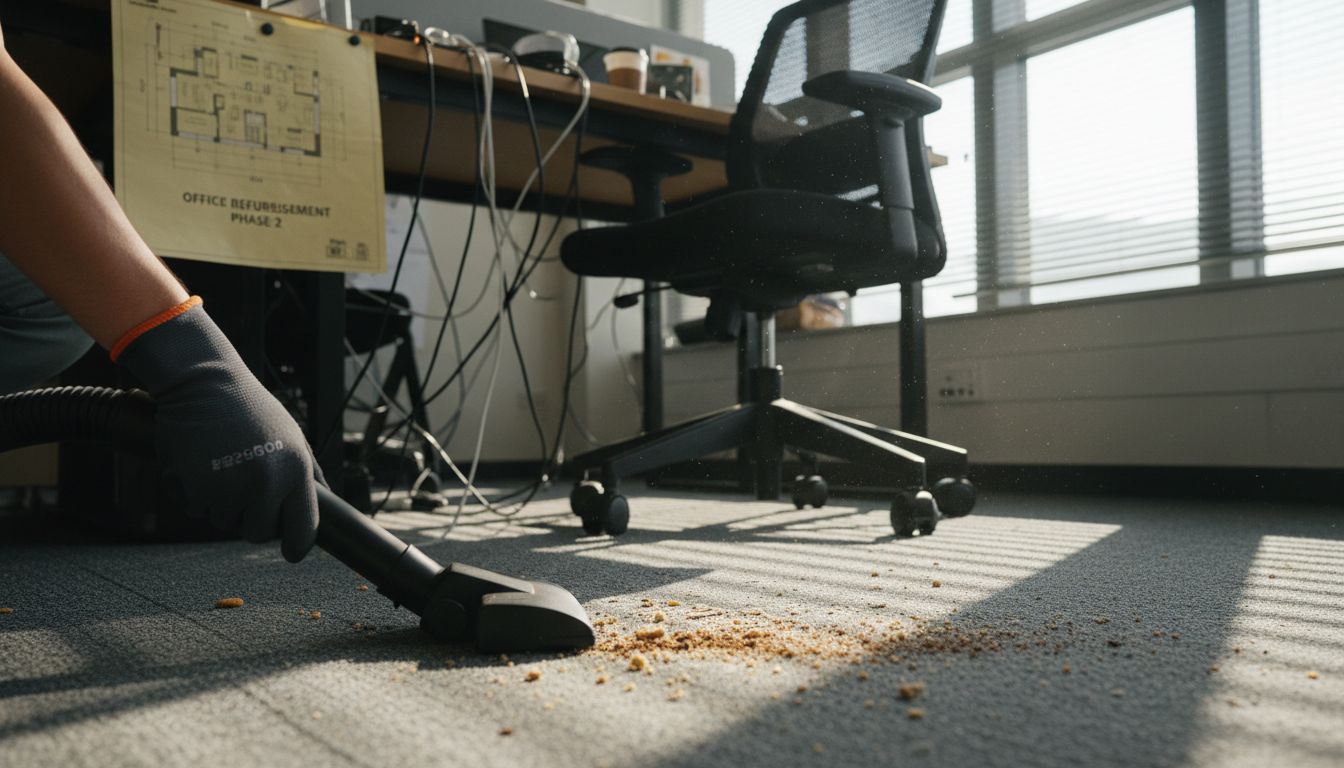
Allow the carpet to dry completely before mat placement. Check for any uneven areas or carpet bumps that might prevent the mat from lying flat. If you discover significant carpet pile variations, consider using a carpet rake to straighten fibres and create a more uniform surface. Smooth out any wrinkles or compressed areas to ensure the mat will sit perfectly flat. The goal is to create a clean, dry, and even surface that allows your chair mat to perform optimally.
Warning: Moisture is the enemy of proper mat installation. Ensure the carpet is completely dry and free from any dampness to prevent potential mould growth or mat adhesion issues. Taking time to prepare your surface properly will significantly extend the life of both your carpet and chair mat.
Step 4: Position and secure the mat correctly under chairs
Precisely positioning your chair mat ensures maximum carpet protection and creates a smooth rolling surface for office chairs. Your goal is to create an optimal workspace environment that minimises carpet wear and supports seamless chair movement.
Begin by carefully placing the mat in the desired workspace location, ensuring it covers the primary area where chairs will roll. Centre the mat under your desk or workspace, allowing sufficient coverage for chair movements. The mat should extend slightly beyond the chair’s typical rolling radius to provide comprehensive protection. Align the mat so that its edges are parallel with your desk or workspace perimeter, creating a clean and professional appearance.
Smooth out any potential wrinkles or air pockets by gently walking across the mat or using a soft roller to ensure complete contact with the carpet surface. Avoid placing heavy furniture directly on the mat, as this can distort its shape and compromise its functionality. Check that the mat lies completely flat without any raised edges that might create tripping hazards or impede chair mobility.
Warning: Some chair mats have a slight curl or memory from packaging. Allow the mat to settle at room temperature for several hours before final positioning. This helps the material relax and conform naturally to the carpet surface, ensuring optimal performance and longevity.
Step 5: Test chair movement and ensure mat stability
After installing your carpet protector mat, thorough testing is essential to confirm its performance and functionality within your workspace. Ensuring smooth chair movement and mat stability will protect both your carpet and office equipment.
Verify chair mobility and mat performance by conducting a comprehensive movement test. Roll your office chair across different sections of the mat to check for consistent smoothness and stability. Pay attention to how the chair transitions between carpet and mat surfaces. The movement should feel seamless without any abrupt stops or jerky motions. Listen for unusual sounds that might indicate friction or improper mat placement.
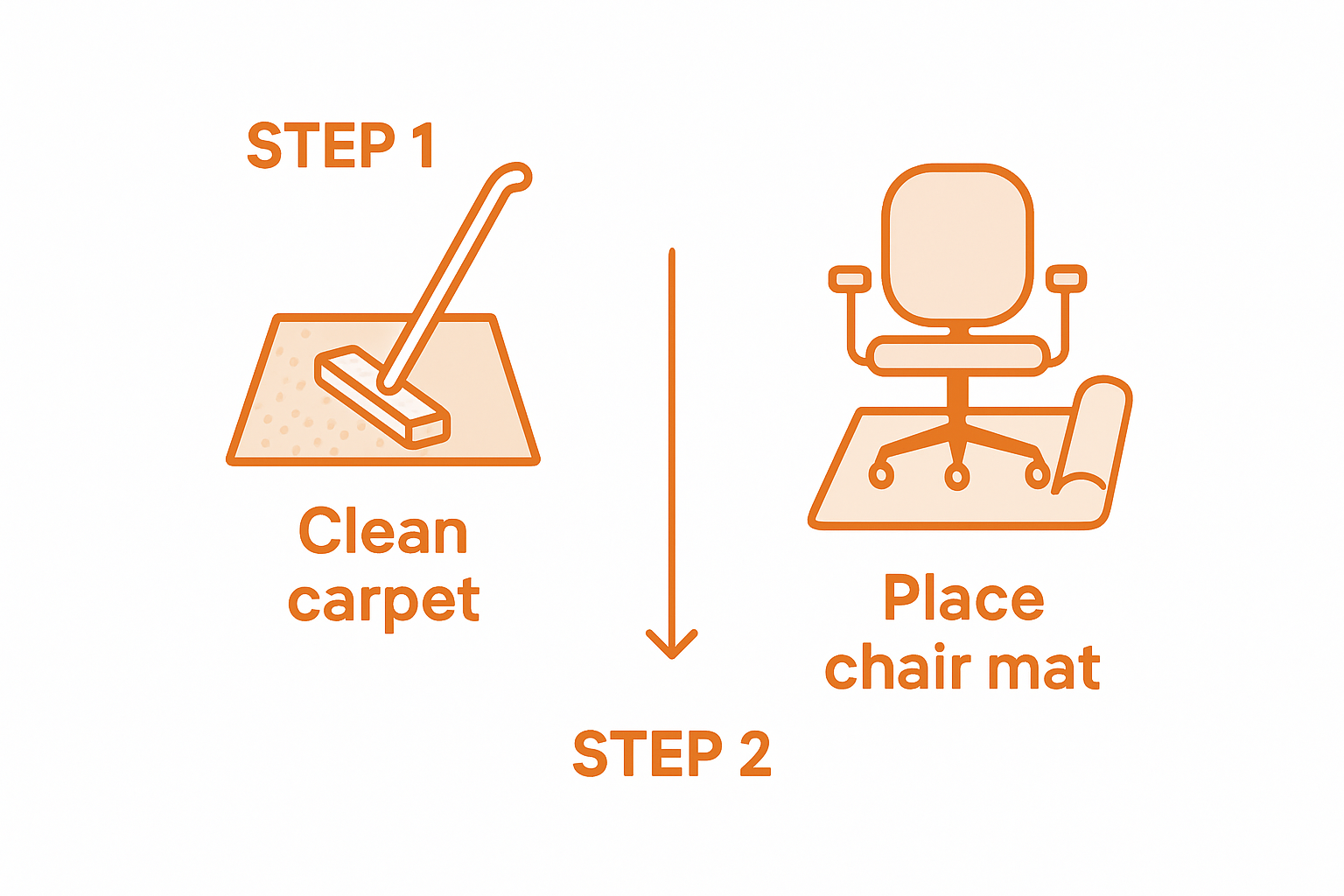
Carefully observe the mat’s positioning during these tests. Check that it remains firmly in place without shifting or bunching underneath the chair wheels. A high quality mat should grip the carpet surface sufficiently to prevent unwanted movement. Test the edges and corners to ensure they remain flat and do not curl or lift during chair movements. If you notice any instability or irregular movement, adjust the mat’s positioning or consider using additional stabilising methods.
Warning: Not all chair mats perform identically. Different carpet textures and chair wheel types can significantly impact mat performance. Conduct periodic checks to maintain optimal mat functionality and prevent potential carpet damage.
Protect Your Office Carpet with the Perfect Chair Mat Solution
Installing a carpet protector mat for chairs in offices requires careful attention to carpet pile depth, mat flexibility, and stability to avoid damage and enhance chair mobility. At Mats4U, we understand these challenges. Our extensive selection of high quality chair mats is designed to match your carpet type and traffic patterns precisely, helping you avoid common issues such as mat slipping or carpet fibre wear.

Discover how our customizable mats can provide seamless protection and long lasting durability for every workspace. Don’t wait for carpet wear to become a costly problem. Visit Mats4U today and explore our range of made-to-measure office mats. Get the perfect fit that supports smooth chair movement and keeps your flooring pristine.
Frequently Asked Questions
How do I assess carpeted areas for a chair mat?
To assess carpeted areas for a chair mat, measure the carpet pile depth using a standard paper clip. Insert it into the carpet, mark the height where the fibres reach, and ensure you measure high traffic zones for wear indicators.
What factors should I consider when selecting a carpet protector mat?
When selecting a carpet protector mat, consider the thickness of your carpet, the frequency of chair movement, and the material type. Ensure the mat matches your carpet’s characteristics to provide effective protection and support.
How do I prepare the carpeted surface before mat installation?
To prepare the carpeted surface, thoroughly clean it by vacuuming and using a damp microfibre cloth to remove any dust or debris. Make sure the carpet is completely dry and check for any uneven areas to create a smooth surface for the mat.
What is the best way to position and secure the mat under my chairs?
Position the mat to cover the primary rolling area, ensuring it extends slightly beyond the chair’s rolling radius. Smooth out any wrinkles or air pockets and avoid placing heavy furniture on it to maintain its shape and functionality.
How can I test the chair movement and mat stability after installation?
To test chair movement and mat stability, roll your office chair across different sections of the mat and observe for any sticking or instability. Adjust the mat if it shifts or bunches during movement and ensure the edges remain flat to prevent tripping hazards.
How often should I check the mat’s performance?
You should check the mat’s performance periodically, especially after heavy use, to ensure it remains stable and your chair moves smoothly over it. Conduct checks every few months or whenever you notice uneven movement.


