



In any commercial or industrial setting, floor mats are far more than mere decorative items. They are essential tools for safety, cleanliness, and comfort, playing a critical role in preventing slips, trapping dirt, and reducing fatigue. Yet, the effectiveness of a mat often hinges on a feature frequently overlooked: its backing. The choice between a gripper (also known as cleated) backing and a flat backing is not trivial; it's a strategic decision that impacts the mat's stability, longevity, and overall performance on specific floor types.
Understanding the nuances of mat backing is crucial for facility managers, business owners, and health and safety officers in the UK. The correct backing ensures the mat stays securely in place, mitigating trip hazards and maximising its functional benefits. An ill-suited backing, conversely, can turn an expensive mat into a liability, leading to dangerous slips, premature wear, and an unsightly appearance. This comprehensive guide will delve deep into the characteristics, advantages, and ideal applications of both gripper and flat mat backings, providing you with the knowledge to make informed decisions for your premises.
Whether you're safeguarding a busy office reception, a high-traffic retail space, an industrial workshop, or a bustling hospitality venue, the stability of your mats is paramount. A mat that bunches, slides, or curls at the edges undermines safety and diminishes the professional image of your establishment. By exploring the science behind these backing types and considering real-world scenarios, we aim to equip you with the expertise to select mats that not only meet but exceed your operational and safety requirements, ensuring a safer and more efficient environment for everyone.
Table of Contents
- Understanding Mat Backing Technologies
- The Critical Choice: Matching Backing to Your Floor Surface
- Beyond Basic Backing: Enhancing Mat Performance and Safety
- Factors to Consider When Selecting Your Mat Backing
- Installation and Maintenance Best Practices
- Frequently Asked Questions
- Conclusion: Making an Informed Decision for Safer and Cleaner Spaces
Understanding Mat Backing Technologies
The foundation of any effective mat lies in its backing. This often-unseen layer dictates how the mat interacts with the floor beneath it, directly influencing its stability and safety. There are two primary categories of mat backing, each engineered for distinct floor surfaces and operational demands: gripper (cleated) backing and flat backing.
What is Gripper (Cleated) Backing?
Gripper backing, frequently referred to as cleated backing, is characterised by its distinctive pattern of small, resilient 'nibs' or 'spikes' on the underside. These cleats are typically made from a durable rubber or vinyl compound, designed to firmly embed themselves into the fibres of carpeted surfaces. This mechanical engagement creates a strong, non-slip bond, preventing the mat from shifting, bunching, or creasing.
The principle behind gripper backing is simple yet highly effective: the cleats grip the carpet, offering exceptional stability where smooth backings would simply slide. This makes them an indispensable choice for areas where mats need to remain stationary on soft flooring, such as office carpets, hotel lobbies, and reception areas.
Benefits of Gripper Backing:
- Superior Stability on Carpets: The primary advantage is its ability to lock onto carpet fibres, virtually eliminating movement.
- Reduces Trip Hazards: By preventing mats from sliding or rucking up, gripper backing significantly lowers the risk of trips and falls.
- Extends Mat Life: A stable mat experiences less stress from constant repositioning and bunching, leading to longer service life.
- Maintains Aesthetic Appeal: Mats stay flat and in place, contributing to a tidy and professional appearance.
Potential Drawbacks:
- Unsuitable for Hard Floors: Gripper backing is explicitly designed for carpet. On hard surfaces like wood, tile, or concrete, the cleats have no fibres to grip and will simply slide, making the mat unstable and potentially causing damage to the floor.
- Potential for Carpet Damage: While rare with proper use, aggressive or worn cleats could potentially abrade certain delicate carpet types over extended periods, especially if the mat is frequently dragged or twisted.
What is Flat Backing?
In stark contrast to gripper backing, flat backing presents a smooth, even surface designed for optimal performance on hard floors. This type of backing relies on friction and, in many cases, inherent non-slip properties of the material itself to maintain stability. Common materials for flat backing include various types of rubber (such as nitrile rubber), vinyl, and PVC.
The smooth, solid surface of a flat-backed mat allows it to lay flush against hard flooring, creating a broad contact area that maximises friction. This design is crucial for preventing slippage on surfaces like polished concrete, ceramic tiles, wooden floors, and laminate.
Benefits of Flat Backing:
- Ideal for Hard Floors: Provides excellent traction and stability on a wide range of hard surfaces.
- Protects Hard Floors: The smooth surface prevents scratches or indentations that cleats might cause.
- Accommodates Wheeled Traffic: The flat profile is ideal for areas with trolleys, office chairs, or carts, allowing for smooth movement without obstruction.
- Easy to Clean: Smooth backings are generally easier to clean and maintain, preventing dirt and moisture from being trapped beneath.
Potential Drawbacks:
- Prone to Slippage on Carpets: Just as gripper backing fails on hard floors, flat backing will slide and bunch excessively on carpets, posing a significant trip hazard.
- Varying Non-Slip Performance: The effectiveness of flat backing on hard floors can vary significantly depending on the material quality and floor conditions (e.g., wetness, presence of dust). High-quality nitrile rubber backings, for instance, offer superior grip compared to cheaper PVC alternatives.
The Critical Choice: Matching Backing to Your Floor Surface

The decision between gripper and flat backing is not a matter of preference but one of fundamental compatibility with your flooring. Incorrect selection can lead to mats that are not only ineffective but actively dangerous. Let's explore the nuances of matching mat backing to its intended environment.
Mats for Carpeted Areas: Why Gripper is King
When dealing with carpeted floors, the primary challenge is to prevent the mat from 'walking' or migrating across the surface. This movement not only makes the area look untidy but also creates dangerous ripples and trip hazards. This is precisely where gripper backing excels.
The numerous small cleats on the underside of a gripper mat are specifically engineered to penetrate the pile of the carpet, creating a firm anchor. Imagine hundreds of tiny hands gripping the carpet fibres; this is the stability that gripper backing provides. This mechanical grip ensures the mat remains steadfast, even in high-traffic zones or areas subject to pivoting and turning.
Consider an office entrance with heavy footfall. Without gripper backing, an entrance mat would quickly shift and bunch, becoming a serious tripping risk for employees and visitors. Similarly, in a hotel corridor, a misaligned mat detracts from the establishment's professional image. Gripper-backed mats address these issues head-on, delivering unwavering stability and peace of mind.
Mats for Hard Floors: The Flat Back Advantage
For hard floor surfaces, the requirements are entirely different. Cleats would offer no purchase and could potentially scratch or mark the floor. Instead, a flat, smooth backing is essential. The effectiveness of a flat-backed mat on a hard floor relies on the coefficient of friction between the backing material and the floor surface.
High-quality flat backings are often made from durable materials like nitrile rubber. Nitrile rubber is particularly prized for its excellent non-slip properties, even when wet, and its resistance to oils, greases, and chemicals, making it ideal for demanding environments such as kitchens, workshops, and industrial settings. Other options include heavy-duty vinyl or natural rubber, each offering varying degrees of grip and durability.
The goal is to maximise surface contact and friction. A well-designed flat-backed mat, especially one with a substantial weight, will adhere firmly to the floor, resisting movement. This is crucial in areas where safety is paramount, such as production lines, laboratories, or healthcare facilities. Furthermore, a smooth backing prevents any potential damage to expensive flooring, a critical consideration for commercial properties.
Explore our extensive range of non-slip mats specifically designed with high-friction flat backings to ensure maximum safety and stability on hard floors.
Beyond Basic Backing: Enhancing Mat Performance and Safety

While the choice between gripper and flat backing is fundamental, modern mat technology offers additional features and considerations that further enhance mat performance and safety. These innovations move beyond the basic function of keeping a mat in place, addressing specific environmental challenges and user needs.
The Role of Mat Underlays
Even with a high-quality flat backing, certain situations, particularly very smooth or polished hard floors, can still present a challenge for mat stability. This is where mat underlays become invaluable. An underlay acts as an additional layer between the mat and the floor, specifically engineered to boost friction and prevent movement.
Underlays are particularly beneficial for thinner, lighter mats or rugs with smooth backings that might otherwise be prone to shifting. They provide an extra 'grip' that adheres to both the mat and the floor, creating a more secure installation without damaging the surface below. This is an excellent solution for enhancing the non-slip properties of existing mats, significantly improving safety and reducing wear.
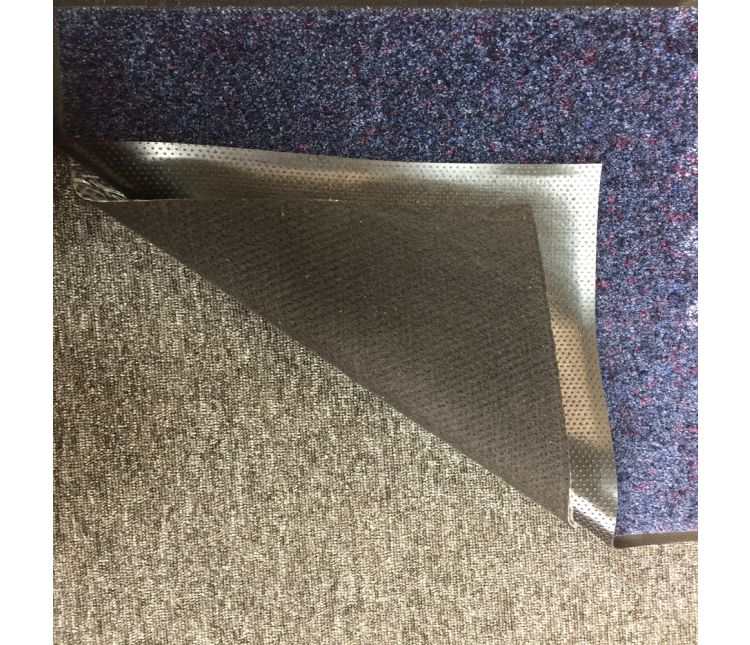
Teebaud Non-Skid Anti-Slip Mat and Rug Underlay
Ensure superior mat stability with the Teebaud Non-Skid Anti-Slip Mat and Rug Underlay. Designed to prevent mats and rugs from slipping, bunching, and creasing on both hard floors and carpeted surfaces, this innovative underlay provides an unparalleled grip without sticking to or damaging your flooring. Its open-weave design allows for airflow, preventing moisture build-up and keeping your floors in pristine condition. Extend the life of your mats and enhance safety with this versatile and highly effective solution.
Price: Please see product page
View ProductSpecialist Mat Backings and Features
Beyond the standard gripper and flat options, some environments demand highly specialised mat backings engineered for extreme conditions. For instance, in industrial kitchens or manufacturing plants where oils, greases, and chemicals are prevalent, standard rubber backings might degrade rapidly. In such cases, backings made from 100% nitrile rubber offer exceptional resistance to these corrosive elements, ensuring the mat's integrity and non-slip properties are maintained over time.
Similarly, for outdoor applications or areas exposed to extreme temperatures, UV-resistant and weather-resistant backings are essential to prevent cracking, fading, and deterioration. These specialist options extend the lifespan of the mat and maintain safety in challenging environments.
Consider mats with integrated drainage systems or open-grid designs, which are particularly effective in wet areas. While the backing itself might be flat, the mat's construction allows liquids to pass through, keeping the surface clear and reducing slip risks. These often feature robust, heavy-duty flat backings to cope with high moisture and traffic.
Discover our range of specialist mats with advanced backing technologies designed for unique environmental challenges, including chemical resistance and extreme durability.
A prime example of a highly versatile and effective mat is the Waterhog range. Waterhog mats are renowned for their exceptional dirt and moisture-trapping capabilities and robust construction. Their unique waffle or 'water dam' border design combined with a heavy-duty rubber backing (typically flat) provides superior performance on hard surfaces, making them a popular choice for high-traffic entrances in commercial buildings. The weight and quality of the rubber backing ensure they stay put, effectively managing debris and moisture at the point of entry.
Explore the enduring quality and superior performance of Waterhog mats, celebrated for their dirt-trapping abilities and stable flat backings.
Edge Design and Bevels: A Crucial Safety Element
While not strictly part of the backing, the design of the mat's edges works in tandem with the backing to enhance overall safety. Bevelled (sloped) edges are a critical feature, particularly for mats in high-traffic areas. These gently sloping borders reduce the height difference between the mat and the floor, significantly minimising the risk of trips and stumbles, especially for individuals who may shuffle their feet or use mobility aids.
A well-designed mat integrates its backing stability with its edge profile. A mat that stays flat and has bevelled edges creates a smooth transition, allowing foot traffic and even wheeled equipment to move seamlessly over it. Conversely, a mat that bunches or has sharp, un-bevelled edges, even with a suitable backing, still poses a significant safety concern. When evaluating mats, always consider how the backing and edge design work together to create the safest possible walking surface.
Factors to Consider When Selecting Your Mat Backing

Choosing the right mat backing is a multi-faceted decision that goes beyond simply matching it to your floor type. Several other critical factors must be carefully evaluated to ensure you select a mat that offers optimal safety, longevity, and cost-effectiveness for your specific application.
-
Floor Type: As established, this is the primary consideration. Hard floors (concrete, tile, wood, vinyl) demand flat backings for stability and floor protection. Carpeted floors require gripper/cleated backings to prevent shifting and bunching. Never interchange these; a gripper mat on a hard floor will slide, and a flat mat on carpet will bunch.
-
Traffic Volume and Type:
- Light Traffic: For areas with infrequent footfall, a standard-weight mat with appropriate backing may suffice.
- Moderate to Heavy Traffic: In busy corridors, entrances, or workstations, a heavier mat with a robust backing is crucial. More substantial weight adds to the mat's inherent stability, complementing the backing's grip.
- Wheeled Traffic: Areas with trolleys, pallet jacks, or office chairs necessitate flat-backed mats with a smooth, low-profile edge to prevent obstruction and facilitate easy movement. Gripper mats would impede wheels and likely get damaged.
-
Environment (Wet, Oily, Dry, Cold): The conditions of your environment heavily influence the choice of backing material:
- Wet Areas: Kitchens, washrooms, and outdoor entrances require backings that are inherently non-slip when wet. Nitrile rubber is often superior in these conditions due to its water resistance and grip. Mats should also have effective drainage if appropriate.
- Oily/Greasy Areas: Industrial kitchens, workshops, and manufacturing plants need backings resistant to oils, greases, and chemicals. 100% Nitrile rubber is the ideal choice as it won't degrade or lose its grip when exposed to such substances.
- Cold Environments: In refrigerated areas or outdoor spaces during winter, backing materials must remain flexible and resistant to cracking at low temperatures.
- Outdoor Exposure: Mats used outdoors need UV-stable backings that won't degrade under sunlight or become brittle due to temperature fluctuations.
-
Maintenance Requirements:
- Consider how the mats will be cleaned. Some backings are better suited for machine washing, while others require manual cleaning.
- A smooth, flat backing is generally easier to wipe clean on its underside compared to a cleated backing which can trap debris.
-
Mat Longevity and Cost-Effectiveness: Investing in a higher quality backing, such as durable nitrile rubber, might have a higher upfront cost but often pays off in the long run. These backings resist wear, tear, and degradation better than cheaper alternatives, extending the mat's lifespan and reducing replacement frequency. A mat that stays put also experiences less strain, further contributing to its durability.
-
Safety Regulations (Health and Safety Standards in the UK): Employers in the UK have a legal responsibility under the Health and Safety at Work etc. Act 1974 and the Workplace (Health, Safety and Welfare) Regulations 1992 to ensure a safe working environment. This includes taking reasonable steps to prevent slips, trips, and falls. Choosing the correct mat backing directly contributes to compliance with these regulations, demonstrating due diligence in creating a safe workspace. Always opt for backings that have proven anti-slip properties relevant to your floor type.
By carefully evaluating these factors, you can make a truly informed decision, selecting mat backings that provide optimal safety, performance, and value for your specific UK commercial or industrial environment.
Installation and Maintenance Best Practices

Even the highest quality mat with the perfect backing won't perform optimally without proper installation and diligent maintenance. These best practices are crucial for maximising the lifespan of your mats, preserving their aesthetic appeal, and, most importantly, ensuring continuous safety.
Proper Placement of Mats
The correct placement is the first step in effective mat management:
- Flat and Even Surfaces: Always ensure the mat is laid on a flat, even surface. Any bumps, cracks, or unevenness in the floor can cause the mat to buckle, regardless of its backing, creating trip hazards.
- Clearance: Ensure there is adequate clearance around doors so that the mat does not obstruct their opening or closing. This often means placing mats slightly away from the door swing path or selecting thinner mats for such areas.
- High-Traffic Zones: Position entrance mats directly at entry points to capture dirt and moisture effectively. In areas with specific slip hazards (e.g., wet processing zones), place anti-slip mats strategically where spills are most likely to occur.
- No Overlapping: Avoid overlapping multiple mats unless they are specifically designed to interlock. Overlapping creates uneven surfaces and trip hazards.
Regular Cleaning and Inspection of Backing for Wear and Tear
Routine maintenance is essential:
- Regular Cleaning: Mats should be cleaned according to the manufacturer's instructions. This typically involves vacuuming, sweeping, or shaking out loose dirt. For deeper cleaning, some mats can be hosed down or machine washed. Regular cleaning prevents dirt from accumulating, which can compromise the mat's grip and overall effectiveness.
- Inspect the Backing: Periodically lift and inspect the mat's backing.
- For Gripper Backings: Check if the cleats are still pronounced and resilient. Worn-down or brittle cleats indicate the backing is losing its ability to grip the carpet effectively.
- For Flat Backings: Look for signs of cracking, hardening, or loss of flexibility. A smooth backing that has become stiff or brittle will have reduced friction and is more prone to slipping. Also, check for any residue from cleaning products or floor treatments that might reduce grip.
- Inspect Edges: Pay attention to the mat's edges. Frayed, curling, or cracked edges are not only unsightly but also significant trip hazards.
When to Replace Mats
Mats, like all commercial assets, have a finite lifespan. Knowing when to replace them is crucial for maintaining safety standards:
- Visible Wear and Tear: If the mat surface is heavily worn, faded, or torn, its functionality (e.g., scraping action, water absorption) will be compromised.
- Compromised Backing: As noted above, if the backing shows significant signs of wear (worn cleats, brittle flat backing, cracking), the mat is no longer providing adequate stability and should be replaced immediately.
- Persistent Movement: If a mat consistently slides or bunches despite proper placement and cleaning, it's a clear indication that its backing has lost its effectiveness.
- Safety Incidents: Any slip, trip, or fall incident involving a mat should trigger an immediate review of its condition and suitability.
By adhering to these installation and maintenance guidelines, you can significantly extend the life of your mats and, more importantly, ensure they continue to provide a safe and professional environment for your employees and visitors.
Frequently Asked Questions (FAQs)
Here are some common questions regarding mat backings and their applications:
Q1: Can a gripper mat be used on a hard floor?
A1: No, gripper mats are specifically designed for carpeted surfaces. The cleats on the backing are intended to embed into carpet fibres for stability. On hard floors like concrete, wood, or tile, these cleats offer no grip and will cause the mat to slide, creating a significant trip hazard and potentially scratching the floor. Always use a flat-backed mat on hard surfaces.
Q2: How do I stop a flat back mat from slipping on a hard floor?
A2: If your flat-backed mat is slipping, several solutions can help. Firstly, ensure the mat has a high-quality backing material, such as nitrile rubber, which offers superior grip. Secondly, consider using a non-skid mat underlay, like the Teebaud Non-Skid Anti-Slip Mat and Rug Underlay, which provides an extra layer of friction. Thirdly, ensure the floor is clean, dry, and free from dust or residue that could reduce friction. A heavier mat also inherently offers more resistance to movement.
Q3: What types of materials are commonly used for mat backing?
A3: Common materials for mat backing include various types of rubber (such as natural rubber, SBR rubber, and nitrile rubber), PVC (polyvinyl chloride), and vinyl. Nitrile rubber is often considered a premium choice, particularly for flat backings, due to its excellent non-slip properties, durability, and resistance to oils, greases, and chemicals. PVC and vinyl are often used for more economical options but may offer less durability and slip resistance.
Q4: How often should I check my mat backing for wear?
A4: For mats in high-traffic commercial or industrial environments, it's advisable to check the backing at least monthly, or more frequently if safety is a critical concern or if the mat is showing signs of movement. In lower-traffic areas, a quarterly inspection might suffice. Always inspect the backing during routine cleaning or whenever the mat is moved.
Q5: Are there eco-friendly mat backing options available?
A5: Yes, the mat industry is increasingly focusing on sustainability. Some manufacturers offer backings made from recycled rubber or other recycled materials. Additionally, certain types of rubber, such as natural rubber, are considered more environmentally friendly due to their renewable source. When choosing mats, inquire about the backing's material composition and any certifications for sustainability.
Q6: Do anti-fatigue mats have special backing?
A6: Anti-fatigue mats typically feature a robust flat backing, often made from durable rubber compounds. While their primary design focuses on cushioning and ergonomic support, their backing is crucial for ensuring stability. These backings are usually heavier and designed to provide excellent grip on hard industrial or commercial floors, preventing the mat from shifting under standing workers or wheeled equipment.
Q7: What's the difference between PVC and Nitrile Rubber backing?
A7: The main differences lie in performance and durability. PVC (Polyvinyl Chloride) backing is generally a more economical option, suitable for lighter traffic and less demanding environments. It can become brittle over time and may not offer the same level of grip, especially in wet or oily conditions. Nitrile rubber backing, on the other hand, is a premium material known for its superior durability, excellent non-slip properties (even when wet or oily), and resistance to chemicals, greases, and oils. It maintains its flexibility and integrity much longer, making it ideal for heavy-duty commercial and industrial applications despite a higher initial cost.


