



Over 80 percent of british workers in manufacturing and warehousing spend hours standing each day, leading to significant fatigue and discomfort. Long periods on hard floors can raise the risk of injuries and slow productivity, making workplace wellbeing a real concern for many industries. By understanding how industrial ergo mats support both health and efficiency, businesses can create safer, more comfortable environments for their staff and reduce long-term costs.
Table of Contents
- Defining Industrial Ergo Mats and Their Purpose
- Types of Industrial Ergo Mats Explained
- Key Features and Functional Benefits
- Industry Applications and Typical Use Cases
- Health, Safety, and Legal Compliance in the UK
- Evaluating Costs, Lifespan and Buying Considerations
Key Takeaways
| Point | Details |
|---|---|
| Ergonomic Support | Industrial ergo mats are essential for enhancing worker comfort and reducing fatigue in environments requiring prolonged standing. |
| Types and Materials | Different mat types, such as rubber and foam, provide specific benefits tailored to various industrial applications. |
| Health and Safety Compliance | Using anti-fatigue mats contributes to legal compliance by mitigating health risks associated with manual handling and improving employee wellbeing. |
| Investment in Productivity | Though the initial cost may be high, the long-term benefits of reduced worker fatigue and injury make ergo mats a worthwhile investment. |
Defining Industrial Ergo Mats and Their Purpose
Industrial ergo mats are specialised floor coverings designed to address worker comfort and safety in industrial environments where prolonged standing is required. According to ScienceDirect, these mats are engineered to reduce musculoskeletal discomfort and fatigue among workers who spend significant time standing during their shifts.
The primary purpose of industrial ergo mats is to provide essential ergonomic support. Industrial Hygiene Network highlights that these mats minimise workplace stress by creating a cushioned surface that helps reduce physical strain. By absorbing shock and providing subtle movement opportunities, ergo mats encourage better circulation and reduce the static load on workers’ joints and muscles.
Key features of industrial ergo mats typically include:
- Shock-absorbing materials like rubber or specialised polymers
- Textured surfaces to prevent slipping
- Varying thickness levels for different industrial requirements
- Resistance to industrial chemicals and heavy machinery traffic
Moreover, these mats are not just about physical comfort but represent a critical investment in workplace productivity and employee wellbeing. By mitigating physical stress, 7 Best Industrial Anti Fatigue Mats for Safer Workplaces can help organisations reduce potential worker compensation claims and improve overall operational efficiency.
Types of Industrial Ergo Mats Explained
Industrial ergo mats come in a diverse range of materials and designs, each tailored to specific workplace requirements. According to Wikipedia, anti-fatigue mats are available in multiple material compositions including vinyl, wood, PVC, rubber, and foam, with each type offering unique protective characteristics for different industrial environments.
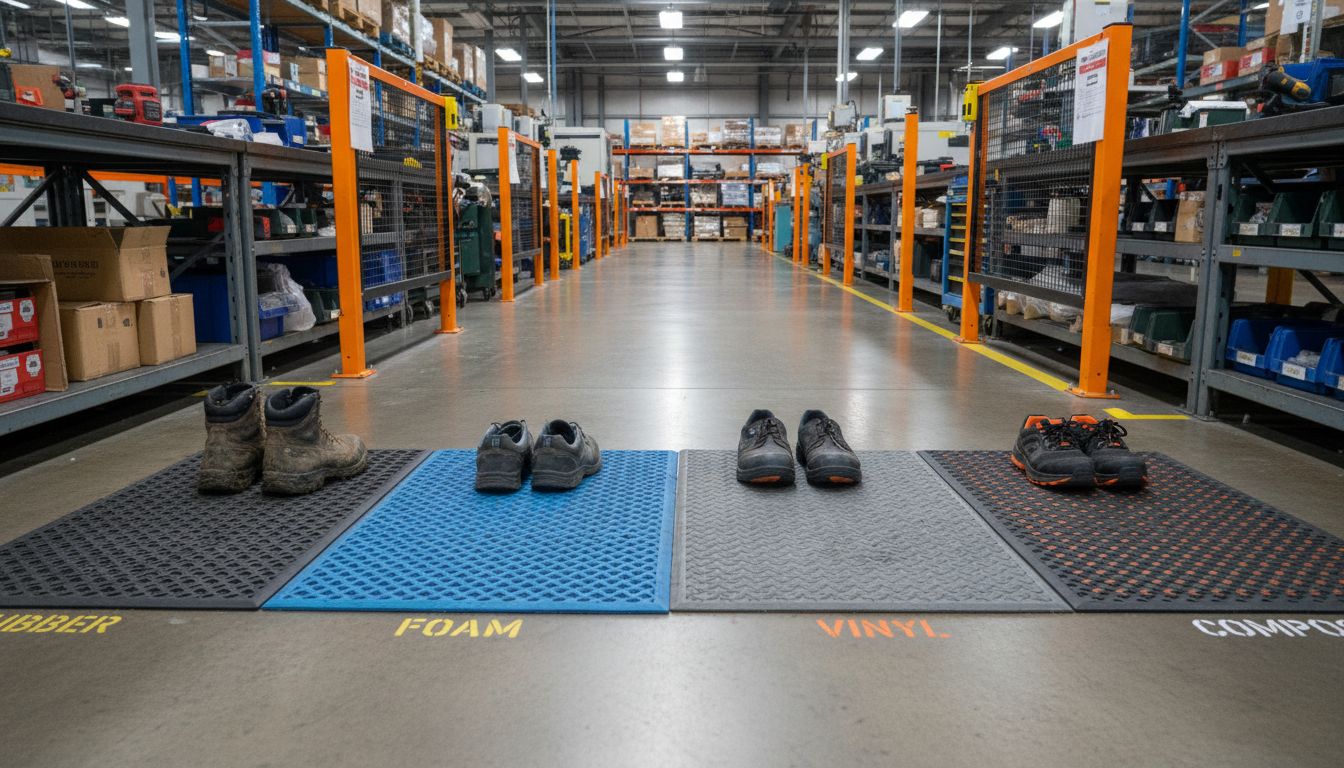
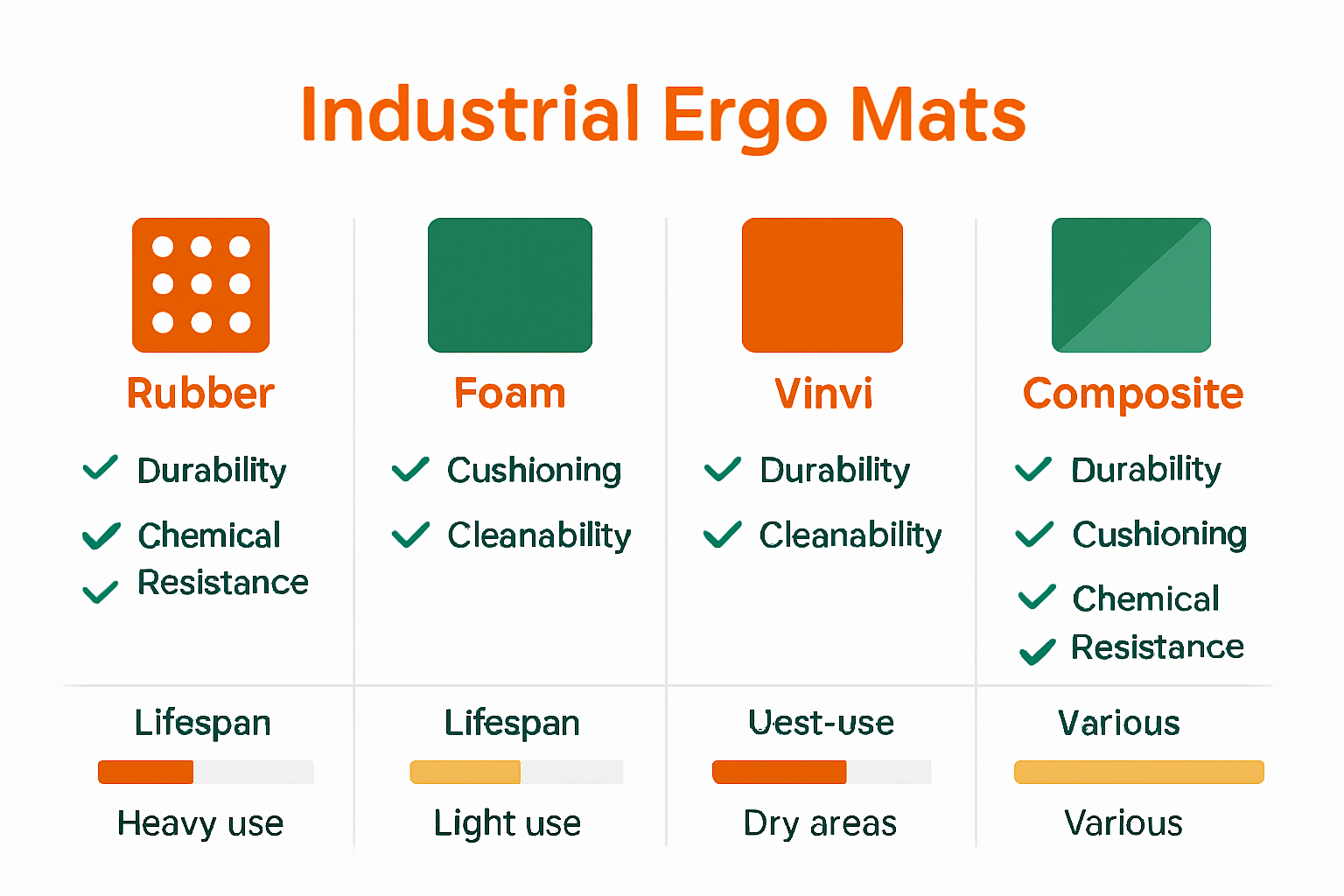
The primary categories of industrial ergo mats can be broadly classified into four distinct types:
- Rubber Mats: Highly durable and resistant to chemical spills, ideal for manufacturing and heavy industrial settings
- Foam Mats: Lightweight and providing exceptional cushioning, best suited for areas requiring prolonged standing
- Vinyl Mats: Cost-effective and easy to clean, perfect for food processing and pharmaceutical environments
- Specialised Composite Mats: Advanced materials combining multiple properties for specific industrial challenges
For workplaces with unique environmental conditions, selecting the right mat becomes crucial. Anti Fatigue Mats for Wet Areas: 7 Key Tips highlights the importance of understanding specific workplace requirements when choosing ergonomic floor coverings. Each mat type offers distinct advantages, from chemical resistance to shock absorption, ensuring worker comfort and safety across diverse industrial landscapes.
Key Features and Functional Benefits
Industrial ergo mats are engineered with sophisticated features designed to transform workplace ergonomics and worker well-being. According to ScienceDirect, these mats incorporate specialised cushioning materials specifically developed to reduce musculoskeletal discomfort and fatigue during prolonged standing periods.
The functional benefits of these mats extend far beyond simple floor covering. Industrial Hygiene Network emphasises that the cushioned surfaces significantly reduce workplace stress and pain, directly contributing to increased worker productivity. Key functional advantages include:
- Shock Absorption: Reduces impact on joints and muscles
- Micro-Movement Encouragement: Promotes subtle muscle engagement
- Improved Circulation: Prevents blood pooling in lower extremities
- Thermal Insulation: Protects against cold or heat-conducting surfaces
Moreover, these mats are not merely passive floor coverings but active ergonomic interventions. By providing a dynamic standing surface, they help mitigate the long-term health risks associated with static workplace environments, making them an essential investment in worker health and organisational productivity.
Industry Applications and Typical Use Cases
Industrial ergo mats serve a critical role across numerous workplace environments, addressing ergonomic challenges in diverse settings. According to Wikipedia, anti-fatigue mats are extensively used in industrial and commercial applications, providing essential support for workers who spend extended periods standing.
The range of industry applications is remarkably comprehensive, spanning multiple sectors with distinct ergonomic requirements:
- Manufacturing: Assembly lines, machine operation areas
- Food Service: Commercial kitchens, food processing facilities
- Retail: Checkout areas, warehouse storage zones
- Healthcare: Operating theatres, pharmacy preparation areas
- Automotive: Mechanic workshops, assembly stations
- Construction: Site offices, fabrication workshops
Each sector demands specific mat characteristics tailored to its unique environmental challenges. Commercial Kitchen Floor Mats: Complete Guide UK highlights how specialised mats can address sector-specific requirements, such as chemical resistance in food preparation areas or slip prevention in high-moisture environments. By providing targeted ergonomic solutions, industrial ergo mats transform workplace comfort and operational efficiency across multiple professional domains.
Health, Safety, and Legal Compliance in the UK
Industrial ergo mats play a critical role in workplace health and safety regulations across the United Kingdom. According to Health and Safety Executive, employers are legally obligated to assess and mitigate risks associated with manual handling tasks, with ergonomic interventions like anti-fatigue mats serving as essential preventative measures.
The legal framework surrounding workplace safety emphasises several key compliance requirements for businesses:
- Risk Assessment: Mandatory evaluation of workplace ergonomic conditions
- Injury Prevention: Proactive strategies to minimise musculoskeletal strain
- Employee Protection: Implementing measures that reduce workplace health risks
- Documentation: Maintaining clear records of ergonomic interventions
Anti-Fatigue Mats UK: The Ultimate Workplace Safety Guide highlights that beyond legal compliance, these mats represent a strategic investment in workforce well-being. By addressing potential health risks associated with prolonged standing, businesses can simultaneously meet regulatory requirements and demonstrate a commitment to employee welfare, potentially reducing long-term healthcare costs and workplace injury claims.
Evaluating Costs, Lifespan and Buying Considerations
Industrial ergo mats represent a strategic investment in workplace ergonomics, with cost considerations extending far beyond initial purchase price. According to AJ Products, businesses must carefully evaluate factors such as material durability, resistance to workplace hazards, and maintenance requirements when selecting appropriate floor coverings.
Key financial and performance considerations include:
- Initial Investment: Pricing variations across different mat materials
- Durability Rating: Expected lifespan under specific workplace conditions
- Maintenance Costs: Cleaning and replacement frequency
- Productivity Impact: Potential reduction in worker fatigue and injury
Industrial Hygiene Network emphasises that while upfront costs may seem significant, the long-term benefits of anti-fatigue mats can be substantial. Businesses should view these mats as a proactive investment in employee health, potentially reducing workplace injuries, minimising sick leave, and maintaining consistent productivity across industrial environments.
Enhance Workplace Comfort with Tailored Industrial Ergo Mats
Prolonged standing at work can cause fatigue, joint strain and reduced productivity. The Complete Guide to Industrial Ergo Mats highlights the importance of shock absorption, ergonomic support and slip resistance to alleviate these issues. At Mats4U, we understand these challenges and offer a broad selection of durable, customisable mats to create safer, more comfortable industrial spaces. Our Home Mats | Cloakroom Mats | Speciality Mats | Mats4U range features specialised options designed to reduce workplace stress and improve overall well-being.

Discover how investing in the right ergonomic floor coverings can transform your workplace. Visit Mats4U now to explore our industrial anti-fatigue mats with tailored solutions crafted for your environment. Act today to enhance employee comfort, boost productivity and meet crucial UK health and safety standards.
Frequently Asked Questions
What are industrial ergo mats?
Industrial ergo mats are specialised floor coverings designed to enhance worker comfort and safety, particularly in environments where prolonged standing is required. They help reduce musculoskeletal discomfort and fatigue.
What are the key benefits of using industrial ergo mats?
The key benefits include shock absorption, improved circulation, reduced joint strain, and enhanced worker productivity. These mats are also designed to encourage micro-movement, which can further alleviate fatigue and discomfort.
What types of materials are used in industrial ergo mats?
Industrial ergo mats are made from various materials, including rubber, foam, vinyl, and specialised composites. Each material offers unique advantages tailored to specific industrial environments, such as chemical resistance or cushioning.
How do I choose the right industrial ergo mat for my workplace?
When selecting an industrial ergo mat, consider factors such as the specific industrial environment, the duration of standing, potential exposure to chemicals, and the type of flooring. Each mat type has distinct properties that cater to different ergonomic challenges.


