



Kneeling is part of many working environments, from maintenance and repairs to cleaning, construction, warehousing, fitting, stock handling and workshop tasks. While it may seem like a normal part of the job, repeated kneeling on hard, cold or uneven floors can quickly lead to discomfort, pressure and strain on the knees.
For many workers, the issue is not one single moment of kneeling. It is the repeated pressure throughout the day. Knees come into contact with concrete, tiles, warehouse floors, workshop surfaces and other hard working areas. Over time, this can make simple tasks feel more uncomfortable and may affect concentration, productivity and overall working comfort.
Choosing the right rubber mats can help create a more forgiving surface for kneeling, standing and moving around at work. A suitable mat can provide cushioning, improve underfoot grip, reduce contact with cold floors and support a safer, more practical working area. This guide explains why kneeling protection matters, what to look for in workplace matting, and which Mats4U solid-surface rubber mats are most relevant for workers who regularly kneel, crouch or work close to the floor.
Table of Contents
- Why Kneeling at Work Should Not Be Ignored
- Common Jobs and Workplaces Where Kneeling Happens
- The Problem with Kneeling on Hard Floors
- How Rubber Mats Help Protect Knees
- Comfort, Grip and Workplace Safety
- What to Look for in Mats for Kneeling
- Why Choose Solid-Surface Mats for Kneeling?
- Recommended Solid-Surface Rubber Mats for Kneeling and Workplace Comfort
- Where These Mats Can Be Used
- How to Maintain Rubber Mats in Work Areas
- Frequently Asked Questions About Kneeling and Rubber Mats
Why Kneeling at Work Should Not Be Ignored

Kneeling is easy to overlook because it often happens as part of a larger task. A worker may kneel to reach machinery, clean a low surface, inspect equipment, fit flooring, sort stock, repair tools or access an awkward area. If the task is quick, the discomfort may seem minor. However, repeated kneeling on hard surfaces can place direct pressure on the knees and surrounding joints.
In practical terms, the floor becomes part of the working environment. If that floor is hard, cold, rough or uneven, it can make kneeling more uncomfortable. A worker may rush the task, shift position constantly, or avoid kneeling properly, which can affect posture and create further strain elsewhere in the body.
Small Discomfort Can Build Up Over Time
One short kneeling task may not feel like a major issue, but repeated pressure throughout the day can build into noticeable discomfort. This is especially true in roles where workers move between kneeling, crouching, bending and standing. A softer, more supportive surface can make these repeated movements more manageable.
Comfort Can Affect Productivity
When someone is uncomfortable, they are less likely to work efficiently. They may need more breaks, reposition themselves often or avoid tasks that require kneeling. Providing suitable rubber matting in areas where kneeling is common can help workers stay more comfortable and focused.
Floor Protection Matters Too
Rubber mats do not only support the person kneeling. They can also help protect the floor and equipment. In workshops, warehouses and industrial spaces, rubber matting can reduce direct contact between tools, parts and the floor while improving grip and comfort in demanding areas.
Common Jobs and Workplaces Where Kneeling Happens

Kneeling can happen in almost any workplace, but some environments make it far more common. These are usually spaces where equipment is low to the ground, where tasks require manual handling, or where workers need to access awkward areas.
Workshops and Maintenance Areas
Mechanics, technicians, engineers and maintenance staff often kneel when inspecting equipment, accessing lower panels, working around machinery or carrying out repairs. In these areas, floors are often concrete or industrial-grade, which can be uncomfortable for repeated kneeling.
Warehouses and Stockrooms
Warehouse staff may kneel when packing, sorting, reaching low shelves or organising stock. Rubber mats can improve comfort in specific work zones where repetitive low-level tasks take place.
Assembly and Production Lines
Workers in production and assembly environments may need to kneel or crouch when adjusting equipment, checking lower components or carrying out maintenance. Solid anti-fatigue matting can help define a more comfortable working zone.
Retail and Service Areas
Retail teams may kneel when stocking lower shelves, arranging displays or accessing storage below counters. A suitable mat can make these repeated tasks more comfortable, especially in back-of-house areas and stockrooms.
Cleaning and Facilities Management
Cleaners and facilities teams often work close to the floor, especially when dealing with skirting, washrooms, cupboards, under-counter areas and equipment bases. A supportive mat can help make these areas more comfortable to work in.
Trades and Fitting Work
Floor fitters, plumbers, decorators, electricians and other trades often kneel as part of daily work. Portable kneeling pads may help for mobile tasks, but in fixed workstations or regular working zones, rubber mats can provide a broader protective surface.
The Problem with Kneeling on Hard Floors

Hard flooring is common in commercial and industrial environments because it is durable, easy to clean and suitable for heavy use. However, what works well for equipment and foot traffic is not always comfortable for workers kneeling directly on the surface.
Direct Pressure on the Knees
Concrete, tiles and other hard floors provide very little cushioning. When a worker kneels, much of their weight is concentrated through a smaller contact area. This can cause discomfort quickly, especially if the task requires staying in the same position for more than a few moments.
Cold Floor Contact
Cold floors can make kneeling even more unpleasant. Rubber mats create a barrier between the worker and the floor surface, helping reduce direct contact with cold concrete, tiles or industrial flooring.
Uneven or Abrasive Surfaces
Some floors have rough textures, loose debris, grit or uneven patches. Kneeling on these surfaces can be uncomfortable and may damage clothing or protective workwear. A suitable mat creates a more consistent work surface.
Repeated Movement from Kneeling to Standing
Many tasks require workers to move repeatedly from standing to kneeling and back again. If the worker is uncomfortable or if the floor surface is unforgiving, this repeated movement can become awkward. A mat with a stable surface can provide better support during these transitions.
Pressure on Other Parts of the Body
Knee discomfort can also affect how a person moves. Workers may shift weight onto their hands, feet, hips or back to reduce knee pressure. Over time, this can create discomfort in other areas. A more cushioned working surface helps reduce the need for awkward positions.
How Rubber Mats Help Protect Knees

Rubber mats are a practical choice for many work areas because rubber naturally provides a degree of cushioning, grip and resilience. The right mat can make a working surface more forgiving without requiring permanent flooring changes.
Cushioning Against Hard Floors
Rubber matting helps reduce direct contact between the knees and hard floor surfaces. This can make kneeling tasks more comfortable, especially in areas where workers need to spend time close to the ground.
Better Grip Underfoot
Many rubber mats are designed with textured, raised or patterned surfaces to improve traction. This is useful when workers are kneeling, crouching, standing or moving around in areas where floors may be smooth or dusty.
Support for Standing Tasks
Workers who kneel often also spend long periods standing. Anti-fatigue rubber mats can help make standing work more comfortable by providing a softer surface than bare concrete or hard flooring.
Practical Placement
Standard-size rubber mats can be placed where they are needed most. This makes them useful for specific kneeling zones, workstations, machinery access points, packing areas, counters, maintenance areas and cleaning zones.
Durability in Demanding Spaces
Rubber mats are often suitable for busy and demanding environments. They can withstand regular foot traffic, equipment movement, cleaning and exposure to workplace conditions better than many softer domestic-style mats.
Comfort, Grip and Workplace Safety

When selecting mats for kneeling, comfort is important, but it should not be the only priority. The mat also needs to support safer movement, stay in position and suit the environment. A soft mat that slips around, curls or becomes difficult to clean may create more problems than it solves.
Stable Surface Design
A good workplace mat should provide a stable surface for kneeling, standing and moving. Raised patterns, textured finishes and cushioned bases can all contribute to a more practical working area.
Visible and Safe Edges
Some workplace mats are available with bevelled or high-visibility edges. These can help reduce trip risks and make the mat area more noticeable in busy workspaces.
Support for Standing and Kneeling
Many workers who kneel also spend long periods standing. Choosing a mat that provides cushioning and grip can help create a more comfortable work area overall, rather than solving only one part of the problem.
Suitable for the Environment
Not every mat suits every workplace. Some mats are best for mainly dry areas, while others are designed for heavier industrial use. For kneeling work, the mat should be matched to the actual conditions and the type of task being carried out.
Easy Maintenance
A workplace mat should be easy to clean and inspect. Dust, dirt and debris can build up over time, so regular maintenance helps keep the mat comfortable, safe and presentable.
What to Look for in Mats for Kneeling
The best mat for kneeling depends on how and where it will be used. A mat for a dry packing area will not need the same features as a mat for a production line or industrial workstation. Before choosing, it is worth looking at the environment, the task and the level of use.
Comfort and Cushioning
If workers regularly kneel, the mat should offer enough cushioning to reduce pressure from the floor. Anti-fatigue or comfort-focused rubber mats are usually better suited to this than thin, decorative or lightweight mats.
Solid Surface
For kneeling, many workers prefer a solid-surface mat because the knee rests on an even layer rather than over drainage holes. A solid surface can feel more consistent under the knees and may be better suited to dry workstations, packing areas, assembly areas and general workplace comfort.
Surface Grip
Grip matters when kneeling, standing and moving across the mat. A textured or raised surface can help workers feel more stable, especially in areas where floors may be smooth or polished.
Durability
Workplace mats need to withstand regular use. In industrial or commercial environments, look for mats designed for repeated contact, cleaning and demanding conditions.
Size and Coverage
The mat should be large enough for the task. If someone needs to kneel, turn, reach or move tools around, a very small mat may not provide enough coverage. Standard-size rubber mats can be used to create defined work zones where extra comfort is needed.
Cleaning Requirements
Choose a mat that can be cleaned easily according to the environment. Dry workstations may mainly need sweeping, vacuuming or occasional washing, while heavier-duty areas may require hosing, mopping or pressure washing depending on the mat type.
Why Choose Solid-Surface Mats for Kneeling?
Drainage mats are useful in wet areas, kitchens and spaces where liquid needs to pass through the surface. However, they are not always the best choice for kneeling tasks. If a worker is kneeling directly on the mat, open holes can feel uneven and may create pressure points depending on the task, body position and duration of use.
Solid-surface mats provide a more continuous contact area. This can make them more comfortable for kneeling, crouching, tool handling and floor-level work in mainly dry environments. They still need to provide grip and stability, but the surface is generally more supportive for direct knee contact.
Better Contact for the Knees
A solid mat gives the knee a more even surface to rest on. This is especially helpful for workers who kneel repeatedly or need to stay in one position while completing detailed tasks.
Good for Dry Workstations
Solid-surface anti-fatigue mats are often best suited to mainly dry areas such as production lines, assembly areas, packing benches, reception desks, cashier stations, maintenance zones and workshop workstations.
Easier for Small Parts and Tools
In work areas where small parts, screws, tools or fittings are used, a solid surface can be more practical than a mat with holes. Dropped items are less likely to fall through the mat, making the area easier to manage.
Professional Appearance
Solid mats often give a cleaner, more finished appearance, especially in customer-facing or semi-visible areas. Options with bevelled edges or yellow borders can also help define the working zone clearly.
Recommended Solid-Surface Rubber Mats for Kneeling and Workplace Comfort
The following Mats4U rubber mats are strong options for workplaces where kneeling, crouching, standing and floor-level tasks are common. These showcase products avoid open drainage holes and are more suitable where a solid working surface is preferred.

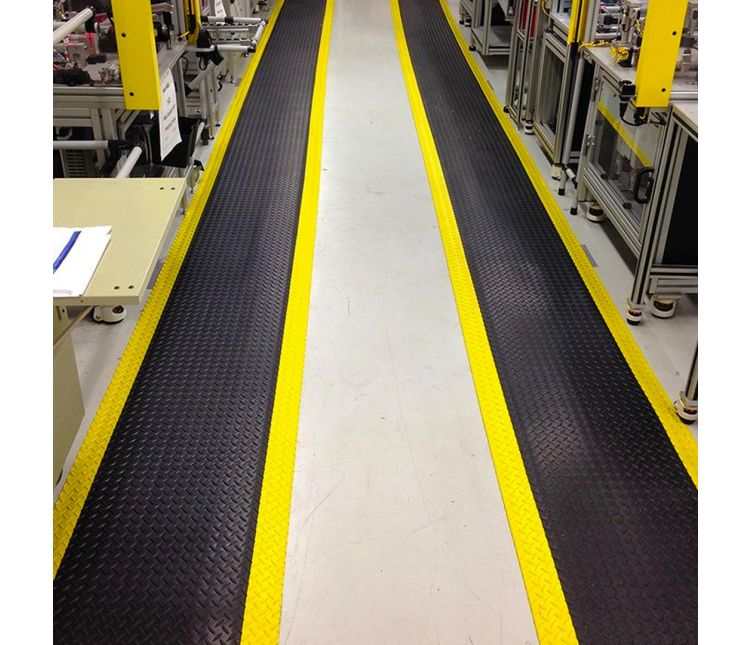
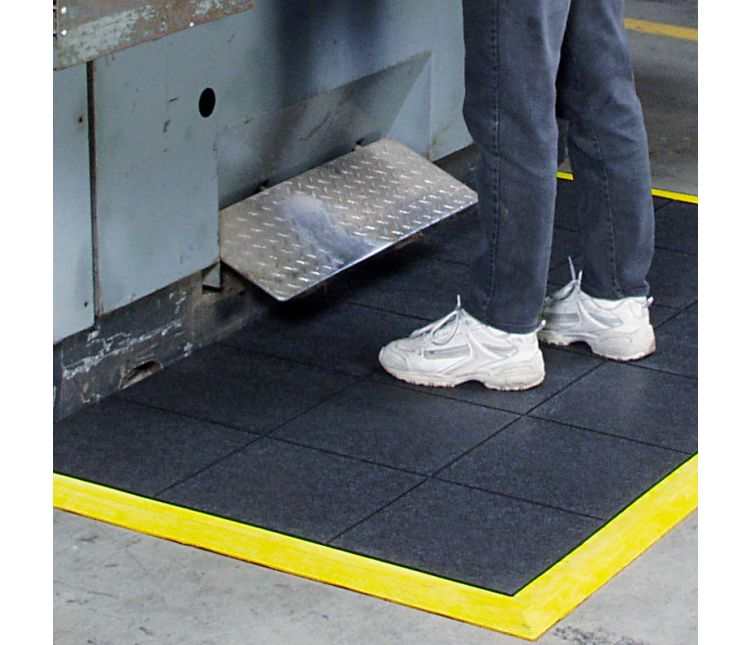
For more options, the full Standard Size Rubber Mats collection includes anti-slip mats, comfort mats, scraper mats and workplace rubber matting options for a wide range of commercial and industrial environments.
Where These Mats Can Be Used
Solid-surface rubber mats for kneeling and workplace comfort can be useful in many different environments. The best choice depends on whether the area is dry, industrial, customer-facing, production-focused or used for regular standing and crouching.
Workshops and Garages
Workshops and garages often involve kneeling around tools, machinery, storage areas and equipment. Solid rubber mats help create a more comfortable surface while also improving the overall working area.
Production and Assembly Lines
Production and assembly environments often involve standing for long periods, with occasional kneeling or crouching to adjust equipment, check components or complete lower-level tasks. Solid anti-fatigue mats are well suited to these areas because they provide comfort without drainage holes.
Warehouses and Packing Areas
In warehouses, workers may kneel when handling stock, packing items, accessing low shelves or carrying out floor-level tasks. Rubber mats can be placed in fixed work zones to provide extra comfort and better traction.
Retail and Reception Workstations
Some customer-facing areas require staff to stand for long periods while still maintaining a tidy appearance. Mats such as Diamond Plate SpongeCote 415 can support comfort in mainly dry areas while still offering a professional, defined workstation look.
Maintenance and Facilities Areas
Maintenance staff often work around lower panels, machinery bases, cupboards, cleaning zones and service areas. Rubber matting can help reduce contact with cold or rough floors while also supporting a more comfortable working area.
Dry Industrial Workstations
Dry workstations often suit solid anti-fatigue matting better than drainage matting. Workers benefit from a cushioned surface, and the solid top helps prevent small parts or tools from falling through the mat.
How to Maintain Rubber Mats in Work Areas
Rubber mats need regular maintenance to stay safe, clean and effective. A mat that becomes overloaded with dirt or debris will not perform as well as one that is kept clean and inspected regularly.
Remove Loose Dirt and Debris
Sweep, shake or vacuum loose debris from rubber mats as needed. In workshops and industrial areas, grit and dirt should not be left to build up because they can affect traction and general cleanliness.
Wipe, Mop or Hose Down When Needed
Many rubber mats can be wiped, mopped or hosed down depending on the product. Diamond Plate SpongeCote 415 has an easy-clean surface and can be cleaned by pressure washer, hose or mop. Bubblemat can be cleaned with a high-pressure hose and mild detergent, while 24/Seven Solid tiles can be wiped clean, swept, hosed or pressure washed.
Allow Mats to Dry Properly
After washing, mats should be allowed to dry properly before being returned to use. Placing a wet mat back into a busy area may reduce grip or allow dirt to build up more quickly.
Inspect the Edges
Check mat edges regularly for signs of lifting, curling or damage. Bevelled edges and ramped edges help reduce trip risks, but they should still be inspected as part of routine maintenance.
Check for Surface Wear
Look for flattening, cracking, surface damage or areas where the mat no longer provides good support. If the mat no longer gives adequate comfort, grip or stability, it may be time to replace it.
Match Cleaning Frequency to the Environment
A dry packing area may only need routine sweeping and occasional washing, while a busy production area may need more frequent cleaning. The more demanding the environment, the more important regular mat maintenance becomes.
Frequently Asked Questions About Kneeling and Rubber Mats
Q1: Why is kneeling on hard floors a problem?
A1: Kneeling on hard floors can place direct pressure on the knees and may become uncomfortable during repeated or extended tasks. Hard, cold or uneven surfaces can make kneeling more difficult and may affect comfort and productivity.
Q2: Can rubber mats help with kneeling at work?
A2: Yes. Rubber mats can provide cushioning, grip and a more practical surface than bare concrete, tiles or other hard floors. They are especially useful in work areas where staff regularly kneel, crouch or work close to the floor.
Q3: Are solid-surface mats better for kneeling than mats with holes?
A3: For kneeling tasks, solid-surface mats are often more comfortable because they provide a more even contact area for the knees. Mats with holes are useful for drainage, but they may not feel as comfortable for direct knee contact.
Q4: What type of mat is best for kneeling?
A4: The best mat depends on the work environment. For mainly dry workstations, solid anti-fatigue mats such as Bubblemat, Diamond Plate SpongeCote 415 or 24/Seven Solid Anti Fatigue Mat Tiles are practical options.
Q5: Are anti-fatigue mats only for standing?
A5: Anti-fatigue mats are mainly designed to support standing workers, but many comfort-focused mats can also make floor-level tasks more comfortable by providing a cushioned surface. The mat should still be suitable for kneeling, movement and the surrounding conditions.
Q6: Which Mats4U mat is best for a dry workstation?
A6: For dry workstations, Bubblemat Anti Fatigue Mat, Diamond Plate SpongeCote 415 Anti Fatigue Mats and 24/Seven Solid Anti Fatigue Mat Tiles & Edges are all strong options depending on the size, layout and level of use.
Q7: Which mat is best for larger working areas?
A7: 24/Seven Solid Anti Fatigue Mat Tiles & Edges are a good option for larger areas because the tiles can be linked together to create bespoke lengths and shapes. Optional bevelled edges can also help define the matting area.
Q8: Which mat is best for a production line?
A8: Diamond Plate SpongeCote 415 Anti Fatigue Mats and 24/Seven Solid Anti Fatigue Mat Tiles & Edges are both suitable for production and assembly areas. They offer solid surfaces, comfort and durability for mainly dry work zones.
Q9: How often should workplace rubber mats be cleaned?
A9: Cleaning frequency depends on the workplace. Dry areas may need routine sweeping or vacuuming, while busier production or workshop areas may require more regular wiping, mopping or washing.
Q10: Where can I buy solid-surface rubber mats for kneeling and workplace comfort?
A10: Mats4U offers a Standard Size Rubber Mats collection with rubber comfort mats, anti-fatigue mats and solid workplace matting options suitable for commercial, industrial and practical work environments.


