



In today's dynamic industrial and commercial landscapes across the UK, the choice of flooring can significantly impact safety, productivity, and operational efficiency. Among the myriad of options available, rubber roll matting stands out as a versatile, robust, and economically sound solution, adept at transforming diverse environments. Far from a mere aesthetic choice, this innovative flooring solution is a strategic investment in the well-being of employees, the protection of existing floor surfaces, and the overall operational integrity of a business. As workplaces evolve, so too must the infrastructure supporting them, making a deep understanding of advanced matting solutions more critical than ever.
This comprehensive guide delves into the multifaceted advantages of rubber roll matting, exploring its unparalleled versatility, superior protective qualities, and long-term cost-effectiveness. We'll uncover why businesses from manufacturing plants to state-of-the-art gyms are increasingly turning to this material to enhance their premises. For those looking to understand the foundational aspects of matting solutions and their initial benefits, our previous insights on the benefits of rubber roll matting offer a valuable starting point. Now, let's explore how rubber roll matting is not just a product, but a cornerstone of modern, efficient, and safe UK workplaces.
Table of Contents
- The Unrivalled Versatility of Rubber Roll Matting
- Key Benefits Explored: Why Rubber Roll Matting Stands Out
- Choosing the Right Rubber Roll Matting for Your UK Business
- Featured Product: Penny Rubber Roll Matting
- Installation and Maintenance Best Practices
- Real-World Applications and Success Stories
- Frequently Asked Questions
The Unrivalled Versatility of Rubber Roll Matting
One of the most compelling attributes of rubber roll matting is its extraordinary versatility. Unlike traditional flooring solutions that are often confined to specific applications, rubber matting effortlessly adapts to a vast array of environments, offering tailored benefits wherever it's deployed. Its inherent flexibility allows it to be cut to size, configured to unique spatial requirements, and installed in areas that other flooring types simply cannot accommodate. This adaptability makes it an invaluable asset for businesses seeking comprehensive and cohesive flooring solutions across their entire premises.
Consider an industrial workshop, where heavy machinery, chemical spills, and constant foot traffic are the norm. Rubber roll matting provides a resilient, chemical-resistant, and anti-slip surface that withstands rigorous daily use, protecting both the subfloor and the personnel. In contrast, a modern gym or fitness centre demands flooring that can absorb impact from dropped weights, offer hygienic surfaces for exercise, and reduce noise transmission. Here, rubber matting excels, providing cushioned support and sound dampening qualities that enhance the workout experience and maintain a professional atmosphere.
Even in retail spaces, where aesthetics often take precedence, rubber roll matting finds its place, offering anti-fatigue relief for staff who stand for extended periods, while also contributing to a clean and safe environment for customers. Its non-porous nature makes it ideal for areas requiring stringent hygiene standards, such as catering facilities or veterinary clinics, where easy cleaning and resistance to bacterial growth are paramount. From equestrian stables to temporary event walkways, the material's inherent strength, weather resistance, and protective qualities ensure it performs optimally, regardless of the challenge. This broad applicability underlines its position as a superior choice for any UK business prioritising function, safety, and longevity in their flooring infrastructure.
Key Benefits Explored: Why Rubber Roll Matting Stands Out
The widespread adoption of rubber roll matting across various sectors in the UK is a testament to its formidable array of benefits. Beyond simple floor protection, these mats contribute significantly to operational efficiency, employee welfare, and overall site safety. Let's delve into the specific advantages that make rubber roll matting a distinguished choice.
Superior Anti-Fatigue Properties
For employees who spend long hours standing, whether on a production line, behind a retail counter, or at a workbench, the physical toll on their bodies can be substantial. Hard concrete or tiled floors offer no shock absorption, leading to foot, leg, and back pain, ultimately affecting concentration and productivity. Rubber roll matting offers a crucial solution by providing a cushioned surface that mitigates these issues. The inherent elasticity of rubber works to absorb impact, reducing the strain on muscles and joints. This leads to significantly improved comfort levels, allowing staff to remain focused and energetic throughout their shifts.
The ergonomic benefits extend beyond immediate comfort. By alleviating chronic fatigue, businesses can observe a measurable reduction in absenteeism due to musculoskeletal disorders and an overall improvement in employee morale. This translates directly into enhanced productivity and a more positive working environment. For UK businesses striving to meet health and safety obligations and foster a supportive workplace, investing in high-quality anti-fatigue rubber roll matting is not just beneficial; it's essential for long-term staff retention and output optimisation.
Enhanced Safety and Slip Resistance
Slips, trips, and falls remain a leading cause of workplace injuries, incurring significant costs in terms of lost productivity, insurance claims, and potential legal ramifications. Rubber roll matting is engineered with safety as a primary consideration, featuring excellent grip even in challenging conditions. The natural high coefficient of friction in rubber, combined with various surface patterns such as ribbed, studded, or checker plate designs, dramatically increases traction underfoot.
This slip-resistant quality is particularly vital in environments prone to moisture, oil, grease, or fine particulate matter, like commercial kitchens, workshops, and industrial processing plants. By creating a secure walking surface, businesses can significantly reduce the risk of accidents, thereby fostering a safer environment for employees and visitors. Compliance with UK health and safety legislation often mandates adequate measures to prevent slips and falls, making rubber roll matting a straightforward and effective solution for adherence. Choosing the right pattern is key; for instance, a fine ribbed pattern provides excellent grip and allows easy sweep-up of debris, while a wider rib or studded pattern offers superior drainage in very wet areas.
Exceptional Durability and Longevity
The long-term value of any investment hinges on its durability, and rubber roll matting excels in this regard. Manufactured from resilient compounds, these mats are built to withstand the rigours of heavy foot traffic, wheeled equipment, and even the abrasive impact of dropped tools or materials. Unlike softer flooring options that quickly show signs of wear and tear, rubber matting retains its structural integrity and aesthetic appeal for many years, even in the most demanding environments.
Furthermore, rubber is naturally resistant to a wide range of chemicals, oils, and greases, preventing degradation that often plagues other flooring types. It also tolerates significant temperature fluctuations without cracking or becoming brittle, making it suitable for both indoor and certain outdoor applications. This inherent robustness translates into a significantly longer lifespan compared to alternative flooring options, reducing the frequency and cost of replacement. For UK businesses seeking a flooring solution that offers both immediate benefits and sustained performance, the durability of rubber roll matting presents a compelling case for its adoption.
Excellent Noise and Vibration Dampening
In many commercial and industrial settings, noise pollution and equipment vibration are persistent challenges. Hard surfaces tend to amplify sounds, creating distracting and potentially harmful noise levels. Likewise, vibrations from machinery can propagate through the floor, affecting sensitive equipment and contributing to an uncomfortable working environment. Rubber roll matting offers an effective solution by acting as a natural sound and vibration absorber.
The dense, elastic structure of rubber absorbs acoustic energy, reducing echoes and overall ambient noise. This is particularly beneficial in open-plan offices, busy production facilities, and fitness centres where the clatter of weights or machinery can be disruptive. Simultaneously, the matting isolates vibrations, preventing them from transferring to the building structure or adjacent equipment. This not only protects machinery from wear and tear but also creates a more stable and pleasant environment for workers. For businesses focused on improving working conditions and adherence to noise exposure regulations, integrating rubber roll matting can be a straightforward yet impactful strategy.
Easy Maintenance and Hygiene
Maintaining cleanliness and hygiene is crucial in any professional environment, and certain sectors, such as healthcare, food service, and animal care, face exceptionally stringent standards. Rubber roll matting simplifies this task considerably. Its non-porous surface prevents liquids, dirt, and debris from penetrating, making spills easy to wipe up without leaving stains or odours. This impermeable quality also inhibits the growth of bacteria, mould, and mildew, which can be a common problem with more absorbent flooring materials.
Regular cleaning typically involves sweeping, vacuuming, and occasional mopping with mild detergents, requiring minimal effort and specialised equipment. This ease of maintenance not only saves time and resources for cleaning staff but also ensures a consistently sanitary environment. For UK businesses where hygiene is paramount, the straightforward cleaning regimen and inherent resistance to microbial growth offered by rubber roll matting provide a significant operational advantage, helping to uphold health standards and create a more professional appearance.
Thermal Insulation Properties
In many industrial and commercial buildings, concrete floors can become extremely cold, especially during the colder months in the UK. This chill can quickly permeate up through workers' feet, contributing to discomfort and an overall colder working environment. Rubber roll matting acts as an effective thermal barrier, significantly improving underfoot insulation.
By insulating against the cold, rubber matting helps to maintain a more stable and comfortable ambient temperature within a workspace. This not only enhances employee comfort and reduces the risk of cold-related ailments but can also contribute to marginal energy savings by reducing the heat loss through the floor. For businesses looking to create a more agreeable and potentially more energy-efficient environment without extensive renovations, the thermal insulating properties of rubber roll matting offer a practical and immediate benefit, improving working conditions for all.
Environmental Resilience
While often considered an indoor solution, certain types of rubber roll matting exhibit remarkable resilience to external environmental factors, extending their utility to outdoor and semi-outdoor applications. Natural and synthetic rubber compounds, particularly EPDM, are inherently resistant to UV radiation, ozone degradation, and extreme temperature fluctuations. This makes them ideal for walkways, outdoor work areas, stable flooring, or temporary event surfaces where exposure to the elements is unavoidable.
Unlike other materials that may crack, fade, or become brittle under prolonged sun exposure or freezing conditions, robust rubber matting maintains its structural integrity and performance characteristics. This resilience ensures a consistent level of safety and functionality, regardless of the weather conditions. For UK businesses needing dependable outdoor flooring that can withstand the unpredictable British climate, selecting weather-resistant rubber roll matting offers a durable and low-maintenance solution, providing peace of mind and sustained performance year-round.
Cost-Effectiveness and Long-Term Value
When evaluating flooring options, the initial purchase price is only one component of the true cost. Rubber roll matting, while a quality investment upfront, delivers exceptional long-term value that often surpasses cheaper alternatives. Its extraordinary durability means fewer replacements, significantly reducing material and installation costs over its lifespan. The minimal maintenance requirements further contribute to savings, cutting down on labour and cleaning product expenses.
Beyond direct costs, the benefits of improved safety and anti-fatigue properties translate into tangible economic advantages. Fewer workplace accidents mean reduced insurance premiums, lower compensation costs, and decreased absenteeism. Enhanced employee comfort and reduced fatigue lead to higher productivity and a more engaged workforce. When all these factors are considered – longevity, low maintenance, safety enhancements, and productivity gains – rubber roll matting emerges as a profoundly cost-effective solution, offering a strong return on investment for any forward-thinking UK business.
Choosing the Right Rubber Roll Matting for Your UK Business
Selecting the ideal rubber roll matting requires careful consideration of several factors to ensure it precisely matches your operational needs. The UK market offers a diverse range of products, each with specific characteristics suited to different environments.
-
Material Composition: Different rubber types offer distinct properties.
- Natural Rubber: Excellent elasticity, good tensile strength, and superior comfort for anti-fatigue applications. Less resistant to oils and chemicals.
- SBR (Styrene Butadiene Rubber): A synthetic alternative to natural rubber, offering good abrasion resistance and durability, often used in general-purpose industrial settings.
- Nitrile Rubber: Highly resistant to oils, greases, and chemicals, making it ideal for workshops, laboratories, and food preparation areas.
- EPDM (Ethylene Propylene Diene Monomer): Offers exceptional weather, ozone, and UV resistance, perfect for outdoor or exposed applications.
- Thickness and Density: Thicker mats generally provide greater anti-fatigue benefits and better sound/vibration dampening. The density affects durability and resistance to heavy loads. Match these to the level of traffic and impact expected.
-
Surface Pattern: This is crucial for slip resistance and drainage. Options include:
- Fine Ribbed: Good grip, easy to sweep, suitable for light to medium traffic.
- Wide Ribbed: Better drainage, more aggressive grip, ideal for wetter areas.
- Studded/Coin Top: Provides multi-directional grip and cushioning.
- Checker Plate/Diamond Plate: Highly durable, aggressive anti-slip pattern for heavy industrial use.
- Specific Application: Clearly define the primary function. Is it for anti-fatigue, spill protection, electrical insulation, or gym flooring? Each purpose may require a particular mat type.
- Environmental Factors: Consider exposure to chemicals, extreme temperatures, sunlight, or water. This will guide the choice of material.
Many suppliers also offer bespoke cutting services, allowing you to acquire rubber roll matting tailored to the exact dimensions of your space, minimising waste and ensuring a perfect fit. By carefully evaluating these aspects, UK businesses can make an informed decision, securing a rubber roll matting solution that delivers optimal performance and value for years to come.
Featured Product: Penny Rubber Roll Matting
Among our extensive range of high-quality rubber roll matting solutions, the Penny Rubber Roll Matting stands out as a superb general-purpose option, embodying many of the benefits discussed in this guide. This durable matting provides an excellent balance of anti-slip properties, comfort, and floor protection, making it a versatile choice for a multitude of commercial and industrial settings across the UK.
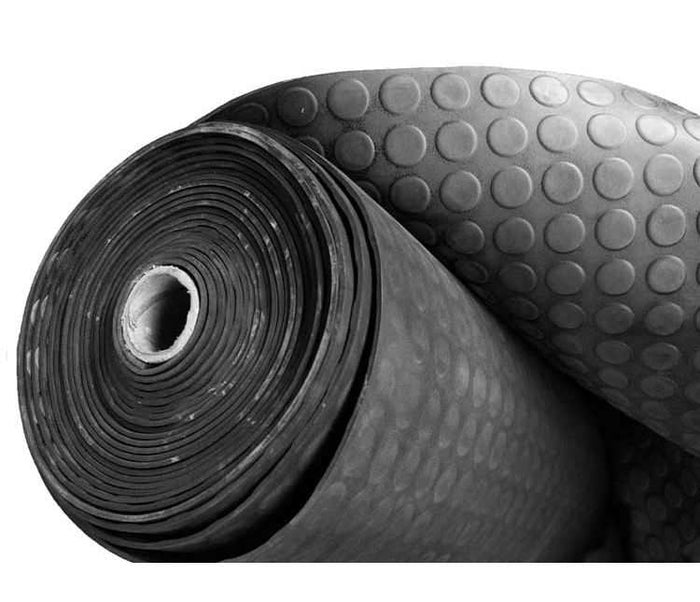
Penny Rubber Roll Matting
Price: £170.00
This robust matting features a distinctive 'penny' or 'coin' top surface pattern, providing excellent multi-directional slip resistance, crucial for high-traffic areas. Made from a durable SBR rubber compound, it offers good resistance to abrasion and everyday wear, ensuring a long service life. Its resilient nature also contributes to anti-fatigue benefits for standing workers and helps dampen noise and vibrations, creating a more comfortable and productive environment. Easy to clean and maintain, Penny Rubber Roll Matting is an economical choice for pathways, workstations, behind counters, or as general floor protection.
View Product DetailsInstallation and Maintenance Best Practices
Proper installation and consistent maintenance are key to maximising the lifespan and performance of your rubber roll matting. While often straightforward, adherence to best practices will ensure optimal functionality and appearance.
Installation Guidelines:
- Subfloor Preparation: Ensure the underlying floor is clean, dry, and free of debris, grease, or sharp objects. Any imperfections in the subfloor may show through or compromise the matting over time.
- Acclimatisation: Allow the rubber rolls to acclimate to the room temperature for at least 24-48 hours before installation. This helps prevent expansion or contraction issues post-installation.
- Laying the Matting: Unroll the matting slowly, ensuring it lies flat. For larger areas, consider using double-sided adhesive tape or a suitable floor adhesive, particularly around the edges and seams, to prevent movement and tripping hazards.
- Cutting to Size: Use a sharp utility knife or heavy-duty shears to cut the matting to fit around obstacles or conform to specific room dimensions. Always measure twice and cut once.
- Seaming: If multiple rolls are used, ensure seams are tightly butted together. For critical applications, cold weld seamers or sealing tapes can be used to create a more monolithic and waterproof surface.
Maintenance Tips:
- Regular Cleaning: Sweep or vacuum regularly to remove loose dirt and debris. This prevents abrasive particles from wearing down the surface.
- Spot Cleaning: For spills, wipe immediately with a damp cloth and mild detergent. Prompt action prevents staining and ensures hygiene.
- Deep Cleaning: Periodically, the matting can be thoroughly cleaned using a mop and bucket with a pH-neutral cleaner. Avoid harsh chemicals, as they can degrade the rubber over time.
- Drying: Ensure the matting is completely dry after wet cleaning, especially if it's not fully adhered, to prevent moisture accumulation underneath.
- Inspection: Regularly inspect for any signs of wear, tears, or damage. Address small issues promptly to prevent them from escalating and compromising the matting's performance and safety.
By following these straightforward guidelines, your rubber roll matting will continue to provide a safe, durable, and effective flooring solution, maximising your investment and supporting a high-performing UK workplace.
Real-World Applications and Success Stories
The theoretical benefits of rubber roll matting translate into tangible improvements in a multitude of real-world scenarios across the UK. Its adaptability means that businesses from diverse sectors can leverage its properties to overcome specific operational challenges and enhance their environments.
Manufacturing and Assembly Lines:
A busy automotive parts factory in the Midlands faced persistent issues with worker fatigue and slip hazards on its concrete floors. Implementing heavy-duty rubber roll matting along assembly lines significantly reduced physical strain on employees, leading to a noticeable decrease in musculoskeletal complaints and an uptick in hourly output. The textured surface of the matting also provided superior grip, especially in areas prone to oil residue, dramatically reducing minor slips and increasing overall workplace safety compliance.
Commercial Gyms and Fitness Centres:
A growing chain of gyms in London adopted high-density rubber roll matting for its free-weight areas and functional training zones. The mats provided excellent impact absorption, protecting the subfloor from dropped weights and significantly dampening the noise and vibrations that often disturb other areas of the gym. This not only extended the life of their expensive equipment but also created a more pleasant and professional atmosphere for members, enhancing their workout experience.
Retail and Hospitality Back-of-House:
A large supermarket chain in Scotland installed rubber roll matting in its packing areas, deli counters, and walk-in chillers. The matting’s anti-fatigue properties were invaluable for staff standing for long shifts, while its slip resistance proved critical in areas prone to spills. The ease of cleaning also ensured that hygiene standards, paramount in food handling environments, were consistently met without extensive labour.
Equestrian and Animal Care Facilities:
An equestrian centre in rural England replaced traditional concrete stable floors with robust, non-absorbent rubber roll matting. This provided superior cushioning for horses, reducing leg strain and improving comfort. The easy-to-clean, hygienic surface also simplified mucking out and helped to create a healthier environment, free from the build-up of moisture and bacteria, benefiting both the animals and the stable staff.
These examples illustrate that rubber roll matting is not merely a product but a foundational component that contributes significantly to safety, efficiency, and comfort, driving positive outcomes for a diverse range of UK businesses.
Frequently Asked Questions
Q1: How long does rubber roll matting typically last?
A1: The lifespan of rubber roll matting varies significantly based on its quality, thickness, material composition (e.g., natural rubber vs. SBR vs. nitrile), and the intensity of its application. High-quality industrial-grade rubber matting, properly installed and maintained, can easily last 5 to 10 years, and often much longer, even in heavy-traffic environments. Regular cleaning and prompt attention to any damage will help maximise its longevity.
Q2: Is rubber roll matting suitable for outdoor use in the UK?
A2: Yes, certain types of rubber roll matting are perfectly suited for outdoor use. Mats made from EPDM (Ethylene Propylene Diene Monomer) rubber are particularly well-regarded for their excellent resistance to UV radiation, ozone, and extreme weather conditions, making them ideal for the variable UK climate. When selecting outdoor matting, always confirm its weather-resistant properties with the supplier.
Q3: How do I clean and maintain rubber roll matting?
A3: Cleaning rubber roll matting is generally straightforward. For daily maintenance, sweep or vacuum to remove loose dirt and debris. For deeper cleaning, a mop and bucket with warm water and a mild, pH-neutral detergent will suffice. Avoid harsh chemicals, solvents, or abrasive cleaners, as these can degrade the rubber over time. Ensure the matting is thoroughly dried after wet cleaning, especially if it's not fully adhered to the floor.
Q4: Can rubber roll matting be cut to a specific size or shape?
A4: Absolutely. One of the key advantages of rubber roll matting is its flexibility for customisation. It can be easily cut to size or shape using a sharp utility knife or heavy-duty shears. This allows for seamless integration around fixed machinery, pillars, or to fit irregular room dimensions. Many suppliers, including Mats4U, also offer bespoke cutting services for precision and convenience.
Q5: What are the main differences between various rubber types used in roll matting (e.g., Natural, SBR, Nitrile)?
A5: Each rubber type has distinct characteristics. Natural Rubber offers superior elasticity, tensile strength, and anti-fatigue properties, making it excellent for general comfort, but it has limited resistance to oils and chemicals. SBR (Styrene Butadiene Rubber) is a synthetic rubber known for its good abrasion resistance, durability, and cost-effectiveness, widely used for general industrial purposes. Nitrile Rubber (Buna-N) excels in resistance to oils, greases, and many chemicals, making it indispensable in automotive workshops, kitchens, and labs. The choice depends entirely on the specific environmental challenges and performance requirements of your application.
Connect with Us:
Stay updated with the latest from Mats4U and connect with our community:
 Find us on Facebook
 Connect on LinkedIn


