



In countless environments, from bustling commercial premises to the quiet comfort of our homes across the UK, floor mats serve a vital purpose. They protect flooring, absorb moisture, capture dirt, and enhance aesthetics. However, a common and often overlooked problem is the tendency for mats to shift, wrinkle, or slide. This isn't just an unsightly inconvenience; a moving mat poses significant safety risks, leading to potential slips, trips, and falls. In workplaces, this can have serious legal and financial implications. Ensuring your mats remain securely in place is paramount for maintaining a safe, professional, and well-kept environment.
This comprehensive guide delves into the underlying reasons why mats move, illuminates the dangers associated with unstable flooring, and provides an arsenal of proven strategies and product solutions to secure your mats effectively. Whether you're dealing with entrance mats, anti-fatigue mats, or decorative rugs, we'll equip you with the knowledge to achieve unwavering stability.
Table of Contents
- Understanding Why Mats Move: The Root Causes of Slippage
- The Dangers of Unsecured Mats: More Than Just an Annoyance
- Proven Strategies to Prevent Mat Movement: A Comprehensive Toolkit
- Specific Solutions for Different Flooring Types
- The Importance of Professional Consultation and Custom Solutions
- Frequently Asked Questions (FAQs)
Understanding Why Mats Move: The Root Causes of Slippage

To effectively prevent mats from moving, it's crucial to understand the various factors that contribute to their instability. Slippage isn't usually due to a single cause but often a combination of environmental conditions, mat characteristics, and usage patterns.
Incompatible Flooring Surfaces
One of the primary culprits is the mismatch between the mat's backing and the floor surface it rests upon. Smooth, hard surfaces like polished concrete, tiles, laminate, or wooden floors offer little friction for standard mat backings. Conversely, a mat designed for hard floors might "creep" or buckle on carpeted surfaces if its backing isn't designed to grip carpet fibres.
Lack of Proper Backing Material
The material and design of a mat's backing are fundamental to its stability. Many low-quality or general-purpose mats come with smooth, rigid backings that simply don't offer enough grip. For optimal stability, mats require specialised backing materials such as:
- Nitrile Rubber: Highly effective on hard, smooth surfaces due to its superior grip and durability. It also resists oil, grease, and chemicals, making it ideal for industrial settings.
- Cleated or Gripper Backing: Features small, robust nubs designed to embed themselves into carpet fibres, preventing lateral movement.
- Suction Cup Design: Some specialised mats incorporate small suction cups that create a vacuum effect on very smooth, non-porous surfaces.
Inadequate Weight and Size
Lighter mats, particularly those with smaller dimensions, are more susceptible to movement. They lack the mass required to resist forces from foot traffic or even air currents from opening doors. Larger, heavier mats naturally offer more inherent stability simply due to their weight and expanded surface area in contact with the floor. Additionally, if a mat is too small for its intended area, it's more likely to be disturbed or kicked out of place.
Environmental Factors
The surrounding environment can significantly impact mat stability. Moisture is a major factor; wet floors can reduce the friction of even well-backed mats, creating a slippery layer between the mat and the surface. Temperature fluctuations can also cause some mat materials to expand or contract, potentially leading to buckling or loss of grip. Dust and debris accumulating beneath a mat can also act as a lubricant, enabling movement.
Foot Traffic and Usage Patterns
High-traffic areas inherently present a greater challenge for mat stability. Constant footfall, particularly from heavy boots or wheeled equipment, exerts significant force on mats. Mats placed at doorways often experience directional forces as people enter and exit, pushing the mat out of alignment. Even the simple act of cleaning or vacuuming can inadvertently shift a poorly secured mat.
The Dangers of Unsecured Mats: More Than Just an Annoyance

While a shifting mat might seem like a minor nuisance, the implications, especially in commercial or public settings, can be severe. Ignoring mat stability can lead to significant safety hazards, legal liabilities, and unnecessary costs.
Slip, Trip, and Fall Hazards
This is by far the most critical danger. When a mat slides, wrinkles, or bunches up, it creates an uneven surface or an unexpected obstacle. Pedestrians can easily lose their footing, resulting in falls that range from minor sprains to severe injuries like broken bones, head trauma, or chronic pain. These incidents are a leading cause of accidents in workplaces and public spaces, impacting both individuals and organisations.
Professional and Legal Implications (Workplace Safety, UK Regulations)
In the UK, employers have a legal obligation under the Health and Safety at Work Act 1974 and the Workplace (Health, Safety and Welfare) Regulations 1992 to ensure a safe working environment. This includes taking all reasonable steps to prevent slips, trips, and falls. An unsecured mat could be viewed as a direct failure to meet these obligations. Consequences can include:
- Fines and Penalties: Health and Safety Executive (HSE) investigations can lead to substantial fines for non-compliance.
- Personal Injury Claims: Individuals injured due to an unsecured mat can pursue legal action, resulting in significant compensation payouts and legal costs for the organisation.
- Reputational Damage: Incidents of injury can harm a company's reputation, affecting customer trust and employee morale.
It's not just workplaces; public venues, retail stores, and care homes also bear a similar responsibility to ensure public safety.
Premature Mat Wear and Tear
A mat that constantly moves, buckles, or gets kicked about will degrade much faster than one that stays put. Constant friction against the floor and repeated creasing will accelerate wear on both the mat's surface and its backing. This leads to reduced lifespan, requiring earlier replacement and increasing operational costs. Furthermore, a worn-out mat is less effective at its primary functions, such as dirt trapping or moisture absorption.
Aesthetic Disruption
While less critical than safety, the aesthetic impact of a constantly shifting mat should not be underestimated. A wrinkled or misaligned mat can make an otherwise pristine entrance or waiting area look untidy and unprofessional. This can negatively influence visitors' first impressions and detract from the overall appearance of your premises.
Proven Strategies to Prevent Mat Movement: A Comprehensive Toolkit

Securing your mats doesn't have to be a complex task. By implementing the right strategies and utilising appropriate products, you can significantly enhance stability and safety. Here are the most effective methods:
Choosing the Right Mat for the Right Location
Prevention starts with selection. Always consider the specific environment and flooring type when choosing a mat:
- For Hard Floors: Look for mats with durable nitrile rubber backing. This material offers superior grip on smooth surfaces and is often resistant to oils and chemicals, making it suitable for high-traffic or industrial areas.
- For Carpeted Surfaces: Opt for mats with a cleated or 'gripper' backing. These small, robust nubs are designed to interlock with carpet fibres, anchoring the mat firmly in place without causing damage.
- Heavy-Duty Options: For very high traffic or demanding industrial environments, invest in heavier, thicker mats that are less prone to being shifted by footfall or equipment.
Utilising High-Quality Underlays and Grippers
Even with a good mat backing, an additional layer of grip can provide extra security, especially for existing mats or rugs. Underlays are an indispensable tool for preventing movement.
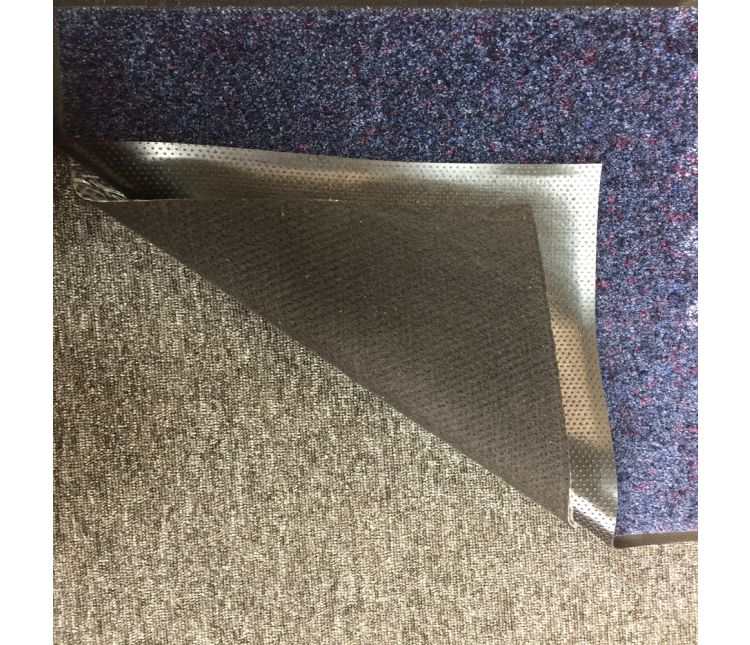
Teebaud Non-Skid Anti-Slip Mat and Rug Underlay
The Teebaud Non-Skid Anti-Slip Mat and Rug Underlay offers an unparalleled solution for keeping your mats and rugs firmly in place on various floor types. Crafted from a superior blend of polyester fibres coated with a plasticiser, this underlay creates a strong, yet gentle, gripping action without damaging your flooring. It's incredibly thin, making it almost invisible, and can be easily cut to size, ensuring a perfect fit for any mat. Ideal for both hard floors and carpets, Teebaud prevents dangerous slips and trips, extending the life of your mats by reducing movement-related wear and tear. It's washable, reusable, and provides excellent air circulation, protecting your floors from potential moisture build-up.
Price: £12.00
View ProductProducts like the Teebaud underlay are versatile, working effectively on both hard floors and carpets. They create a strong, invisible bond without being sticky or causing damage, making them a popular choice for achieving superior mat stability.
Implementing Mat Tapes and Adhesives
For a more permanent or robust solution, especially in areas with very high traffic or persistent mat movement, mat tapes and adhesives can be highly effective. Double-sided mat tape adheres the mat directly to the floor. While effective, it's important to choose tapes specifically designed for flooring to avoid residue or damage upon removal. For areas where a mat needs to be absolutely immovable, certain floor adhesives can be used, though these typically represent a semi-permanent installation.
Strategically Placing Furniture or Heavy Objects
In some scenarios, particularly with larger area rugs or mats in less traffic-intensive zones, placing furniture partially onto the mat can anchor it effectively. The weight of a sofa, desk, or display unit along the edges of a mat can prevent it from shifting. This method is more suitable for aesthetic rugs than critical safety mats in high-traffic commercial spaces.
Regular Maintenance and Cleaning
A clean mat and a clean floor are essential for maintaining grip. Dust, dirt, and debris that accumulate underneath a mat can act as a lubricant, reducing friction and allowing the mat to slide. Regularly lifting and cleaning both the mat's underside and the floor beneath it will ensure optimal contact and grip. For mats with specialised backings, ensure they are cleaned according to manufacturer instructions to preserve their gripping properties.
Edge Ramps and Bevelled Edges for Safety
While not a direct method to stop a mat from moving, mats with integrated edge ramps or bevelled edges significantly reduce the trip hazard posed by the mat's perimeter. These sloped edges create a smooth transition from the floor to the mat, making it less likely for people to trip even if the mat shifts slightly. Many industrial and commercial mats come with this feature as standard, enhancing overall safety.
Commercial-Grade Matting Solutions
For businesses, investing in purpose-built commercial-grade matting can be the most effective long-term solution. These mats are often heavier, feature superior anti-slip backings, and are designed to withstand extreme traffic and environmental conditions. Many are also custom-sized to fit specific areas, eliminating gaps and reducing the potential for movement. From entrance mats designed to scrape dirt and absorb moisture to anti-fatigue mats that stay put in demanding factory settings, a tailored commercial solution often provides the best balance of safety, durability, and performance.
Specific Solutions for Different Flooring Types
The type of flooring you have plays a crucial role in determining the most effective anti-slip strategy. What works wonders on carpet might be ineffective or even detrimental on a hard floor.
Hard Floors (Tile, Wood, Laminate, Vinyl)
Hard floors are notoriously slippery for mats with inadequate backing. For these surfaces, the goal is to maximise friction and adhesion without damaging the floor.
- Nitrile Rubber Backing: Mats specifically designed with a heavy-duty nitrile rubber backing provide excellent grip. The natural properties of nitrile rubber create strong surface tension, keeping the mat in place.
- High-Quality Underlays: As highlighted with the Teebaud underlay, a good non-skid underlay acts as an invisible anchor. It's designed to grip both the mat above and the hard floor below without adhesives or residue.
- Double-Sided Mat Tape: For areas where movement is absolutely intolerable, a specific flooring-grade double-sided tape can temporarily or semi-permanently secure the mat. Always test a small, inconspicuous area first to ensure no residue or damage occurs upon removal.
- Suction Technology: Some newer mat designs incorporate miniature suction cups on their backing, offering a powerful hold on very smooth, non-porous hard floors.
Carpeted Surfaces
Preventing mats from moving on carpets requires a different approach. Here, the challenge is to prevent the mat from 'creeping' or 'walking' across the soft, fibrous surface.
- Cleated or Gripper Backing: This is the gold standard for carpeted areas. The small, rigid nubs on the mat's underside dig into the carpet pile, providing an anchor that resists movement in any direction.
- Carpet Underlays: Specialised underlays designed for carpeted floors often feature a slightly textured or rubberised surface on one side to grip the mat, and a material on the other side that effectively 'locks' into the carpet fibres. These are excellent for area rugs or mats that don't come with integrated gripper backing.
- Heavy Mats: While not a primary solution, heavier, thicker mats are less prone to being shifted by foot traffic on carpeted surfaces than lighter alternatives.
Outdoor and Entrance Areas
Outdoor mats face additional challenges, including exposure to weather, extreme temperatures, and heavy dirt loads. Their stability is crucial for safety as people transition from outside to inside.
- Heavy-Duty Rubber Mats: These are often made from thick, durable rubber compounds, providing significant weight and inherent anti-slip properties. They are designed to withstand harsh weather and intense foot traffic.
- Drainage Holes and Channels: Many outdoor mats feature drainage systems that prevent water from pooling on or under the mat, which could reduce grip. By allowing water to pass through, the mat maintains better contact with the ground.
- Recessed Mat Wells: The most secure solution for entrance areas is often a custom-fitted mat well, where the mat sits flush with the surrounding floor. This eliminates edges that could curl or trip hazards, and the mat's tight fit prevents almost any movement.
- Ground Anchoring: In some outdoor industrial or public settings, mats can be temporarily or permanently anchored to the ground using pins or adhesives, though this is less common for standard commercial entrance mats.
For more insights into managing various matting challenges, including how to select the right mat for specific environments, you might find our previous comprehensive guide helpful: How to Stop Mats From Moving: The Ultimate Guide to Safe and Stable Flooring. It offers additional perspectives and practical tips that complement the strategies discussed here.
The Importance of Professional Consultation and Custom Solutions
While the strategies outlined above offer robust solutions, every environment presents its own unique set of challenges. This is particularly true for commercial and industrial settings where safety standards are stringent and traffic patterns are complex. Engaging with matting specialists can make a significant difference in achieving optimal mat stability and compliance.
Tailored Advice for Unique Environments
A professional matting supplier or consultant can assess your specific premises, identify potential slip hazards, analyse traffic flow, and recommend solutions perfectly tailored to your needs. They can advise on the best mat types, backing materials, and securing methods for areas with specific requirements, such as food preparation zones, wet industrial areas, or high-traffic retail entrances. Their expertise ensures that you don't just guess at a solution but implement one that is proven and effective for your unique circumstances.
Ensuring Compliance with Safety Standards
For businesses in the UK, adhering to health and safety regulations is not optional. Specialists understand the intricacies of legislation like the Health and Safety at Work Act 1974 and the Workplace (Health, Safety and Welfare) Regulations 1992. They can help you select and deploy matting solutions that not only stop movement but also contribute to a fully compliant and safe working or public environment. This peace of mind is invaluable, protecting your organisation from potential legal repercussions and safeguarding the well-being of your employees and visitors.
Long-Term Cost-Effectiveness
Investing in high-quality, properly secured mats, guided by expert advice, often proves to be more cost-effective in the long run. By preventing slips and falls, you mitigate the risk of expensive personal injury claims, lost workdays, and rising insurance premiums. Furthermore, correctly chosen and secured mats last longer, reducing the frequency and cost of replacement. They also protect your underlying flooring, saving on maintenance and repair expenses. A stable mat is a mat that performs its job efficiently and economically for years to come.
Whether you're looking to safeguard a single entrance or overhaul your entire matting strategy, seeking professional guidance ensures that your mats remain steadfast, contributing to a safer, cleaner, and more professional environment for everyone.
Frequently Asked Questions (FAQs)
Q1: Why do my mats keep moving even if they have a rubber backing?
A1: While rubber backing generally provides good grip, several factors can still cause movement. The type of rubber (e.g., natural rubber vs. nitrile rubber) makes a difference, with nitrile offering superior grip on hard floors. The condition of the floor (dusty, wet, oily) can reduce friction. The mat's weight, the intensity of foot traffic, and the specific texture of your floor can also play a role. Using a high-quality underlay like Teebaud, or ensuring the mat has a proper cleated backing for carpets, can significantly improve stability.
Q2: Can I use regular double-sided tape to stop my mats from moving?
A2: It's generally not recommended to use regular double-sided tape, especially on delicate flooring. Standard tapes can leave sticky residue, damage floor finishes (like wood or laminate), or even lift paint or sealants when removed. Always opt for specialist mat or rug tape designed for flooring, which uses a gentler adhesive that is strong enough to hold the mat but safe for your floors. Alternatively, consider an underlay which provides grip without adhesive.
Q3: How often should I clean under my mats to prevent movement?
A3: The frequency depends heavily on the traffic level and the environment. In high-traffic commercial areas, cleaning under mats weekly or bi-weekly is advisable. For lower-traffic areas or homes, monthly cleaning might suffice. The key is to prevent the build-up of dust, dirt, and debris, which can act as a lubricant and reduce the mat's grip. Regular cleaning also helps maintain the integrity of the mat's backing.
Q4: Are anti-slip sprays effective for keeping mats in place?
A4: Anti-slip sprays can offer a temporary solution, but their effectiveness varies greatly. They often work by creating a textured, slightly sticky film on the mat's backing or the floor. However, this film can wear off quickly in high-traffic areas, requiring frequent reapplication. Some sprays might also leave residue or affect the floor finish over time. For long-term, reliable stability, an underlay, appropriate mat backing, or mat tape is usually a more robust solution.
Q5: Will a heavier mat always stay in place better than a lighter one?
A5: While a heavier mat generally offers more inherent stability due to its mass, weight alone isn't the sole factor. A mat's backing material and its compatibility with the floor surface are equally, if not more, important. A lightweight mat with an excellent anti-slip backing can often outperform a heavy mat with a poor or inappropriate backing. The ideal solution combines adequate weight with a high-friction, purpose-designed backing.
Q6: Can I use the same solution for mats on hard floors and carpets?
A6: Not typically. Solutions that work well on hard floors often fail on carpets, and vice-versa. Hard floors benefit from smooth, high-friction backings (like nitrile rubber) or underlays that adhere without being sticky. Carpets, however, require backings with 'grippers' or 'cleats' that penetrate the carpet fibres to prevent movement. Some versatile underlays, like Teebaud, are designed to work effectively on both, but it's crucial to check product specifications for compatibility with your specific flooring type.
At Mats4U, we are dedicated to providing the highest quality matting solutions for every need. Explore our extensive range of anti-slip mats, underlays, and safety flooring options on our website to ensure your premises are as safe and stable as possible. For further discussions or bespoke solutions, connect with us on social media:
Follow us on Facebook
Connect with us on LinkedIn


