



Choosing the right matting is an important part of creating a safe, accessible and practical entrance. For wheelchair users, a mat must do more than simply trap dirt. It needs to allow smooth movement, stay securely in place, reduce the risk of slipping, and avoid creating an unnecessary obstacle at the doorway.
In many homes, offices, healthcare facilities, schools, retail spaces and public buildings, entrance mats are used to control dirt and moisture. However, not every mat is suitable for wheeled access. A mat that is too thick, too loose, too soft, badly positioned or poorly backed can make movement more difficult for wheelchair users, mobility scooter users, pushchairs and trolleys.
This guide explains what makes a mat wheelchair friendly, which features to look for, and why Tri Grip Heavy-Duty Mats are one of the strongest choices for accessible entrance matting. It also looks at other relevant Mats4U options for different entrances, traffic levels and floor types.
Table of Contents
- What Does Wheelchair Friendly Matting Mean?
- Why Accessible Matting Matters
- Common Matting Problems for Wheelchair Users
- Key Features to Look for in Wheelchair Friendly Mats
- Entrance Matting and Accessibility in Busy Buildings
- Why Tri Grip Heavy-Duty Mats Are a Strong Choice
- Recommended Wheelchair Friendly Mat Options
- Where Wheelchair Friendly Mats Are Most Useful
- How to Choose the Right Mat for Your Space
- Maintenance Tips for Accessible Matting
- Frequently Asked Questions About Wheelchair Friendly Mats
What Does Wheelchair Friendly Matting Mean?

Wheelchair friendly matting is matting that allows wheelchair users to move across it smoothly and safely without the wheels sinking, catching, dragging or becoming restricted. It should offer enough surface stability for easy movement while still performing its main job of trapping dirt and moisture.
A good wheelchair friendly mat should be firm enough to support wheeled traffic, low enough to avoid creating a step-like edge, and stable enough to remain in place during use. It should also be suitable for the floor surface underneath, whether that is carpet, tiles, vinyl, laminate, concrete or another hard floor finish.
Wheelchair friendly mats are not only useful for wheelchair users. The same features often benefit mobility scooter users, walking frame users, people using crutches, parents with pushchairs, staff moving trolleys, and visitors who need a smoother and safer entrance.
It Is About More Than Mat Thickness
Low profile matting is important, but thickness is only one part of the decision. A mat also needs suitable backing, strong edges, a stable surface and the right pile construction. A very thin mat may still move, curl or wrinkle if it is not made properly, while a thicker commercial mat may still be practical if it has a stable construction and bevelled or well-finished edges.
It Must Still Control Dirt and Moisture
Accessibility should not come at the cost of performance. Entrance matting still needs to scrape dirt from footwear, absorb moisture and protect surrounding floors. The aim is to choose a mat that supports easy movement while still keeping the entrance cleaner, drier and more presentable.
Why Accessible Matting Matters

Accessible matting helps create a more inclusive and practical environment. In public and commercial spaces, customers, staff and visitors should be able to move through entrances, corridors and reception areas with as little difficulty as possible. The wrong mat can make a doorway feel awkward, unsafe or poorly planned.
For wheelchair users, small obstacles can make a big difference. A mat that slides forward, bunches up, catches under the wheels or has a raised edge can interrupt movement and create unnecessary frustration. In busy entrances, this can also affect safety because other people may be walking through the same area at the same time.
Better Access for More Users
A wheelchair friendly mat can improve access for a wide range of people. It supports smoother movement for wheeled mobility equipment, but it also helps with pushchairs, delivery trolleys and wheeled bags. In many commercial spaces, this makes the entrance more practical for everyday use.
Cleaner Floors Without Creating Barriers
Every entrance still needs effective dirt and moisture control. Without matting, wet footwear can create damp patches and dirt can spread through the building. The correct mat helps manage this without creating a barrier to accessibility.
Improved Presentation and Professionalism
An entrance should feel clean, safe and easy to use. A mat that constantly moves, curls or gets caught under wheels can make the building feel poorly maintained. Choosing the correct accessible matting helps create a more professional first impression.
Common Matting Problems for Wheelchair Users

Many matting issues only become obvious once the mat is in regular use. A product may look suitable at first glance, but if it is not designed for wheeled access, it may quickly become inconvenient or unsafe.
Loose Mats That Move Out of Place
One of the most common problems is movement. If a mat slides, creeps or shifts when a wheelchair moves over it, the user may have to work harder to cross the mat. Movement can also create uneven edges or gaps around the entrance.
Edges That Curl or Lift
Curling edges can create a hazard for both wheelchair users and pedestrians. Wheels may catch on a raised corner, and people walking over the mat may trip. This is especially common with cheaper mats, worn mats or mats placed on unsuitable floor surfaces.
Soft or Deep Pile Surfaces
A very soft or deep pile mat can increase rolling resistance. This means the wheelchair may not glide easily across the surface. A denser, firmer commercial mat is usually better because it supports smoother movement while still trapping dirt and moisture.
Mats That Are Too Thick for the Entrance
If the mat creates a noticeable height change, it may be harder for wheelchair users to cross. This is especially important at doorways, transitions, corridors and lift entrances where movement needs to be smooth and predictable.
Incorrect Backing for the Floor Type
A mat designed for carpet may not work properly on a hard floor, and a mat designed for hard floors may not grip correctly on carpet. Choosing the wrong backing can cause movement, wrinkling or poor stability.
Undersized Mats
A mat that is too small may not stay stable under wheeled movement and may not provide enough surface area for effective dirt and moisture control. In busy entrances, a larger mat can provide better coverage and a smoother transition.
Key Features to Look for in Wheelchair Friendly Mats

When selecting wheelchair friendly mats, the best choice is usually one that combines accessibility, stability, durability and entrance performance. The following features are especially important.
Low or Manageable Profile
A wheelchair friendly mat should not create a difficult height change. Low-profile mats are often easier for wheelchair users, but the mat must still be strong enough to trap dirt and withstand traffic. Where a thicker mat is used, the edges and placement become especially important.
Stable Backing
The backing should help the mat remain in place. Flat backing is usually suited to hard floors, while gripper backing is designed for carpeted surfaces. Matching the backing to the floor helps prevent slipping, creeping and curling.
Firm Surface Construction
A firm, dense surface allows wheels to move more easily than a loose or overly soft pile. Commercial entrance mats with tightly constructed fibres are often better suited to wheelchairs than deep, fluffy or decorative mats.
Slip Resistance
Matting should support stable movement for both pedestrians and wheelchair users. Slip-resistant backing and a stable surface help reduce unnecessary movement and improve safety around the entrance.
Moisture Absorption
Wheelchair friendly matting still needs to deal with water brought in on shoes and wheels. A mat that absorbs moisture helps reduce wet patches on surrounding floors and supports a cleaner indoor environment.
Dirt Trapping
Entrance mats should capture dirt and debris before it spreads further indoors. This is especially important in public buildings, healthcare settings, schools, offices and retail spaces where many people pass through daily.
Correct Size
The mat should be large enough to cover the natural route of travel. A small mat at the edge of a doorway may not offer enough stability or dirt control. In larger entrances, a longer matting run may be more effective and easier to cross smoothly.
Entrance Matting and Accessibility in Busy Buildings
Busy buildings need entrance matting that works for everyone. In offices, hospitals, care homes, schools, hotels, retail spaces and public buildings, users may include wheelchair users, visitors with walking aids, parents with pushchairs, staff with trolleys and delivery teams carrying goods.
In these settings, matting should be treated as part of the overall access route. It should not create an obstacle, move under pressure or make the doorway feel difficult to use. At the same time, it must control dirt and moisture effectively enough to keep the surrounding floor cleaner and safer.
Entrances and Receptions
Entrances and reception areas often carry the highest level of foot and wheeled traffic. These areas need durable mats that can withstand repeated use while maintaining a smart appearance. A poor-quality mat may wear quickly, flatten or shift out of place.
Corridors and Walkways
Corridors should remain easy to navigate. If matting is used in corridors or walkways, it should be flat, stable and appropriate for the width of the route. Mats should not narrow the usable pathway or create uneven surfaces.
Lift Areas
Lift entrances require smooth access because users may need to turn, stop and move carefully in a smaller space. A stable, low-profile mat can be useful, but loose or curling mats should be avoided.
Healthcare and Care Environments
Healthcare buildings, clinics and care homes often have higher accessibility requirements because many users may rely on mobility aids. In these spaces, matting should be carefully selected to support easy movement, safety and hygiene-focused maintenance.
Why Tri Grip Heavy-Duty Mats Are a Strong Choice
Tri Grip Heavy-Duty Mats are a strong option for wheelchair friendly matting because they combine durability, stability, moisture control and a firm commercial-grade surface. They are designed for busy entranceways, lobbies, corridors, walkways, lift interiors, schools, hotels, hospitals, offices and public sector buildings, making them suitable for many environments where accessibility matters.
The mat surface is made from a densely tufted, heat-set twisted pile using ECONYL® regenerated nylon. This helps provide strong dirt scraping, moisture absorption and long-term resilience. For wheelchair use, this type of dense, durable construction is helpful because the surface is not overly soft or loose, supporting smoother wheeled movement compared with many deep-pile decorative mats.
Heavy-Duty Construction
Wheelchairs place repeated pressure on matting, especially in entrances where users turn, stop, accelerate or move across the same route each day. A heavy-duty mat is better suited to this type of use than a lightweight mat that may wrinkle, flatten or move out of position.
Stable Backing Options
Tri Grip Heavy-Duty Mats are available with flat backing for hard floors or gripper backing for carpeted floors. This is important because the correct backing helps keep the mat stable on the surface underneath. A mat that stays in position is easier and safer for wheelchair users to cross.
Dirt and Moisture Control
The mat is designed to handle dirt and moisture in high-footfall areas. This makes it useful for entrances where wheelchair users, pedestrians and other wheeled traffic may all be moving through from outdoor areas. Effective moisture control helps reduce wet transfer onto surrounding floors.
Custom Size Options
Tri Grip Heavy-Duty Mats are available in a wide range of colours and sizes, including custom lengths. This makes it easier to cover larger entrance areas or create a longer matting route where wheelchair users can move smoothly without immediately rolling off the mat onto wet or dirty flooring.
Professional Appearance
Accessible matting still needs to look suitable for the building. Tri Grip Heavy-Duty Mats offer a clean commercial appearance, making them suitable for offices, public buildings, healthcare facilities, hospitality spaces and professional entrances where both performance and presentation matter.
Recommended Wheelchair Friendly Mat Options
The best wheelchair friendly mat depends on the environment, traffic level, floor surface and the type of dirt or moisture being controlled. The following Mats4U options are suitable for different accessible entrance matting requirements.


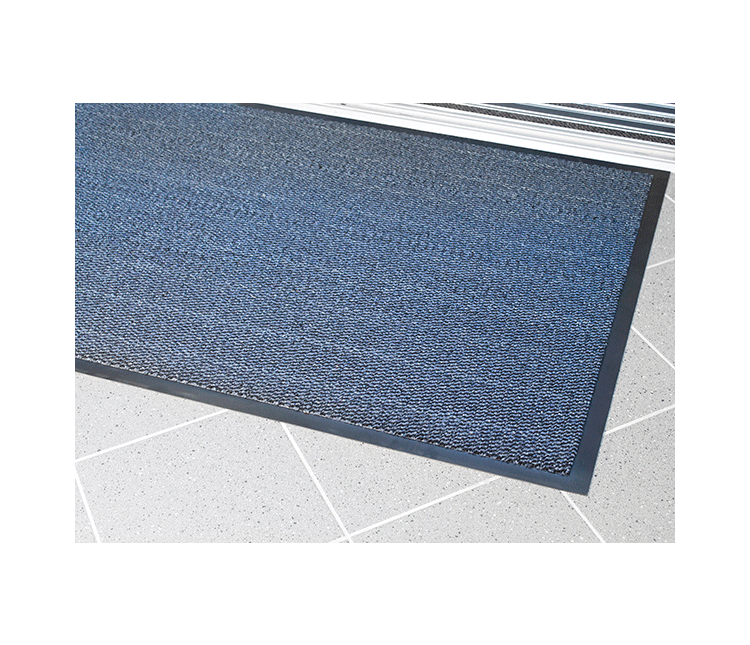

For more options, the wider Entrance Mats collection includes indoor entrance mats, heavy-duty mats, WaterHog mats, washable mats and made-to-measure options for different building types and traffic levels.
Where Wheelchair Friendly Mats Are Most Useful
Wheelchair friendly mats are useful in any space where access, safety and floor protection all matter. They are especially important where people move between outdoor and indoor areas, or where wheeled movement forms part of daily building use.
Commercial Entrances
Offices, reception areas and commercial entrances need matting that looks professional while supporting safe and easy movement. Wheelchair friendly mats help control dirt and moisture without making the entrance difficult to cross.
Healthcare Facilities
Hospitals, clinics, care homes and treatment centres often need matting that supports wheelchair users, mobility aids and wheeled equipment. Stable, low-profile and easy-to-clean matting is particularly important in these environments.
Schools, Colleges and Universities
Educational buildings experience steady foot traffic, pushchairs, wheelchairs, trolleys and occasional equipment movement. Durable entrance mats help protect floors while supporting accessible movement around entrances and corridors.
Retail Spaces
Retail spaces should be welcoming and easy to enter. A mat that catches under wheelchair wheels or shifts at the doorway can affect the customer experience. A stable, wheelchair friendly entrance mat helps create a better arrival point.
Hotels and Hospitality Venues
Hotels, restaurants and leisure venues need entrance matting that looks smart and performs reliably. Wheelchair friendly matting helps keep entrances clean while supporting a smoother experience for all visitors.
Homes and Residential Entrances
Domestic entrances can also benefit from accessible matting, particularly where a household member or regular visitor uses a wheelchair, mobility scooter, walking frame or pushchair. The right mat helps keep floors clean without creating an obstacle.
How to Choose the Right Mat for Your Space
The best wheelchair friendly mat will depend on the type of entrance, the floor surface, the level of traffic and whether the mat needs to handle moisture, dirt, wheeled access or all three.
Check the Floor Surface
Start by identifying whether the mat will sit on carpet or a hard floor. Hard floors usually need flat backing, while carpeted surfaces may require gripper backing. Using the correct backing helps the mat remain stable during wheelchair movement.
Consider How Much Traffic the Area Receives
A busy public entrance needs a more durable mat than a quiet domestic doorway. For high-traffic environments, a heavy-duty option such as Tri Grip Heavy-Duty Mats is usually more suitable. For lighter traffic, Plush Vinyl Backed Mats may be enough.
Look at the Direction of Wheelchair Movement
If wheelchair users will turn, stop or change direction on the mat, stability becomes even more important. The mat should be large enough to support movement without bunching or shifting.
Think About Moisture Levels
If the entrance is exposed to wet weather, choose a mat with good absorption and dirt trapping. This helps reduce wet transfer from footwear and wheels onto the surrounding floor.
Choose the Correct Size
The mat should cover the main route of travel. If it is too small, wheelchair users may roll partly on and partly off the mat, which can feel uneven and reduce effectiveness. Larger mats can create a smoother and more controlled entrance area.
Avoid Loose or Unstable Decorative Mats
Decorative mats may look appealing, but many are not designed for wheelchairs or commercial access routes. Avoid mats that are lightweight, curled, deep-pile, wrinkled or likely to move during use.
Maintenance Tips for Accessible Matting
Wheelchair friendly mats need regular maintenance to remain safe and effective. Dirt, moisture and wear can all affect performance over time.
Vacuum Regularly
Regular vacuuming removes dry dirt and debris from the mat surface. This helps the mat continue trapping more dirt and prevents particles from building up in the pile.
Remove Moisture Build-Up
During wet weather, check mats more often. If a mat becomes heavily saturated, it may need drying or cleaning to maintain performance and reduce wet transfer onto surrounding floors.
Check That the Mat Lies Flat
Inspect the mat for curling edges, lifted corners or movement. A mat that does not lie flat is not suitable for an accessible route and should be corrected or replaced.
Inspect for Wear
Look for flattened pile, damaged backing, frayed edges or areas that have lost stability. Wheelchair movement can place repeated pressure on the same path, so high-use areas should be checked regularly.
Clean According to Product Guidance
Different mats have different care requirements. Some may need regular vacuuming only, while others can be cleaned with mild detergent, extraction cleaning or other appropriate methods. Following product guidance helps extend the life of the mat.
Replace Mats When They Stop Performing
If a mat no longer stays flat, no longer traps dirt effectively, or has become difficult to cross, replacement may be the safest and most practical option.
Frequently Asked Questions About Wheelchair Friendly Mats
Q1: What makes a mat wheelchair friendly?
A1: A wheelchair friendly mat should be stable, firm, low or manageable in profile, suitable for the floor surface and easy for wheels to move across. It should not bunch, curl, slide or create a difficult edge at the doorway.
Q2: Are Tri Grip Heavy-Duty Mats wheelchair friendly?
A2: Yes, Tri Grip Heavy-Duty Mats are a strong option for wheelchair friendly entrance matting. They offer a dense commercial-grade surface, durable backing options and good dirt and moisture control for busy indoor spaces.
Q3: Are low-profile mats always the best choice for wheelchairs?
A3: Low profile is important, but it is not the only factor. The mat must also be stable, firm, correctly backed and suitable for the amount of traffic in the area. A thin mat that moves or curls is not a good wheelchair friendly option.
Q4: Can wheelchair friendly mats still absorb water?
A4: Yes. Many wheelchair friendly entrance mats are designed to absorb moisture while still allowing smooth movement. Tri Grip mats and WaterHog mats are examples of entrance matting options that support dirt and moisture control.
Q5: What backing should I choose for wheelchair friendly mats?
A5: The backing should match the floor surface. Flat backing is generally used on hard floors, while gripper backing is used on carpeted floors. Choosing the correct backing helps reduce mat movement.
Q6: Are deep pile mats suitable for wheelchairs?
A6: Deep, soft or loose pile mats are usually not ideal because wheelchair wheels can sink or drag, making movement harder. A firmer, denser commercial mat is normally more suitable.
Q7: Can entrance mats be used in care homes and healthcare settings?
A7: Yes. Entrance mats can be very useful in care homes, clinics, hospitals and healthcare settings, provided they are stable, easy to maintain and suitable for wheelchair users and other mobility aids.
Q8: What is the best wheelchair friendly mat for high-traffic areas?
A8: Tri Grip Heavy-Duty Mats are one of the best choices for high-traffic wheelchair friendly areas because they are designed for commercial use, moisture control, durability and stability.
Q9: How do I stop a mat moving under wheelchair wheels?
A9: Choose the correct backing for the floor surface, use the correct mat size, and make sure the mat is placed on a clean, dry and suitable floor. If a mat still moves, it may not be the right product for that area.
Q10: Where can I buy wheelchair friendly mats?
A10: Mats4U offers a range of entrance mats suitable for different accessibility needs, including Tri Grip Heavy-Duty Mats, Tri Grip Standard Mats, Plush Vinyl Backed Mats and WaterHog entrance matting options.


