



For decades, metal entrance mat systems have been perceived as the ultimate choice for high-traffic commercial environments. Their robust appearance often suggests unparalleled durability and effectiveness in scraping dirt from footwear. However, a closer look reveals that this perception often masks a host of significant drawbacks, especially when viewed through the lens of modern safety standards, aesthetic expectations, and long-term cost-effectiveness in the UK.
In today's dynamic commercial landscape, businesses are increasingly seeking entrance solutions that not only perform their primary function of preventing dirt and moisture ingress but also contribute positively to safety, accessibility, and brand image. This comprehensive guide will delve into the critical reasons why traditional metal entrance mat systems are falling out of favour and introduce superior, high-performance alternatives that are better suited to the demands of contemporary UK businesses. From enhanced safety features to superior dirt and moisture control, and from environmental sustainability to versatile design options, we'll explore why upgrading your entrance matting is not just an aesthetic choice, but a strategic business decision.
Table of Contents
- The Allure and Illusion of Metal Entrance Mat Systems
- Debunking the Myths: Why Metal Systems Fall Short in Modern Environments
- The Superior Alternatives: Modern Matting Solutions for UK Businesses
- Beyond the Mat: A Holistic Approach to Entrance Matting Strategy
- Making the Informed Choice: Investing in Safety, Aesthetics, and ROI
- Frequently Asked Questions
The Allure and Illusion of Metal Entrance Mat Systems
When one imagines a heavy-duty entrance mat, often the image of a rigid, gridded metal system comes to mind. These systems have historically been lauded for their perceived strength and ability to withstand significant foot traffic. Businesses, particularly those with industrial or high-volume entrances, might initially gravitate towards metal entrance mat systems, believing them to be the most resilient and effective solution for preventing the spread of dirt and debris indoors. The robust, industrial aesthetic is often equated with longevity and a premium feel, making them a common choice in airports, shopping centres, and large corporate buildings across the UK.
The underlying assumption is that metal, being a hard-wearing material, provides an indestructible barrier against external contaminants. Proponents might highlight their ability to scrape off large particles of mud and grit from shoes. Furthermore, the argument for their longevity is often presented as a key selling point, suggesting that while the initial investment might be higher, the long-term costs will be lower due to their supposed imperviousness to wear and tear. However, this perspective often overlooks the practical realities and hidden costs that emerge over time, leading to a false sense of security and efficiency. As we delve deeper, it becomes clear that the initial allure of metal matting can quickly give way to a multitude of operational challenges and safety concerns that modern businesses simply cannot afford to ignore.
Debunking the Myths: Why Metal Systems Fall Short in Modern Environments
While metal entrance mat systems might appear impressive initially, their practical application in contemporary environments reveals significant limitations. Modern businesses in the UK require solutions that are not only durable but also safe, aesthetically pleasing, and easy to maintain. In these crucial areas, metal systems often fall drastically short.
Safety Hazards: A Slippery Slope
Perhaps the most critical drawback of metal entrance mat systems is their inherent safety risk. Unlike advanced textile mats designed to absorb moisture, metal surfaces offer very little friction, especially when wet. Rain, snow, or even condensation can transform a metal mat into a treacherous hazard, significantly increasing the risk of slips, trips, and falls for visitors and employees alike. The smooth, hard surface provides minimal grip, creating a dangerous pathway that can lead to serious injuries. The Health and Safety Executive (HSE) in the UK places a strong emphasis on maintaining safe walking surfaces, and metal mats frequently undermine this objective.
Furthermore, the design of many metal systems, featuring grates or slats, can pose significant tripping hazards. Gaps between metal strips, or areas where the mat may have shifted or become uneven due to heavy traffic, can easily catch heels, crutches, or even the small wheels of luggage or trolleys. This is particularly problematic for individuals with mobility issues or those using wheelchairs, creating accessibility barriers rather than solutions. Over time, metal edges can also become worn, sharp, or protrude, leading to cuts or scrapes. The loud, clanking noise generated by footsteps on metal mats can also be a distraction, further contributing to an unsafe and unpleasant entrance experience. For any facility manager or business owner, mitigating such risks is paramount, and the safety track record of metal mats is a significant cause for concern.
Aesthetic Limitations and Maintenance Nightmares
The visual appeal of an entrance mat plays a vital role in forming a first impression of a business. Unfortunately, metal entrance mat systems often struggle to meet modern aesthetic standards. Their industrial, utilitarian look can appear cold, unwelcoming, and outdated, clashing with contemporary interior designs that favour warmth, sophistication, and a more integrated approach to branding. As they age, metal systems are prone to corrosion, rust, and tarnishing, especially in environments exposed to moisture or de-icing salts during winter, further diminishing their appearance and professionalism.
Beyond aesthetics, the maintenance of metal mats is notoriously challenging. Their intricate grates and channels are excellent at trapping dirt and debris, but this very feature makes them incredibly difficult to clean thoroughly. Soil, grit, and moisture accumulate in hard-to-reach crevices, becoming breeding grounds for bacteria and odours. Removing these heavy systems for deep cleaning is often a labour-intensive process requiring specialist equipment, disrupting daily operations and incurring significant labour costs. Unlike easily vacuumed or machine-washed textile mats, metal systems require cumbersome procedures that make regular, effective cleaning a rare and costly endeavour, ultimately compromising hygiene and the overall cleanliness of the entrance area.
Durability and Longevity: A Questionable Investment
While metal is often associated with durability, its application in entrance matting doesn't always translate to superior longevity or a wise investment. The constant impact of heavy foot traffic, coupled with the weight of the mats themselves, can cause significant wear and tear not only on the mat components but also on the underlying flooring. Metal edges can scratch, dent, or even damage expensive floor finishes over time, leading to costly repairs that far outweigh any perceived savings from the mat's 'durability'.
Furthermore, individual metal slats or sections within a system can become loose, warped, or damaged, necessitating costly replacements that often require specific custom parts. Unlike modular textile systems where a single damaged tile can be easily swapped, repairing a metal system can be complex and expensive, leading to prolonged periods where the matting is unsightly or even unsafe. The argument for metal's superior longevity often overlooks these hidden costs and the potential for cumulative damage, making them a less sound long-term investment compared to versatile, high-performance textile alternatives that offer easier maintenance and repair options.
Environmental Impact and Sustainability Concerns
In an era where businesses are increasingly focusing on sustainability and reducing their environmental footprint, metal entrance mat systems present several challenges. The production of metals like aluminium or steel is often energy-intensive, requiring significant natural resources and contributing to carbon emissions. The manufacturing process typically has a higher environmental cost compared to the production of many modern textile matting solutions.
Furthermore, the disposal and recycling of large, complex metal matting systems can be problematic. While metals are recyclable, the composite nature of some systems, which may include rubber or plastic elements, can complicate the recycling process, often leading to components ending up in landfill. Businesses looking to align with contemporary eco-friendly practices will find that many advanced textile mats are now manufactured using recycled materials, are more easily recyclable at the end of their life, and often have a lower overall environmental impact throughout their lifecycle. Choosing sustainable options not only benefits the planet but also enhances a company's corporate social responsibility profile.
The Superior Alternatives: Modern Matting Solutions for UK Businesses
Having identified the shortcomings of metal entrance mat systems, it's crucial to explore the advanced alternatives available today. Modern matting solutions offer superior performance in terms of safety, dirt control, aesthetics, and sustainability, providing a far better return on investment for UK businesses.
High-Performance Textile Matting: The Unsung Hero
High-performance textile entrance matting represents a significant leap forward in floor protection. Unlike the rigid, non-absorbent nature of metal, these mats are specifically engineered with advanced fibres and backing materials to perform a dual function: effectively scraping off dry dirt and, crucially, absorbing large volumes of moisture. This makes them exceptionally effective as both primary and secondary barrier matting, stopping up to 90% of walked-in dirt and moisture at the entrance.
Leading options, such as the Waterhog range, utilise highly absorbent polypropylene fibres that not only trap water but also resist crushing, ensuring the mat maintains its effectiveness over time. The unique waffle or geometric patterns on these mats are designed to scrape dirt from all angles of footwear, holding it within the mat's deep reservoirs until cleaning. The non-slip rubber backing ensures the mat stays firmly in place, significantly reducing trip hazards and enhancing overall safety. Furthermore, many high-performance textile mats are machine washable or easily cleaned with a vacuum or extraction cleaner, making maintenance straightforward and cost-effective. They are also comfortable underfoot and dampen noise, contributing to a more pleasant and professional entrance environment.
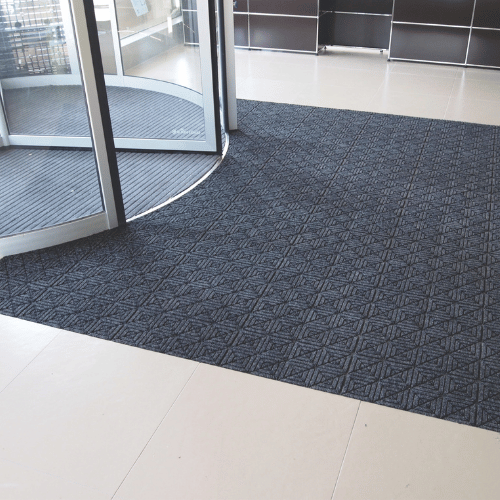
Waterhog Eco Premier Matting Tiles - Geometric
Experience unparalleled performance and sustainability with our Waterhog Eco Premier Matting Tiles. Designed for high-traffic areas, these geometric tiles effectively trap dirt, moisture, and debris, keeping your floors clean and safe. Made from recycled materials, they offer an eco-friendly solution without compromising on durability or aesthetic appeal. Their modular design allows for easy customisation and replacement, making them a smart long-term investment for any UK business looking to enhance their entrance.
Price: £275.20
View ProductModular and Tile Systems: Flexibility and Future-Proofing
For large or unusually shaped entrances, and for businesses seeking ultimate flexibility, modular entrance matting tiles offer an ideal solution. These systems, often made from durable carpet tiles or high-performance rubber compounds, allow for custom configurations to fit any space perfectly, eliminating unsightly gaps or ill-fitting edges. The primary advantage of modular tiles is their ease of replacement. If a section becomes heavily worn or damaged, only the affected tiles need to be swapped out, rather than replacing an entire, costly system. This significantly reduces maintenance costs and minimises disruption.
Furthermore, modular systems allow for creative design. Businesses can combine different colours, textures, or even materials within the same entrance area to create zones for scraping and absorbing, or to incorporate branding elements seamlessly. This future-proofs the matting investment, as layouts can be changed, or sections upgraded, without overhauling the entire entrance solution. For high-traffic areas where specific wear points might develop, modular tiles offer a practical, long-term solution.
Customisation and Branding: Beyond Basic Functionality
An entrance mat is no longer just a functional item; it’s an extension of your brand. Modern matting solutions offer extensive customisation options that allow businesses to integrate their logo, company colours, and messaging directly into the mat itself. This transforms a utilitarian object into a powerful branding tool, reinforcing your corporate identity from the moment a visitor steps inside.
Unlike the limited aesthetic choices of metal systems, textile and modular mats come in a vast array of colours, patterns, and even custom-cut shapes. This allows businesses to select a mat that not only performs exceptionally but also complements their interior design, enhances their brand image, and creates a welcoming, professional atmosphere. Custom logo mats, for example, are a cost-effective way to make a strong first impression, demonstrating attention to detail and a commitment to quality. This level of aesthetic integration and brand reinforcement is virtually impossible to achieve with traditional metal systems.
Beyond the Mat: A Holistic Approach to Entrance Matting Strategy
Implementing an effective entrance matting system goes beyond simply choosing a single mat. A truly comprehensive strategy considers the entire entrance area and the specific challenges it faces. This holistic approach ensures maximum effectiveness, longevity, and safety for your facility.
Zonal Matting Systems: The Three-Zone Defence
The most effective entrance matting strategies in the UK employ a zonal approach, often referred to as the 'three-zone defence' system. This involves deploying different types of matting to tackle various types of dirt and moisture at different stages of entry:
-
Zone 1: Primary Barrier (External/Foyer)
This initial zone, typically placed outdoors or just inside the main entrance, is designed to aggressively scrape off coarse dirt, mud, and larger debris from footwear. Robust scraper mats made from resilient rubber or heavy-duty synthetic fibres are ideal here. The goal is to remove the bulk of contaminants before they enter the building. -
Zone 2: Secondary Barrier (Main Entrance)
Located immediately after the primary barrier, this zone is crucial for absorbing moisture and trapping finer dirt particles. High-performance textile mats, like those in the Waterhog range, excel in this role. They combine scraping action with superior absorbency, preventing wet and slippery conditions further inside the building. This zone should be long enough to allow for at least 4-6 steps on the mat for optimal effectiveness. -
Zone 3: Tertiary Barrier (Interior Transition)
This final zone is typically placed deeper within the building, in reception areas or corridors. Its purpose is to remove any remaining fine dust and moisture, polish shoes, and blend seamlessly with the interior décor. Decorative textile mats or carpet tiles are often used here, providing an aesthetic finish while contributing to cleanliness.
By implementing a multi-zone system, businesses can dramatically reduce the amount of dirt and moisture tracked into their premises, protecting internal flooring, reducing cleaning costs, and significantly enhancing safety.
Installation and Maintenance Best Practices
Even the best matting system will underperform without proper installation and diligent maintenance. For modern textile and modular mats, installation is generally straightforward. Loose-lay mats require correct positioning to ensure they lie flat and don't create trip hazards. Recessed matting systems need precise measurements to fit snugly into wells. For modular tiles, correct interlocking and adhesion ensure a stable, seamless surface.
Maintenance for textile mats is significantly simpler than for metal systems. Regular vacuuming can remove dry dirt, while periodic deep cleaning with an extraction cleaner or machine washing (for compatible mats) will rejuvenate the fibres and restore their absorbency. Stains should be addressed promptly to prevent setting. Regular rotation of mats in high-wear areas can also extend their lifespan. Establishing a clear maintenance schedule, ideally daily vacuuming and weekly or bi-weekly deep cleaning depending on traffic, is key to maximising the performance and longevity of your entrance matting investment.
Compliance and Regulations in the UK
For UK businesses, adherence to health and safety regulations is not optional. The Workplace (Health, Safety and Welfare) Regulations 1992, along with the Health and Safety at Work etc. Act 1974, place a duty on employers to ensure a safe working environment, including safe floors and traffic routes. This directly impacts the choice of entrance matting.
Modern, anti-slip entrance mats contribute significantly to compliance by reducing the risk of slips and trips, which are among the most common causes of workplace injuries. Mats that conform to standards for slip resistance and accessibility (e.g., ensuring no significant trip hazards for wheelchair users or those with mobility aids, aligning with the spirit of the Equality Act 2010) are essential. Unlike metal systems, which can often create new hazards, high-performance textile mats are designed with safety as a core principle, providing stable, non-slip surfaces that actively prevent accidents. Choosing compliant matting is not just about avoiding fines; it's about protecting your employees and visitors and demonstrating a commitment to their well-being.
Making the Informed Choice: Investing in Safety, Aesthetics, and ROI
The journey from traditional, often problematic, metal entrance mat systems to sophisticated, high-performance alternatives is a testament to progress in facility management. While the initial perceived robustness of metal might have held sway in the past, a critical examination reveals a host of disadvantages concerning safety, maintenance, aesthetics, and environmental impact. Modern UK businesses simply cannot afford to compromise on these crucial aspects.
By embracing advanced textile and modular matting solutions, companies can significantly enhance the safety of their premises, creating secure and welcoming entrances that protect both people and interior flooring. These mats offer superior dirt and moisture control, drastically reducing cleaning costs and extending the lifespan of internal floor finishes. Furthermore, the extensive customisation options allow businesses to transform a functional item into a powerful brand statement, elevating their corporate image from the very first step. Investing in the right entrance matting is not merely an operational expense; it is a strategic decision that delivers tangible returns on investment through improved safety records, reduced maintenance burdens, enhanced aesthetics, and a positive environmental impact. Make the informed choice for your business and step into a future of cleaner, safer, and more stylish entrances.
Frequently Asked Questions
- Are metal entrance mats inherently dangerous?
- While not always dangerous, metal entrance mats pose significant safety risks. Their smooth surfaces can become extremely slippery when wet, leading to slips and falls. Gaps in their design can also create tripping hazards, especially for individuals with mobility issues or those wearing high heels. Modern textile mats offer superior anti-slip properties and greater safety.
- What are the best alternatives to metal entrance mats for heavy traffic areas?
- For heavy traffic areas, high-performance textile mats like the Waterhog range, or robust modular tile systems, are excellent alternatives. They are designed to withstand intense footfall, effectively scrape and absorb dirt and moisture, and provide a stable, anti-slip surface. Many are also made from durable recycled materials for longevity.
- How do modern textile mats compare in durability to metal systems?
- Modern high-performance textile mats are engineered for exceptional durability. While metal mats are perceived as strong, they can corrode, warp, and damage underlying floors. Textile mats like Waterhog resist crushing and fading, maintain their effectiveness over time, and can often be easily cleaned or have individual sections replaced, often providing a better long-term investment than metal systems.
- Can entrance mats improve a building's overall air quality?
- Yes, effectively designed entrance matting systems can significantly improve indoor air quality. By trapping dirt, dust, allergens, and moisture at the entrance, they prevent these contaminants from being tracked throughout the building, reducing the amount of airborne particles and contributing to a healthier indoor environment.
- What maintenance is required for high-performance textile mats?
- High-performance textile mats are generally easy to maintain. Regular vacuuming is sufficient for daily cleaning. Periodic deep cleaning using an extraction cleaner or, for some mats, machine washing, will remove embedded dirt and restore absorbency. Promptly addressing spills and stains also helps to maintain their appearance and effectiveness.
- How do I choose the right matting system for my specific business?
- Choosing the right system depends on several factors: the amount and type of traffic, the type of dirt and moisture expected, aesthetic preferences, and budget. Consider a zonal matting approach, assessing external, main entrance, and interior transition areas. Consulting with matting experts, like Mats4U, can help you select the most effective and compliant solution for your specific needs.
Connect with us for more insights and solutions:


