



Rubber roll matting is a practical flooring solution for areas that need grip, durability and floor protection. It can be used in commercial kitchens, gyms, workshops, laboratories, poolside areas, corridors, entryways and other indoor spaces where a tough anti-slip surface is needed.
Two very similar options available from Mats4U are the Dot Rubber Matting 3mm and the Dot Rubber Matting 4.5mm. Both have the same dot surface pattern, both are available in black or grey, both offer synthetic or nitrile rubber material options, and both can be ordered as cut lengths or full rolls.
The main difference is the thickness. Dot Rubber Matting 3mm is the lower-profile option, making it useful where a thinner matting roll is preferred. Dot Rubber Matting 4.5mm is the thicker option, making it better where extra substance, grip and floor protection are required.
Table of Contents
- Why Compare Dot Rubber Matting 3mm and 4.5mm?
- Quick Comparison: Dot Rubber Matting 3mm vs 4.5mm
- What Is Dot Rubber Matting 3mm?
- What Is Dot Rubber Matting 4.5mm?
- 3mm vs 4.5mm Thickness
- Dot Surface Pattern and Grip
- Synthetic Rubber vs Nitrile Rubber Options
- Wet and Dry Area Suitability
- Temperature and Chemical Resistance
- Cut-Length and Full Roll Options
- Cleaning and Maintenance
- Product Comparison: Dot Rubber Matting 3mm and 4.5mm
- Which One Should You Choose?
- Where to Use Dot Rubber Roll Matting
- Frequently Asked Questions
Why Compare Dot Rubber Matting 3mm and 4.5mm?
Dot Rubber Matting 3mm and Dot Rubber Matting 4.5mm are worth comparing because they are extremely similar products. They share the same dot-style surface pattern, the same colour options, the same rubber material options and the same basic roll format.
The choice usually comes down to whether the area needs a thinner lower-profile matting roll or a thicker rubber matting roll with a more substantial feel underfoot.
Both Are Rubber Roll Mats
Both products are supplied as rubber roll matting, making them useful for covering longer areas, walkways, work zones, counters, shelves or custom floor spaces.
Both Have a Dot Surface Pattern
Both mats use a raised dot surface pattern. This helps improve grip and stability underfoot, especially in areas where slips may be a concern.
Both Offer Synthetic or Nitrile Rubber Options
Both products allow customers to choose between synthetic rubber and nitrile rubber, depending on the application and performance required.
The Main Difference Is Thickness
The 3mm version is thinner and lower profile. The 4.5mm version is thicker and more substantial.
Quick Comparison: Dot Rubber Matting 3mm vs 4.5mm
The table below gives a simple overview of how the two Dot Rubber Matting options compare.
| Feature | Dot Rubber Matting 3mm | Dot Rubber Matting 4.5mm |
|---|---|---|
| Best For | Lower-profile floor protection, light-duty walkways, shelves, workbenches and areas where thinner matting is preferred | Thicker floor protection, busier walkways, work areas and spaces needing a more substantial rubber surface |
| Mat Type | Dot-pattern rubber roll matting | Dot-pattern rubber roll matting |
| Thickness | 3mm | 4.5mm |
| Surface Pattern | Raised dot pattern | Raised dot pattern |
| Colour Options | Black or grey | Black or grey |
| Material Options | Synthetic rubber or nitrile rubber | Synthetic rubber or nitrile rubber |
| Roll Width | 120cm wide | 120cm wide |
| Roll Options | Cut length or 120cm x 10m full roll | Cut length or 120cm x 10m full roll |
| Temperature Resistance | -30°C to +70°C | -30°C to +70°C |
| Main Advantage | Lower-profile, flexible and easier to fit where thinner matting is needed | Thicker, more substantial and better where added floor protection is preferred |
What Is Dot Rubber Matting 3mm?
Dot Rubber Matting 3mm is a lower-profile rubber roll matting option with a raised dot surface pattern. It is designed to provide grip, floor protection and durability in a variety of indoor environments.
The 3mm thickness makes it useful where a thinner matting roll is needed. It can be used in areas where door clearance, low profile, easy handling or flexible fitting are important.
Lower-Profile Rubber Matting
The 3mm thickness gives this matting a slimmer profile. This makes it practical for areas where a thicker mat may sit too high or feel too bulky.
Dot Pattern Surface
The raised dot surface helps improve traction and stability underfoot, reducing the risk of slips in suitable areas.
Black or Grey Colour Options
Dot Rubber Matting 3mm is available in black or grey, allowing customers to choose a colour that suits the space.
Cut Length or Full Roll
The matting can be ordered as a cut length or as a 120cm x 10m full roll, making it suitable for both small and larger areas.
What Is Dot Rubber Matting 4.5mm?
Dot Rubber Matting 4.5mm is the thicker version of this rubber roll matting. It has the same dot pattern surface, the same black or grey colour options, and the same synthetic or nitrile rubber material choices.
The 4.5mm thickness gives it a more substantial feel and makes it a better option where the floor needs extra protection or where the area receives more regular use.
Thicker Rubber Matting
The 4.5mm depth gives this matting more substance than the 3mm version. This makes it useful where a stronger-feeling rubber surface is required.
Raised Dot Grip Surface
The dot surface pattern helps improve grip and gives the mat a practical industrial appearance.
Same Colour and Material Choices
Like the 3mm version, the 4.5mm matting is available in black or grey and can be selected in synthetic rubber or nitrile rubber.
Useful for Busy Areas
The thicker construction makes this option more suitable where the floor area may receive more regular movement, foot traffic or workplace use.
3mm vs 4.5mm Thickness

The biggest difference between these two products is thickness. Since the surface pattern, colour choices and roll format are very similar, thickness is usually the main deciding factor.
When 3mm Works Best
Choose 3mm when you need a lower-profile rubber surface. It is useful for areas where matting needs to be thinner, easier to handle or less raised from the surrounding floor.
When 4.5mm Works Best
Choose 4.5mm when you want a thicker, more substantial rubber matting roll. It is better where added floor protection and a stronger surface feel are preferred.
Why Thickness Matters
Thickness affects how the mat feels underfoot, how much protection it provides and how easily it fits around doors, edges and equipment.
Check Clearance Before Ordering
Before choosing a thickness, check whether doors, trolleys, equipment or furniture need to move over or around the matting.
Dot Surface Pattern and Grip
Both mats have the same raised dot pattern. This surface is designed to improve grip and stability underfoot while giving the mat a neat, practical finish.
3mm Dot Surface
The 3mm version provides the same dot-style grip pattern in a thinner format. This is useful where grip is needed without adding too much height.
4.5mm Dot Surface
The 4.5mm version provides the same dot-style grip pattern with a thicker rubber base. This gives the surface a more substantial feel.
Which Has Better Grip?
Both mats use the same dot surface pattern, so grip is very similar. The 4.5mm option may feel more robust because it is thicker, but the surface style is the same.
Why the Dot Pattern Helps
The raised dot pattern helps create extra contact and texture underfoot, which can support safer walking and standing in suitable areas.
Synthetic Rubber vs Nitrile Rubber Options
Both thicknesses are available in synthetic rubber or nitrile rubber options. This allows customers to choose the most suitable material for the environment.
Synthetic Rubber Option
Synthetic rubber is a practical choice for general-purpose rubber matting applications where grip, protection and durability are required.
Nitrile Rubber Option
Nitrile rubber is often preferred where greater resistance to oils, greases or chemicals is needed. This can make it useful in more demanding workplace areas.
Do Both Thicknesses Offer Both Materials?
Yes. Both the 3mm and 4.5mm versions are available in synthetic rubber or nitrile rubber.
Which Material Should You Choose?
Choose synthetic rubber for general-purpose use and nitrile rubber where oil, grease or chemical resistance is more important.
Wet and Dry Area Suitability

Both Dot Rubber Matting options can be used in dry indoor settings and wet environments. This makes them versatile across many different commercial and industrial spaces.
3mm in Wet or Dry Areas
The 3mm version is suitable where a thinner matting roll is needed for wet or dry areas. It can help improve traction and floor protection without adding too much height.
4.5mm in Wet or Dry Areas
The 4.5mm version is also suitable for wet or dry areas and gives a thicker surface for spaces that need a more substantial matting option.
Which Is Better for Wet Areas?
Both can work in wet areas. Choose 4.5mm if a thicker mat is preferred and 3mm if a lower-profile surface is more important.
Important Wet Area Note
These mats provide grip, but they are not open drainage mats with large holes. Where liquid needs to drain through the mat, a drainage mat may be more suitable.
Temperature and Chemical Resistance
Both Dot Rubber Matting options are designed to perform across a wide temperature range and offer chemical resistance to water, mild acids and alkalis.
Temperature Resistance
Both the 3mm and 4.5mm versions are listed with temperature resistance from -30°C to +70°C, making them suitable for a wide range of environments.
Chemical Resistance
Both mats offer resistance to water, mild acids and alkalis. This makes them useful in workshops, laboratories and other areas where occasional spills may occur.
Which Has Better Resistance?
The product information is very similar for both thicknesses. The choice should therefore be based mainly on thickness and material choice.
When to Choose Nitrile Rubber
If the area may be exposed to oils, greases or more demanding substances, nitrile rubber is usually the better option.
Cut-Length and Full Roll Options
Both products are supplied in a flexible roll format, making them useful for customers who need to cover longer spaces or cut matting to fit a specific area.
3mm Roll Options
- Cut Length: 120cm x per linear metre
- Full Roll: 120cm x 10m
4.5mm Roll Options
- Cut Length: 120cm x per linear metre
- Full Roll: 120cm x 10m
Which Has More Size Flexibility?
Both have the same listed roll format, so size flexibility is very similar.
Roll Matting Tip
Measure the full length and width of the area before ordering. For walkways, allow enough coverage for safe movement through the whole traffic path.
Cleaning and Maintenance

Both mats are easy to clean and maintain. Regular cleaning helps keep the raised dot pattern clear of dirt, dust and debris.
Cleaning Dot Rubber Matting 3mm
Clean the 3mm version by wiping it down with a mild detergent and water solution. For tougher stains, use a non-abrasive cleaner.
Cleaning Dot Rubber Matting 4.5mm
Clean the 4.5mm version in the same way. Wipe it with mild detergent and water, or use a non-abrasive cleaner for tougher marks.
Which Is Easier to Clean?
Both are easy to clean because they share the same dot surface style and cleaning guidance.
Maintenance Tip
Sweep or vacuum loose dirt before wiping the mat. This helps prevent grit from being spread across the surface during cleaning.
Product Comparison: Dot Rubber Matting 3mm and 4.5mm
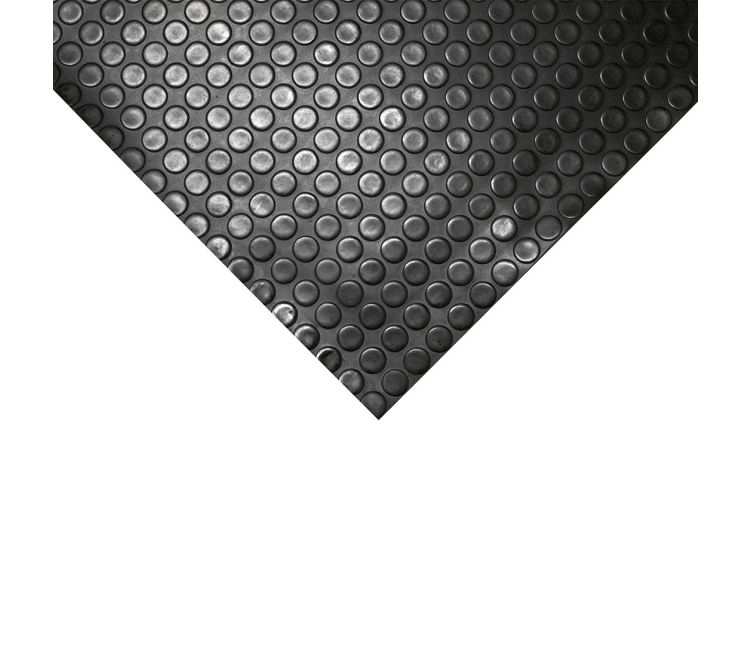
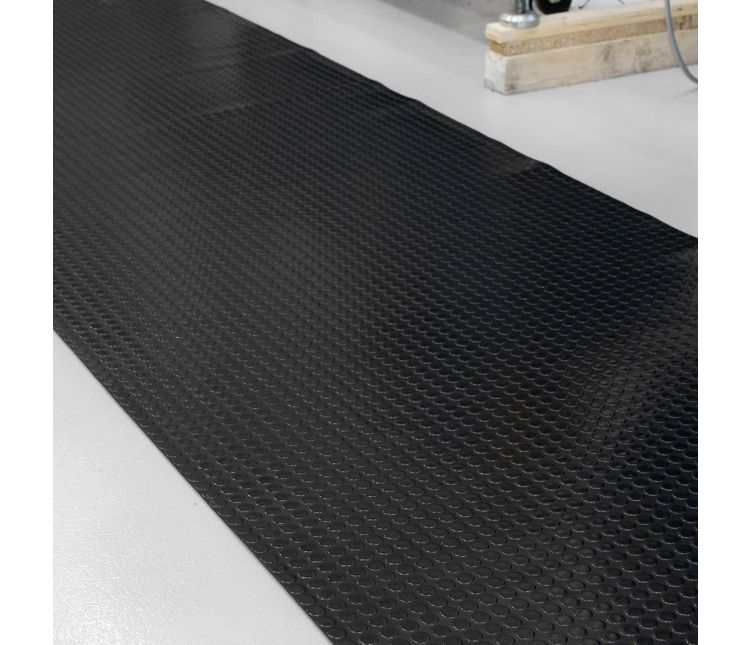
The following two Mats4U products are very similar rubber roll matting options, making them ideal for a direct thickness comparison.
Which One Should You Choose?
The easiest way to choose between Dot Rubber Matting 3mm and Dot Rubber Matting 4.5mm is to decide how much thickness you need. If the area needs a lower-profile rubber surface, choose 3mm. If the area needs a thicker and more substantial rubber matting roll, choose 4.5mm.
Choose Dot Rubber Matting 3mm If:
- You want a lower-profile rubber matting roll.
- You need thinner matting for easier fitting.
- The area has limited clearance under doors or equipment.
- You want a practical dot-pattern surface for grip.
- You need black or grey colour options.
- You want synthetic rubber or nitrile rubber choices.
- You need cut-length or full-roll options.
- You want matting for shelves, workbenches, walkways or lighter-use areas.
- You prefer a thinner and more flexible rubber flooring solution.
Choose Dot Rubber Matting 4.5mm If:
- You want a thicker rubber matting roll.
- You need a more substantial surface underfoot.
- The floor area needs extra protection.
- The space receives more regular use or foot traffic.
- You want the same raised dot pattern in a thicker format.
- You need black or grey colour options.
- You want synthetic rubber or nitrile rubber choices.
- You need cut-length or full-roll options.
- You prefer a more robust-feeling rubber matting solution.
The Simple Answer
Choose Dot Rubber Matting 3mm when a thinner, lower-profile rubber roll is needed. Choose Dot Rubber Matting 4.5mm when you want a thicker, more substantial option with the same dot-pattern surface and material choices.
Where to Use Dot Rubber Roll Matting

Dot Rubber Matting can be used in a wide range of commercial, industrial and practical indoor spaces. The correct thickness depends on the level of use, clearance and protection required.
Commercial Kitchens
Both thicknesses can be used in commercial kitchens where grip and floor protection are required. Choose nitrile rubber where oil or grease resistance is more important.
Gyms and Fitness Centres
Dot Rubber Matting can be used in gym and fitness areas to provide a textured, anti-slip surface. The 4.5mm option is better where a thicker surface is preferred.
Workshops
Both versions are suitable for workshops. Choose 3mm for lower-profile protection and 4.5mm for a more substantial rubber surface.
Laboratories
Dot Rubber Matting can be used in laboratories where slip resistance and resistance to water, mild acids and alkalis are useful.
Poolside Areas and Locker Rooms
Both products can be used in wet areas such as poolside spaces and locker rooms. Regular cleaning is important to keep the surface clear and safe.
Entryways and Corridors
Dot Rubber Matting can help protect floors in entryways and corridors while providing a textured walking surface.
Retail Spaces
Both options can be used behind counters or in staff areas where employees stand or walk regularly.
Workbenches and Shelving
The 3mm option is useful on workbenches and shelving where a thinner rubber protective surface is preferred.
Frequently Asked Questions
Q1: What is the difference between Dot Rubber Matting 3mm and 4.5mm?
A1: The main difference is thickness. Dot Rubber Matting 3mm is thinner and lower profile, while Dot Rubber Matting 4.5mm is thicker and more substantial.
Q2: Are both mats made from rubber?
A2: Yes. Both products are rubber roll matting options with synthetic rubber or nitrile rubber choices.
Q3: Do both mats have the same dot surface pattern?
A3: Yes. Both mats use a raised dot surface pattern for grip and stability.
Q4: Which mat is better for low-profile use?
A4: Dot Rubber Matting 3mm is better for low-profile use because it is thinner.
Q5: Which mat is better for extra floor protection?
A5: Dot Rubber Matting 4.5mm is better where a thicker and more substantial rubber surface is preferred.
Q6: Are both available in black and grey?
A6: Yes. Both thicknesses are available in black or grey.
Q7: Can I choose synthetic rubber or nitrile rubber?
A7: Yes. Both the 3mm and 4.5mm versions are available in synthetic rubber or nitrile rubber options.
Q8: Which material should I choose for oily areas?
A8: Nitrile rubber is usually the better choice where oil or grease resistance is important.
Q9: Can both mats be ordered as cut lengths?
A9: Yes. Both products can be ordered as 120cm wide cut lengths by the linear metre.
Q10: Can both mats be ordered as full rolls?
A10: Yes. Both products are available as 120cm x 10m full rolls.
Q11: Are both mats suitable for wet areas?
A11: Yes. Both products are listed as suitable for dry indoor settings and wet environments.
Q12: Are these drainage mats?
A12: No. These are dot-pattern rubber mats, not open-hole drainage mats. For areas needing liquid to pass through the mat, a drainage mat may be better.
Q13: What temperature range can these mats handle?
A13: Both products are listed with temperature resistance from -30°C to +70°C.
Q14: Are these mats chemical resistant?
A14: Both products offer resistance to water, mild acids and alkalis.
Q15: Which mat is better for workbenches?
A15: Dot Rubber Matting 3mm is often the better choice for workbenches because it is thinner and easier to fit as a protective surface.
Q16: Which mat is better for busy walkways?
A16: Dot Rubber Matting 4.5mm is the better choice for busier walkways where a thicker rubber surface is preferred.
Q17: How do I clean Dot Rubber Matting?
A17: Wipe it with mild detergent and water. For tougher stains, use a non-abrasive cleaner.
Q18: Which mat is easier to handle?
A18: Dot Rubber Matting 3mm is easier to handle because it is thinner and lighter than the 4.5mm version.
Q19: Which mat should I choose for general-purpose use?
A19: Choose 3mm for lighter, lower-profile general use. Choose 4.5mm if you want a thicker and more robust rubber surface.
Q20: Where can I buy Dot Rubber Matting 3mm and 4.5mm?
A20: Dot Rubber Matting 3mm and Dot Rubber Matting 4.5mm are both available from Mats4U.


