



Footwear can carry dirt, debris and contaminants from one area to another, particularly in facilities where cleanliness and controlled access are important. In busy workplaces, simply cleaning the floor may not be enough if contaminants are continually being brought in on the soles of shoes, boots or wheeled equipment.
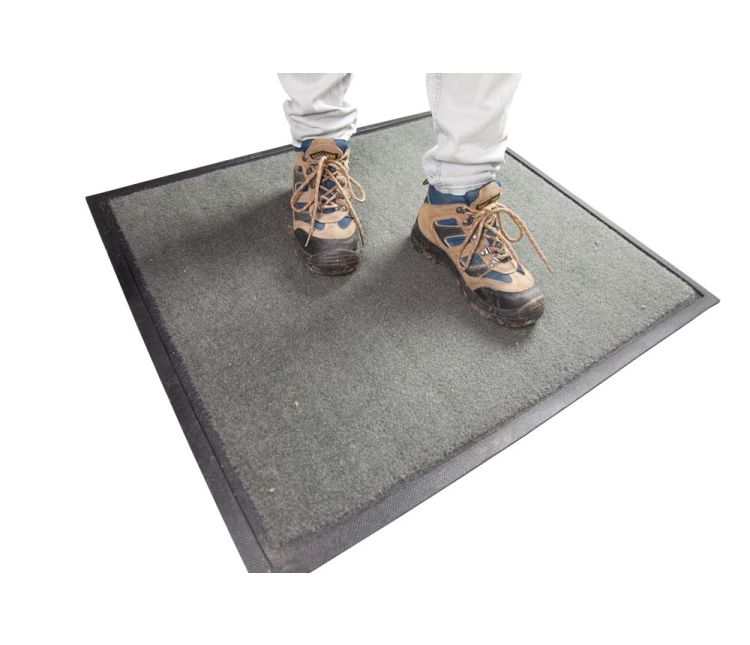
The StepWell OptiBrush Disinfectant Mat is a heavy-duty footbath mat designed to be used with a suitable disinfectant solution. Positioned at an entrance or transition point, it helps apply disinfectant to the soles and treads of footwear as people walk across the mat.
With coarse nylon fibres, raised spill-control borders and a heavy nitrile rubber backing, StepWell OptiBrush provides a practical way to introduce footwear cleaning into entrances, healthcare facilities, public buildings, offices and other controlled environments.
Table of Contents
- What Is a StepWell OptiBrush Disinfectant Mat?
- How Does a Disinfectant Mat Work?
- Why Footwear Contamination Control Matters
- How the Brush Fibres Clean Footwear
- 4.1 Litres per m² Disinfectant Capacity
- Spill-Control Borders
- Heavy-Duty Nitrile Rubber Backing
- Using StepWell for Wheeled Traffic
- Why Use an Absorbent Mat Afterwards?
- Choosing a Suitable Disinfectant
- How to Use StepWell OptiBrush
- Where Can StepWell OptiBrush Be Used?
- Available Sizes and Specifications
- Cleaning and Maintenance
- StepWell OptiBrush Product Showcase
- Who Should Consider a Disinfectant Mat?
- Frequently Asked Questions
What Is a StepWell OptiBrush Disinfectant Mat?
StepWell OptiBrush is a heavy-duty disinfectant mat designed to hold a disinfectant solution within its bordered surface. When a person walks across the mat, the solution is transferred to the bottom of their footwear while coarse fibres help scrub the treads and soles.
Instead of simply wiping dirt from shoes like a conventional entrance mat, StepWell is intended to form part of a footwear hygiene process. It is particularly useful where controlling what is carried into a facility on footwear is important.
A Footbath Mat for Everyday Entrances
The mat creates a simple footwear cleaning point without requiring users to manually clean their shoes or boots before entering an area.
Designed for Heavy-Duty Use
StepWell combines solution-dyed nylon fibres with a nitrile rubber base, giving it a robust construction suited to commercial and professional facilities.
Suitable for More Than Shoes
The mat can also be positioned where suitable wheeled traffic passes through, helping apply solution to wheels as they move across the surface.
Designed for Controlled Entry Points
For best results, StepWell should be positioned where people naturally have to cross it rather than where it can easily be walked around.
How Does a Disinfectant Mat Work?
A disinfectant mat combines a liquid-holding base with a textured surface. Disinfectant solution is poured into the mat and retained within its raised borders.
As footwear crosses the mat, the fibres make contact with the sole while the disinfectant reaches the bottom of the shoe or boot. This creates a simple additional hygiene step at an entrance or transition point.
Step 1: Add Disinfectant Solution
A suitable diluted disinfectant is poured into the mat so that the lower surface and fibres contain enough solution to make contact with footwear.
Step 2: Walk Across the Mat
Users step onto and across the mat rather than simply stepping around it. This allows the fibres and solution to reach more of the footwear tread.
Step 3: The Fibres Scrub the Soles
The coarse nylon fibres help physically agitate the bottom of footwear as the user walks across the mat.
Step 4: Dry Footwear Afterwards
An absorbent mat can be positioned immediately after the disinfectant mat to remove excess moisture before users continue onto surrounding floors.
Why Footwear Contamination Control Matters

People regularly move between outdoor environments, car parks, warehouses, corridors, production areas and other spaces. Dirt and contaminants can therefore move with them on footwear.
Facilities with higher cleanliness requirements may benefit from controlling footwear at entrances and between different zones rather than relying only on routine floor cleaning.
Entrances Are Transfer Points
An entrance is one of the first places where outdoor dirt and debris enter a building. Positioning a footwear cleaning system here can help address the problem before people move further inside.
Different Areas May Need Separation
Some workplaces contain cleaner and dirtier zones. A disinfectant mat can be placed at the transition between these areas as one part of a wider hygiene procedure.
High Foot Traffic Increases the Challenge
The more people entering a facility, the more opportunities there are for dirt and contaminants to be brought inside on footwear.
Routine Matters
A disinfectant mat works best when it forms part of an established cleaning and hygiene routine, including regular checks of the solution and cleaning of the mat itself.
How the Brush Fibres Clean Footwear
StepWell OptiBrush uses coarse continuous-filament solution-dyed nylon. The fibres create a brushing action as shoes or boots move across the surface.
Reaches Shoe Treads
Many work shoes and boots have deep tread patterns where dirt can collect. The textured fibre surface helps make contact with these areas while the user walks over the mat.
Physical Scrubbing Plus Solution
The mat does more than simply wet footwear. The fibres help loosen material from the sole while the disinfectant solution is applied at the same time.
Suitable for Work Boots
The coarse construction makes StepWell particularly useful where users wear more substantial footwear such as work boots or safety shoes.
Integrated into Normal Foot Traffic
There is no separate brush station to operate. Cleaning takes place as the user walks through the designated entrance point.
4.1 Litres per m² Disinfectant Capacity
StepWell OptiBrush is designed to hold up to approximately 4.1 litres of disinfectant solution per square metre.
This liquid-holding capacity allows the mat to maintain contact between the disinfectant and the bottom of footwear without requiring the mat to be manually sprayed before every person walks across it.
Solution Is Contained Within the Mat
The raised border helps keep the liquid in the working area of the mat instead of allowing it to immediately spread onto the surrounding floor.
Check the Solution Regularly
How frequently solution needs to be refreshed will depend on the amount of traffic, the type of disinfectant being used and the conditions in the facility.
Do Not Simply Keep Topping Up Dirty Solution
The mat should be cleaned and the solution replaced according to the hygiene procedure used by the facility rather than continually topping up heavily contaminated liquid.
Follow the Disinfectant Instructions
Always follow the dilution, contact time and safety instructions provided by the manufacturer of the disinfectant being used.
Spill-Control Borders

One of the most important features of StepWell OptiBrush is its raised spill-control border. Because the product is designed to hold liquid, controlling that liquid is essential.
Helps Keep Solution Contained
The surrounding border helps prevent the disinfectant from immediately flowing away from the mat.
Creates a Defined Cleaning Zone
The border keeps the disinfectant concentrated in the area where footwear makes contact with the mat.
7.9mm Border Thickness
The mat has a listed border thickness of approximately 7.9mm, compared with a body thickness of approximately 2.9mm.
Monitor Surrounding Floors
Even with a containment border, footwear can carry liquid off the mat. This is why a drying mat immediately afterwards can be useful.
Heavy-Duty Nitrile Rubber Backing
The base of StepWell OptiBrush is made from nitrile rubber. This gives the mat a heavy, durable foundation and helps it remain stable during use.
Helps Resist Movement
A disinfectant mat should remain in the intended traffic path. The heavy rubber construction helps reduce unwanted movement when positioned correctly.
Designed to Resist Curling
The nitrile construction is designed to resist curling, cracking and splitting, helping the mat maintain its shape during regular use.
Slip-Resistant Base
The rubber backing provides grip against the floor, which is particularly important because the mat itself is being used with liquid.
Built for Commercial Environments
Nitrile rubber is well suited to products that need to withstand repeated professional or commercial use.
Using StepWell for Wheeled Traffic
Footwear is not the only way contaminants can move between areas. Trolleys, carts and other wheeled equipment may also travel between different parts of a facility.
StepWell OptiBrush can be positioned so appropriate wheeled traffic travels over the mat and makes contact with the disinfectant solution.
Useful at Controlled Access Points
A disinfectant mat can be incorporated into an entrance or transition route used by both people and wheeled equipment.
Wheel Contact Matters
The wheels need enough contact with the working surface to pick up the solution. The exact setup should suit the size and type of equipment being used.
Consider the Full Traffic Route
The mat should be positioned so users cannot easily bypass it if footwear or wheel cleaning is part of the facility's hygiene procedure.
Use Suitable Drying or Transition Flooring
Where wheels leave the mat wet, the surrounding floor should be managed appropriately to reduce the risk of excess solution being spread further.
Why Use an Absorbent Mat Afterwards?

Mats4U recommends placing an absorbent mat after StepWell OptiBrush. This creates a simple two-stage system: the first mat applies the disinfectant and the second helps remove excess liquid from footwear.
Stage One: Clean and Disinfect
Users first walk across StepWell OptiBrush so the soles make contact with the disinfectant solution.
Stage Two: Remove Excess Moisture
An absorbent mat immediately afterwards allows users to take additional steps while excess liquid is removed from the footwear.
Helps Protect Surrounding Floors
Removing excess moisture can help prevent disinfectant from being tracked across nearby flooring.
Helps Reduce Wet-Floor Risks
A drying stage is particularly useful where the surrounding floor is smooth and could become slippery if excessive liquid is transferred onto it.
Choosing a Suitable Disinfectant
The performance of a disinfectant mat depends partly on the solution used with it. StepWell OptiBrush is designed to work with suitable sanitising and disinfecting solutions.
Quaternary Ammonium Solutions
The mat is suitable for use with appropriately prepared quaternary ammonium-based sanitising solutions.
Hydrogen Peroxide Solutions
Suitable hydrogen peroxide-based solutions may also be used according to the disinfectant manufacturer's instructions.
Diluted Chlorine Bleach
The product information also states that diluted chlorine bleach may be used. Always follow the relevant chemical manufacturer's dilution and safety guidance.
Never Mix Cleaning Chemicals
Different disinfectants and cleaning chemicals should not be mixed unless the chemical manufacturer specifically confirms that it is safe to do so.
How to Use StepWell OptiBrush
Correct use and maintenance are important if the mat is to remain practical and hygienic.
1. Position the Mat
Place StepWell at the required entrance or transition point on a suitable level floor.
2. Prepare the Disinfectant
Prepare the chosen disinfectant exactly according to the manufacturer's instructions.
3. Add the Solution
Pour enough prepared solution into the mat to cover the working base without unnecessarily overfilling it.
4. Walk Across the Surface
Users should walk across the mat so that the fibres and solution have contact with the soles and treads of their footwear.
5. Step onto an Absorbent Mat
Where appropriate, place an absorbent mat immediately afterwards to help dry footwear.
6. Monitor the Mat
Check the solution regularly, especially in busy areas where dirt can accumulate more quickly.
7. Clean and Refresh
Clean the mat and replace the solution as required by the traffic level and the disinfectant manufacturer's guidance.
Where Can StepWell OptiBrush Be Used?
StepWell OptiBrush can be used anywhere a controlled footwear cleaning point would be useful. The exact hygiene requirements will depend on the facility and its own procedures.
Healthcare Facilities
Healthcare environments may use controlled entrance and transition points to support broader cleanliness and hygiene procedures.
Public Buildings
Busy public buildings can receive large numbers of visitors from different outdoor environments, making entrance control especially important.
Offices
StepWell may be useful at selected office entrances or controlled work areas where additional footwear hygiene procedures are required.
Industrial Facilities
Manufacturing and industrial sites may need to control what workers carry between external spaces and production or controlled areas.
Food-Related Facilities
Where required by site hygiene procedures, disinfectant mats can form part of footwear control at appropriate access points.
Laboratories
Laboratories and controlled environments may benefit from clearly defined transition areas between different zones.
Care Facilities
Where enhanced entrance hygiene procedures are used, StepWell can provide a practical footwear cleaning stage.
Staff Entrances
Dedicated staff entrances are often easier to control because everybody entering the area can be directed across the same matting system.
Available Sizes and Specifications
StepWell OptiBrush is available in practical doorway sizes, allowing businesses to choose the version that best suits their entrance or transition area.
Available Mat Sizes
- 75cm x 85cm
- 85cm x 150cm
Technical Specifications
| Specification | StepWell OptiBrush |
|---|---|
| Yarn | Coarse Continuous Filament Solution Dyed Nylon |
| Carpet Weight | 1300g/m² |
| Rubber | Nitrile EXS |
| Body Thickness | 2.9mm |
| Border Thickness | 7.9mm |
| Total Weight | 5.2kg/m² |
| Solution Capacity | Up to 4.1 litres/m² |
| Size Tolerance | Approximately ±2% |
75cm x 85cm
The smaller size is useful for standard doorways and controlled pedestrian entry points where space is limited.
85cm x 150cm
The larger size gives users a longer walking area and may be more suitable for busier entrances or locations where additional contact with the mat is preferred.
Cleaning and Maintenance
Because StepWell deliberately collects dirt from footwear while holding disinfectant solution, regular cleaning is important.
Remove Used Solution
Dispose of used disinfectant according to the product manufacturer's instructions and the facility's chemical handling procedures.
Hose Clean
The mat can be rinsed thoroughly using a hose to remove dirt and residue.
Pressure Wash When Required
For heavier contamination, StepWell can be pressure washed.
Hang to Dry
After cleaning, hang the mat and allow it to dry properly before preparing it for reuse.
Inspect the Mat
Regularly check the borders, rubber backing and carpet fibres for excessive wear or damage.
Refresh Solution According to Use
Busy entrances may require more frequent solution changes than low-traffic locations. Do not rely on a fixed schedule if the mat becomes visibly dirty sooner.
StepWell OptiBrush Product Showcase
StepWell OptiBrush is designed for facilities that want to add a simple footwear cleaning stage to an entrance or controlled transition point.
Who Should Consider a Disinfectant Mat?
A disinfectant mat is most useful where a business or organisation has identified footwear as one potential route for contaminants moving between areas.
Choose StepWell OptiBrush If:
- You need a controlled footwear cleaning point at an entrance.
- You want disinfectant solution to make contact with footwear soles and treads.
- You need coarse fibres that help scrub the bottom of shoes and boots.
- You want a mat that can hold up to 4.1 litres of solution per square metre.
- You need a heavy nitrile rubber backing.
- You want raised borders to help contain disinfectant solution.
- You need a mat suitable for selected wheeled traffic as well as footwear.
- You want a product that can be hosed or pressure washed.
- You need standard sizes that suit typical doorways and access points.
- You want to combine a disinfectant mat with a separate absorbent drying mat.


