



Over one third of workplace injuries in British industries are caused by slips, trips, and falls, making proper floor safety a critical concern for employers. Navigating regulations and selecting effective safety solutions can feel daunting, yet investing in reliable slip proof rubber matting demonstrates genuine commitment to employee wellbeing and legal compliance. This guide clears up common myths and explains how expertly designed rubber matting can transform safety in demanding British work environments.
Table of Contents
- Slip Proof Rubber Matting Defined and Debunked
- Types of Slip Proof Matting for Businesses
- How Slip Resistant Mats Prevent Accidents
- UK Safety Standards and Legal Compliance
- Choosing the Right Matting for Your Sector
- Cost Implications and Installation Mistakes
Key Takeaways
| Point | Details |
|---|---|
| Rubber Matting Importance | Slip proof rubber matting significantly enhances workplace safety by reducing slip and fall accidents in high-risk areas. |
| Types of Matting | Businesses should select matting tailored to specific environments, such as anti-fatigue for manufacturing or chemical-resistant for laboratories. |
| Maintenance is Key | Regular inspections and maintenance of matting are essential to ensure continued effectiveness and compliance with safety standards. |
| Cost vs. Safety | Investing in high-quality matting not only prevents accidents but can also lead to long-term savings on insurance and liability costs. |
Slip Proof Rubber Matting Defined and Debunked
Rubber matting represents a critical safety intervention for workplace environments, designed to mitigate slip and fall risks. At its core, a non-slip mat provides essential protection against workplace accidents by creating a stable surface in areas prone to liquid spillage or high traffic.
Slip proof rubber matting functions through specialised surface textures and materials engineered to dramatically reduce slip hazards. These industrial-grade floor coverings utilise advanced rubber compounds with high-friction characteristics, creating microtextures that grip footwear and prevent unexpected sliding. Typical applications include manufacturing zones, commercial kitchens, healthcare facilities, and industrial processing areas where liquid exposure is frequent.
The technical composition of slip proof rubber matting involves multiple strategic design elements. Manufacturers incorporate drainage channels, raised surface patterns, and resilient rubber compounds that maintain grip even when wet. These mats typically feature:
- Raised surface patterns for enhanced traction
- Chemical-resistant rubber materials
- Bevelled edges to prevent tripping
- Drainage capabilities to reduce surface liquid
- Durability under heavy industrial use
Pro Safety Tip: Always inspect rubber matting quarterly for wear, tear, and potential surface degradation to maintain optimal slip resistance and workplace safety.
British workplaces must prioritise understanding comprehensive rubber floor mat solutions to create environments that protect both employees and operational efficiency. By selecting appropriate slip proof rubber matting, organisations demonstrate commitment to proactive risk management and employee wellbeing.
Types of Slip Proof Matting for Businesses
Businesses across the United Kingdom require specialised slip proof matting solutions tailored to unique workplace environments. Essential considerations for wet area mat selection involve understanding the specific functional requirements of different industrial and commercial settings.
Industrial Matting Types encompass a diverse range of specialised floor coverings designed to address specific workplace challenges. These include:
- Anti-Fatigue Mats: Engineered for workers standing extended periods in manufacturing, healthcare, and retail environments
- Chemical Resistant Mats: Designed for laboratories, chemical processing areas, and industrial workshops
- Heavy-Duty Drainage Mats: Ideal for food processing, commercial kitchens, and wet production areas
- Modular Safety Mats: Customisable solutions for specific workspace configurations
- Static Dissipative Mats: Critical for electronics manufacturing and sensitive technical environments
Manufacturers develop these matting solutions with intricate engineering principles, incorporating advanced rubber compounds, textured surfaces, and strategic design elements to maximise workplace safety and operational efficiency. The materials undergo rigorous testing to ensure performance under challenging conditions, including high moisture, chemical exposure, and continuous industrial usage.
British businesses must carefully evaluate their specific environmental requirements when selecting slip proof matting. Comprehensive rubber mat solutions offer significant advantages in reducing workplace accidents, improving employee comfort, and maintaining high safety standards across diverse industrial sectors.
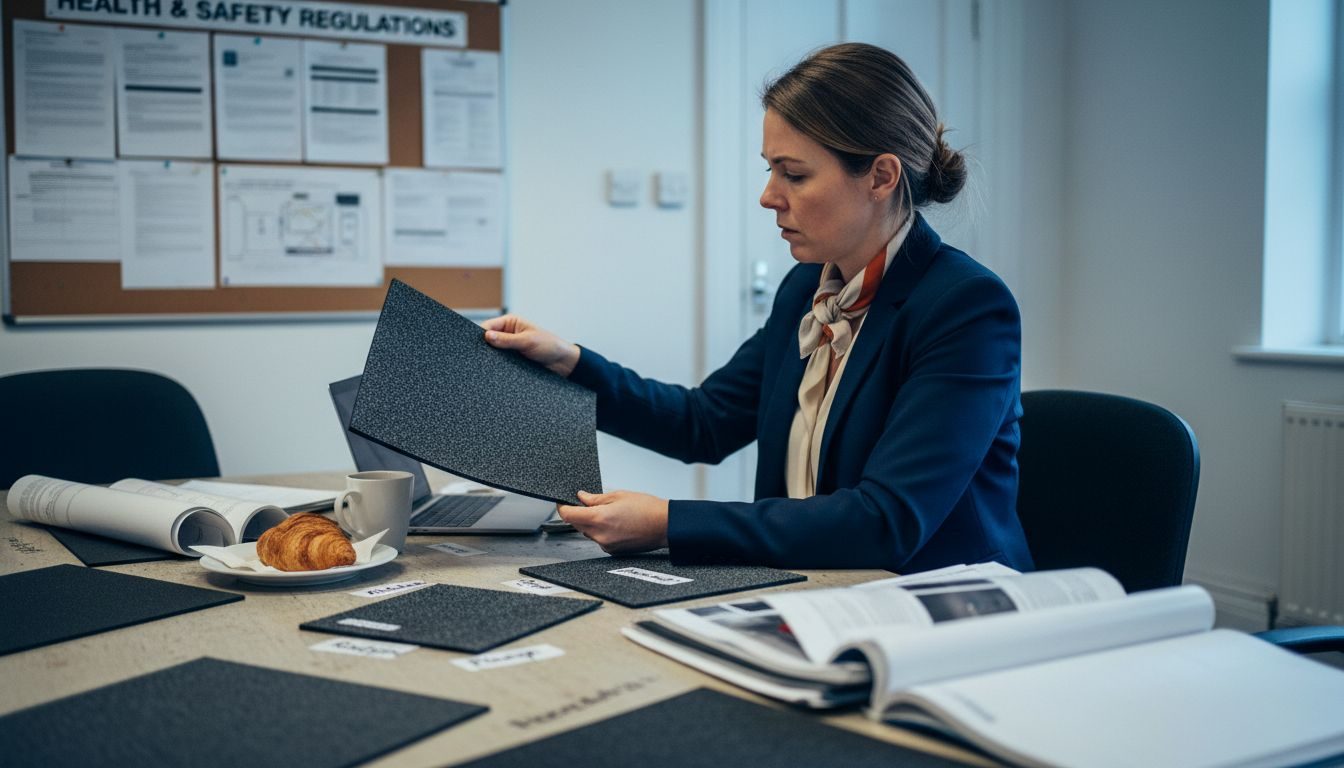
Pro Selection Tip: Conduct a comprehensive workplace risk assessment before selecting slip proof matting to ensure precise matching between mat characteristics and specific environmental challenges.
How Slip Resistant Mats Prevent Accidents
Workplace accidents related to slips and falls represent a significant safety challenge for British businesses. Non-slip mats provide a critical intervention by creating stable surfaces in high-risk areas prone to liquid spillage and potential hazards.
Accident Prevention Mechanisms of slip resistant mats involve multiple strategic engineering approaches. These specialised floor coverings incorporate advanced design features that actively mitigate workplace injury risks:
- Textured surface patterns that increase friction
- Raised drainage channels to redirect liquids
- Bevelled edges preventing tripping hazards
- Shock-absorbing materials reducing impact forces
- Multi-directional grip patterns for enhanced stability
The scientific principles underlying slip resistant matting involve complex surface engineering. Manufacturers develop materials with microscopic textures that create additional friction points, effectively interrupting potential slip trajectories. UK food industry safety professionals recognise these mats as essential protective infrastructure in environments with inherent moisture and contamination risks.
Comprehensive risk management requires strategic mat placement and regular maintenance. Industrial environments, commercial kitchens, healthcare facilities, and manufacturing spaces all benefit from targeted slip resistant matting solutions that dramatically reduce workplace accident potential.
Pro Safety Insight: Conduct quarterly mat inspections to ensure continued slip resistance, checking for wear, surface integrity, and potential degradation of friction properties.
UK Safety Standards and Legal Compliance
Workplace safety regulations in the United Kingdom establish rigorous standards for preventing slip and fall accidents, with comprehensive guidelines that mandate proactive risk management strategies for businesses across all sectors.
Under the Health and Safety at Work Act 1974, employers bear a legal responsibility to ensure workplace environments remain safe and minimise potential hazards. The Health and Safety Executive (HSE) provides explicit guidance on floor safety, emphasising the critical role of appropriate matting solutions in accident prevention:
- Conducting regular risk assessments
- Installing appropriate slip-resistant surfaces
- Maintaining clean and dry workplace environments
- Implementing effective drainage and spillage management
- Providing adequate employee training on safety protocols
Legal compliance extends beyond mere installation of slip-resistant mats. Businesses must demonstrate a systematic approach to risk management, including documentation of safety measures, regular maintenance checks, and ongoing evaluation of matting effectiveness. Preventing workplace accidents through proper safety infrastructure requires a comprehensive understanding of both legal obligations and practical implementation strategies.
Industrial sectors such as manufacturing, food processing, healthcare, and hospitality face particularly stringent requirements, with potential significant financial and legal consequences for non-compliance. Organisations must therefore invest in high-quality, professionally designed slip-resistant matting solutions that meet or exceed current UK safety standards.
Pro Compliance Tip: Maintain a comprehensive safety log documenting mat installations, maintenance records, and risk assessments to demonstrate proactive workplace safety management.
Choosing the Right Matting for Your Sector
Specialist matting solutions play a pivotal role in addressing unique safety and performance requirements across diverse UK industrial and commercial environments. Each sector demands a tailored approach to floor protection and workplace ergonomics.
Sector-Specific Matting Requirements encompass a range of specialised solutions designed to address distinct workplace challenges:
- Manufacturing: Anti-fatigue mats with shock absorption
- Food Processing: Hygienic, chemical-resistant mats with drainage capabilities
- Healthcare: Antimicrobial, easily sanitised surface coverings
- Retail: Decorative entrance mats with robust wear resistance
- Hospitality: Slip-resistant mats for high-moisture environments
- Warehouse: Heavy-duty mats supporting material handling equipment
Commercial entrance mat selection involves careful consideration of environmental conditions, traffic patterns, and specific functional requirements. Businesses must evaluate factors such as material durability, moisture management, ergonomic support, and aesthetic compatibility with existing workplace design.
Advanced matting technologies now offer sophisticated solutions that go beyond traditional safety considerations. Modern mats incorporate intelligent design features like integrated drainage systems, ergonomic support structures, and materials engineered to withstand extreme temperatures, chemical exposures, and continuous heavy-duty usage.
Pro Selection Tip: Conduct a comprehensive workplace assessment, mapping specific environmental challenges and performance requirements before selecting sector-specific matting solutions.
Here is a comparison of sector-specific matting needs and their unique workplace benefits:
| Sector | Key Matting Requirement | Main Benefit for Workplace |
|---|---|---|
| Manufacturing | Shock-absorbent anti-fatigue | Reduces worker fatigue, boosts productivity |
| Food Processing | Chemical-resistant, drainable | Maintains hygiene, minimises slip hazards |
| Healthcare | Antimicrobial, easy to sanitise | Prevents contamination, ensures compliance |
| Retail | Decorative, highly durable | Enhances appearance, withstands heavy footfall |
| Hospitality | Moisture-resistant, grippy surface | Increases guest safety, prevents falls |
| Warehouse | Heavy-duty, supports machinery | Withstands equipment, improves durability |
Cost Implications and Installation Mistakes
Businesses must carefully consider financial and safety implications when investing in slip-resistant matting, as improper installation can significantly increase workplace accident risks. Understanding the nuanced cost structures and potential pitfalls is critical for making informed procurement decisions.
Financial Considerations for slip-resistant matting involve multiple strategic factors:
- Initial material procurement costs
- Long-term durability and replacement frequency
- Potential accident prevention savings
- Maintenance and cleaning expenses
- Potential legal liability reductions
Common installation mistakes that escalate costs and compromise safety include:
- Incorrect surface preparation
- Inadequate measurement and sizing
- Selecting inappropriate mat materials for specific environments
- Poor adhesive or mounting techniques
- Neglecting regular maintenance protocols
The true economic value of slip-resistant matting extends beyond immediate purchase price. Organisations must evaluate lifecycle costs, considering potential workplace injury expenses, insurance premium reductions, and operational efficiency improvements. Comprehensive commercial mat solutions require sophisticated analysis of workplace-specific requirements.
Advanced risk management approaches recommend conducting thorough cost benefit analyses that integrate safety performance metrics, material durability assessments, and potential accident prevention strategies. Investing in high-quality, professionally installed matting represents a proactive approach to workplace safety management.
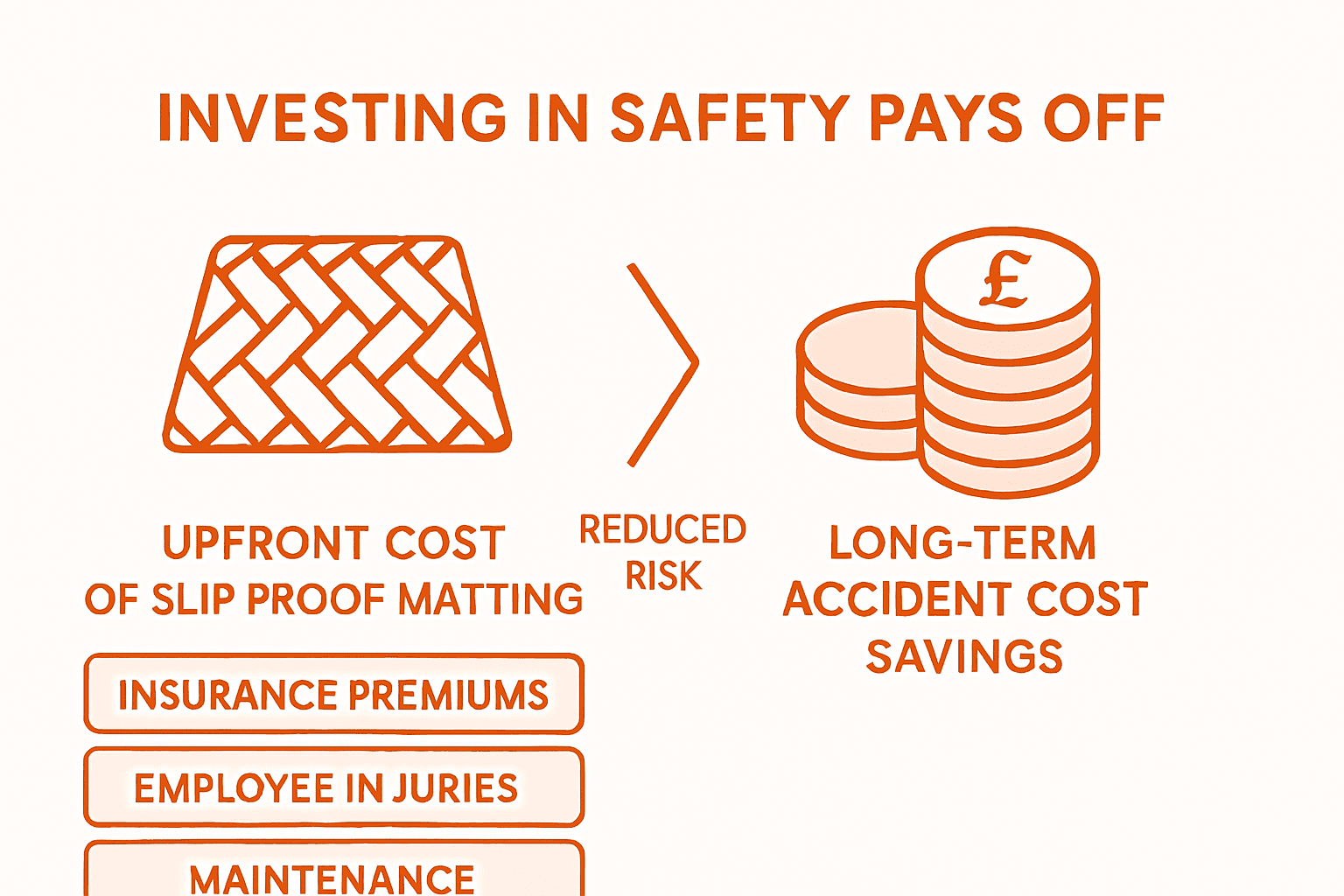
Pro Financial Insight: Calculate potential accident-related costs against matting investment, considering insurance premiums, potential legal liabilities, and employee productivity losses when making procurement decisions.
Below is a summary of financial and operational factors affecting slip-resistant matting investments:
| Consideration | Impact on Business | Example Risk |
|---|---|---|
| Initial Procurement Cost | Influences budget planning | Overspending on unsuitable mats |
| Durability and Lifespan | Reduces frequency of replacements | Higher overall maintenance costs |
| Accident Prevention Savings | Lowers injury and insurance costs | Expensive claims for accidents |
| Maintenance Expenses | Affects ongoing operational costs | Neglect may lead to hazards |
| Legal Liability Reduction | Minimises compliance risks | Fines from non-compliance |
Enhance Workplace Safety with Expert Slip Proof Rubber Matting from Mats4U
Ensuring stable and secure flooring is vital to prevent slips and falls in any professional setting. If you are challenged by wet or hazardous workplace environments, Mats4U offers expertly designed slip resistant mats tailored to your sector’s unique needs. From industrial zones requiring durable rubber solutions to specialised environments such as healthcare, explore our range of Hospital Mats | Matting for Medical Facilities crafted for maximum hygiene and slip resistance.

Take control of safety risks today by choosing premium quality mats that feature advanced grip technology and are made-to-measure for your space. Visit Mats4U to browse our full catalogue including Home Mats | Cloakroom Mats | Speciality Mats and find customised solutions that protect your workforce and comply with UK safety standards. Elevate your workplace safety now with Mats4U’s trusted matting solutions.
Frequently Asked Questions
What is slip proof rubber matting?
Slip proof rubber matting is a safety intervention designed to reduce slip and fall risks in workplace environments. It features specialised textures and materials that create stable surfaces to prevent accidents, particularly in areas with high traffic or liquid exposure.
How does slip resistant matting prevent slips and falls?
Slip resistant matting prevents slips and falls through its textured surface patterns that increase friction, raised drainage channels that redirect liquids, and shock-absorbing materials that reduce impact forces, enhancing overall stability in high-risk areas.
What types of environments benefit from using slip proof rubber matting?
Slip proof rubber matting is beneficial in various environments such as manufacturing zones, commercial kitchens, healthcare facilities, and industrial processing areas, where slip hazards from liquid exposure and high traffic are prevalent.
How can I maintain slip resistant mats for optimal performance?
To maintain slip resistant mats, conduct regular inspections at least quarterly to check for wear and tear. Ensure they are kept clean and dry, and promptly address any signs of degradation to preserve their slip resistance and overall safety functionality.
Recommended
- 7 Essential Benefits of Rubber Mats for Wet Floors – Mats4U
- Complete Guide to Rubber Floor Mats for Wet Areas – Mats4U
- How to Stop Mats Slipping on Carpet for Businesses – Mats4U
- 7 Key Tips for Using Anti Fatigue Mats for Wet Areas – Mats4U
- Surface Treatment Process for Durable Infrastructure Results


