



Most british businesses underestimate the impact that custom commercial mats can have on safety, brand image, and workplace efficiency. In fact, studies show that over 60 percent of workplace slips could be prevented with the right matting solutions. From first impressions at the entrance to protecting high-traffic corridors, choosing the right mats is more than a matter of appearance. Understanding how to identify your exact needs, select materials, and manage installation will help any business create a safer and more welcoming environment.
Table of Contents
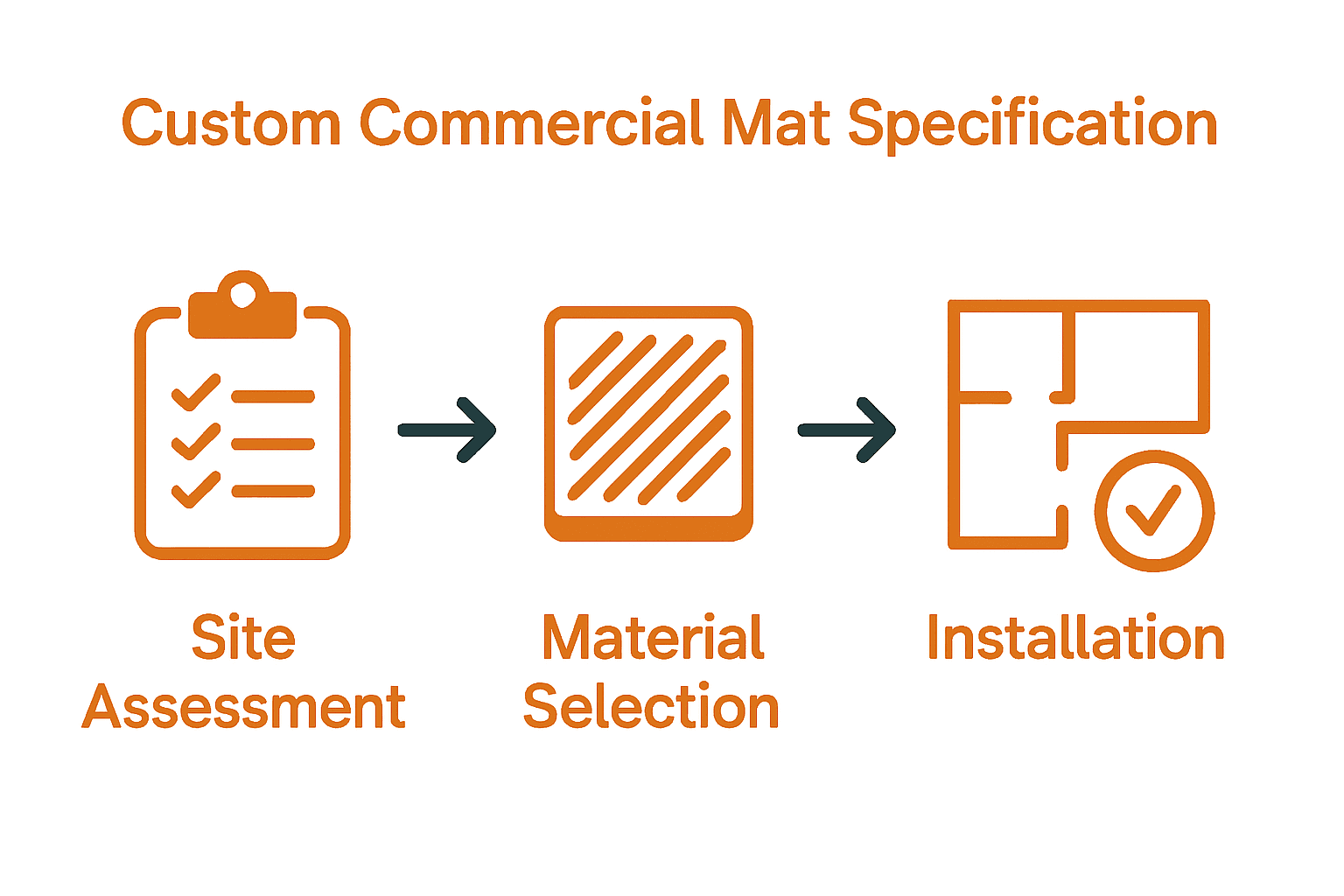
- Step 1: Assess Matting Requirements And Areas
- Step 2: Select Suitable Custom Commercial Mats
- Step 3: Design Mats With Branding Or Specifications
- Step 4: Order And Confirm Customisation Details
- Step 5: Install And Verify Mat Placement And Quality
Quick Summary
| Key Point | Explanation |
|---|---|
| 1. Assess matting needs thoroughly | Conduct a detailed site survey to identify areas requiring mats, focusing on traffic, environmental conditions, and safety hazards. |
| 2. Select appropriate mat materials | Choose mat materials based on specific conditions like moisture levels and foot traffic to ensure durability and safety. |
| 3. Focus on branding in design | Define your branding goals and ensure the mat design aligns with corporate identity while maintaining functionality and durability. |
| 4. Confirm customisation details before ordering | Compile all specifications, specify exact colours and designs, and review proofs meticulously to ensure alignment with requirements. |
| 5. Verify installation and quality | Document the installation process and inspect the mats to confirm they meet colour and performance standards, ensuring they function effectively. |
Step 1: Assess Matting Requirements and Areas
Successfully specifying custom commercial mats begins with a comprehensive assessment of your business’s unique flooring needs. According to the Government Functional Standard procurement guidelines, evaluating specific requirements is crucial for effective implementation.
Start by conducting a detailed site survey of all potential matting zones. This means identifying high traffic areas such as entrances, corridors, reception spaces, and workstations where floor protection and safety are paramount. Pay special attention to zones with specific environmental challenges like moisture, dirt, or potential slip hazards. Consider factors like foot traffic volume, typical weather conditions, and the specific industrial or commercial activities occurring in each area.
When mapping out your matting requirements, create a comprehensive checklist that includes key assessment criteria such as floor surface type, moisture exposure, cleaning frequency, aesthetic considerations, and safety regulations. Our guide on front door mat sizing can provide additional insights into precise measurement techniques that will help ensure optimal mat selection for your specific business environment.
A strategic tip is to photograph each area and note precise measurements to facilitate accurate mat specification. This visual and numerical documentation will prove invaluable when consulting with commercial matting specialists who can translate your specific requirements into customised solutions.

Step 2: Select Suitable Custom Commercial Mats
Selecting the right custom commercial mats requires a strategic approach that balances functionality, safety, and aesthetic requirements. According to the Common Minimum Standards for public sector procurement, choosing appropriate materials is fundamental to meeting project specifications and ensuring quality performance.
Begin by matching mat materials to your specific environmental conditions. Different areas within your business will demand unique matting solutions. For high moisture zones like entrances or wet processing areas, opt for quick drying synthetic materials with excellent water absorption properties. In heavy traffic corridors, choose dense woven or rubber materials that can withstand substantial footfall and resist wear. Our guide on commercial entrance mats provides comprehensive insights into selecting mats that match specific business environments.
Consider additional critical factors such as slip resistance, fire safety ratings, and maintenance requirements. Prioritise mats with certifications that demonstrate compliance with UK health and safety standards. For industrial settings, select mats with anti fatigue properties for areas where employees stand for extended periods. When exploring logo or branded mats, ensure the material can sustain print quality and withstand regular cleaning without colour degradation.
A strategic recommendation is requesting material samples before making final selections. This allows you to physically test mat performance, texture, and durability in your specific workplace environment. By meticulously evaluating each potential mat against your precise requirements, you will make an informed decision that enhances both workplace safety and professional presentation.
Step 3: Design Mats with Branding or Specifications
Creating custom commercial mats that effectively represent your business requires a thoughtful approach to design and branding. According to the Common Minimum Standards for public sector procurement, incorporating specific design requirements is essential for meeting organisational identity and project objectives.
Begin by defining your primary branding goals for the custom mat. Will it serve as a functional marketing tool, a safety communication platform, or a professional aesthetic enhancement? Consider your corporate colour palette, logo dimensions, and the specific message you want to convey. Our guide on logo mat design offers comprehensive insights into transforming your brand identity into an effective floor covering solution.
Pay close attention to design technical specifications that impact both visual appeal and functional performance. This includes determining precise logo placement, selecting appropriate colour reproduction techniques, and ensuring the design maintains clarity under heavy foot traffic. High quality mat designs should withstand repeated cleaning while preserving colour vibrancy and professional appearance. Consider requesting digital proofs or sample prints to verify the final design meets your exact brand standards before committing to full production.
A strategic recommendation is to collaborate closely with professional mat designers who understand both branding principles and material limitations. They can help translate your corporate identity into a durable, visually compelling mat that serves multiple purposes of brand representation, workplace safety, and environmental functionality.
Step 4: Order and Confirm Customisation Details
The final stage of procuring custom commercial mats involves a meticulous process of ordering and confirming precise customisation requirements. According to the Government Functional Standard, following structured procurement procedures ensures alignment with organisational specifications and quality standards.
Initiate the ordering process by compiling a comprehensive documentation package that includes your detailed design specifications, precise measurements, material requirements, and branding elements. Prepare digital files of your logo in vector format and specify exact colour codes to guarantee accurate reproduction. Our guide on custom logo mats can provide additional guidance on preparing technical documentation for your order.
Carefully review the proof and specification documents provided by the manufacturer. Scrutinise every detail including mat dimensions, material composition, print quality, colour accuracy, and durability specifications. Confirm that all technical requirements match your original brief and request modifications if any discrepancies emerge. Many professional mat suppliers offer digital proofing systems that allow real time collaboration and precise adjustments before final production.
A strategic recommendation is to request a physical sample or prototype before committing to a full production run. This allows you to physically validate the mat quality, colour representation, and overall performance characteristics. By conducting thorough verification at each stage, you minimise the risk of unexpected variations and ensure the final product meets your exact business requirements.
Step 5: Install and Verify Mat Placement and Quality
The final implementation of your custom commercial mats requires careful installation and systematic quality verification. According to the Common Minimum Standards for public sector procurement, proper placement and comprehensive quality assessment are critical to meeting project specifications.
Begin the installation process by preparing the target surface thoroughly. Ensure the floor area is clean, dry, and free from debris or uneven surfaces that could compromise mat adhesion or positioning. Our guide on installing custom logo outdoor mats provides additional insights into achieving optimal placement. Pay particular attention to alignment, ensuring the mat sits flush with surrounding flooring and any directional branding elements are oriented correctly.
Conduct a comprehensive quality verification immediately after installation. Inspect the mat for precise colour match, print clarity, and edge integrity. Test the mat’s performance by walking across it and checking for any movement, bunching, or potential trip hazards. Verify that the mat effectively captures moisture, provides appropriate slip resistance, and maintains its designed functionality under actual workplace conditions.
A strategic recommendation is to document the installation process with photographs and performance notes. This creates a baseline record for future reference and allows you to track the mat’s performance over time. By implementing a rigorous installation and verification process, you ensure that your custom commercial mat not only looks professional but also delivers the functional benefits your business requires.
Elevate Your Business Space with Expertly Specified Custom Mats
Choosing the right commercial mats is essential for creating safe, welcoming, and professional environments. Whether you face challenges like managing moisture, protecting high traffic areas, or showcasing your brand, the detailed steps in “How to Specify Custom Commercial Mats for Your Business” offer clear guidance for success. At Mats4U, we transform these specifications into tangible solutions with a wide range of customisable mats crafted for every need.
Why settle for generic mats when you can have tailored options that meet your precise requirements? Explore our extensive collection including Front Back Door Mats designed to withstand demanding entrances, or consider specialist options like our Hospital Mats for healthcare settings. With bespoke design services, accurate sizing, and branding possibilities, your mats will not only serve a functional role but also amplify your business identity and safety protocols.
Take control of your workspace environment now by visiting Mats4U to find the perfect custom commercial mat solutions. Benefit immediately from expert advice, premium materials, and a service dedicated to precise customisation. Don’t wait until costly floor damage or safety incidents occur. Start specifying your ideal mats today.
Frequently Asked Questions
How do I assess matting requirements for my business?
To assess matting requirements, conduct a thorough site survey of potential matting zones, focusing on high traffic areas like entrances and corridors. Create a checklist that includes floor types, moisture exposure, and safety regulations to ensure you choose the right mat for each specific location.
What materials should I consider for custom commercial mats?
When selecting materials, consider the specific environmental conditions of each area within your business. For example, use quick-drying synthetic materials in moist areas and dense woven or rubber mats in high-traffic zones to ensure durability and safety.
How can I incorporate branding into my custom commercial mats?
To incorporate branding, define your branding goals and consider your corporate colours and logo dimensions. Collaborate with professional designers to ensure your mat design meets identity standards while maintaining functionality and durability under heavy foot traffic.
What steps should I take before placing an order for custom commercial mats?
Before placing an order, compile all necessary documentation that includes design specifications, measurements, and material requirements. Review proofs from the manufacturer for accuracy in dimensions and colour before confirming the order to avoid discrepancies.
How do I ensure proper installation of custom commercial mats?
To ensure proper installation, prepare the target surface by cleaning and ensuring it is dry and even. Align the mat correctly and verify its placement immediately after installation to avoid safety issues related to trip hazards.
What should I check after installing custom commercial mats?
After installation, conduct a comprehensive quality check to confirm accurate colour matches, print clarity, and overall performance. Walk across the mat to check for any movement or bunching, ensuring it meets functional requirements for your business environment.
Recommended
- How to Choose and Use Logo Walk Off Mats for Business – Mats4U
- How to Order Custom Outdoor Mats with Logo for Business – Mats4U
- 7 Best Commercial Entrance Mats and How to Choose for Business – Mats4U
- How to Order Custom Logo Mats for Your Business – Mats4U
- Custom Size Marble Tile Sheets for Unique Projects
- Why Personalized Signage: Complete Guide for Businesses -


