



Most people spend about 90 percent of their time indoors, yet the quality of british indoor air is often overlooked. Poor air within offices, schools, and factories can affect everything from productivity to long-term health. Understanding what shapes indoor air quality is crucial for anyone managing a workplace or living space. This guide unpacks the core concepts and practical steps to help you create a safer, healthier environment where people thrive.
Table of Contents
- What Is Indoor Air Quality? Core Concepts
- Types Of Indoor Air Quality Solutions
- Key Technologies For Air Quality Improvement
- Legal Standards And Workplace Requirements
- Benefits For Commercial And Industrial Spaces
- Common Mistakes When Implementing Solutions
Key Takeaways
| Point | Details |
|---|---|
| Understanding Indoor Air Quality | IAQ significantly affects health, comfort, and productivity, influenced by various pollutants from multiple sources within indoor environments. |
| Effective Management Strategies | Successful IAQ management relies on source control, ventilation enhancement, and cleaning technologies to minimise pollutant levels. |
| Technology’s Role | Advanced monitoring and purification technologies, including IoT-enabled devices, are crucial for real-time assessment and improvement of air quality. |
| Legal Compliance and Benefits | Adhering to UK air quality regulations not only protects health but also enhances employee productivity and reduces costs, presenting a compelling economic case for improvement. |
What Is Indoor Air Quality? Core Concepts
Indoor air quality (IAQ) represents the condition of the air within buildings and spaces where people spend significant time, directly influencing human health, comfort, and productivity. According to research from the Parliamentary Office of Science and Technology, indoor environments can contain a complex mix of pollutants that pose potential risks to occupants.
Pollutant Sources in indoor spaces typically originate from multiple channels, including:
- Building materials and furnishings
- Heating and cooking appliances
- Cleaning products and chemicals
- Human activities and occupant behaviour
- External environmental contaminants entering through ventilation
The complexity of indoor air quality is further highlighted by scientific investigations, with research published in Environmental Science: Atmospheres demonstrating the intricate challenges in quantifying and managing indoor pollutant levels. These pollutants can range from particulate matter and volatile organic compounds (VOCs) to biological contaminants like mould spores and allergens.
Understanding indoor air quality requires a comprehensive approach that considers not just the types of pollutants present, but also their concentration, interaction, and potential health impacts. Businesses and facility managers must recognise that IAQ is not a static condition but a dynamic environment influenced by ventilation, occupancy, external pollution levels, and ongoing maintenance practices. Proactive monitoring, regular assessment, and strategic interventions are crucial in maintaining a healthy indoor environment that supports human wellbeing and organisational productivity.
Types Of Indoor Air Quality Solutions
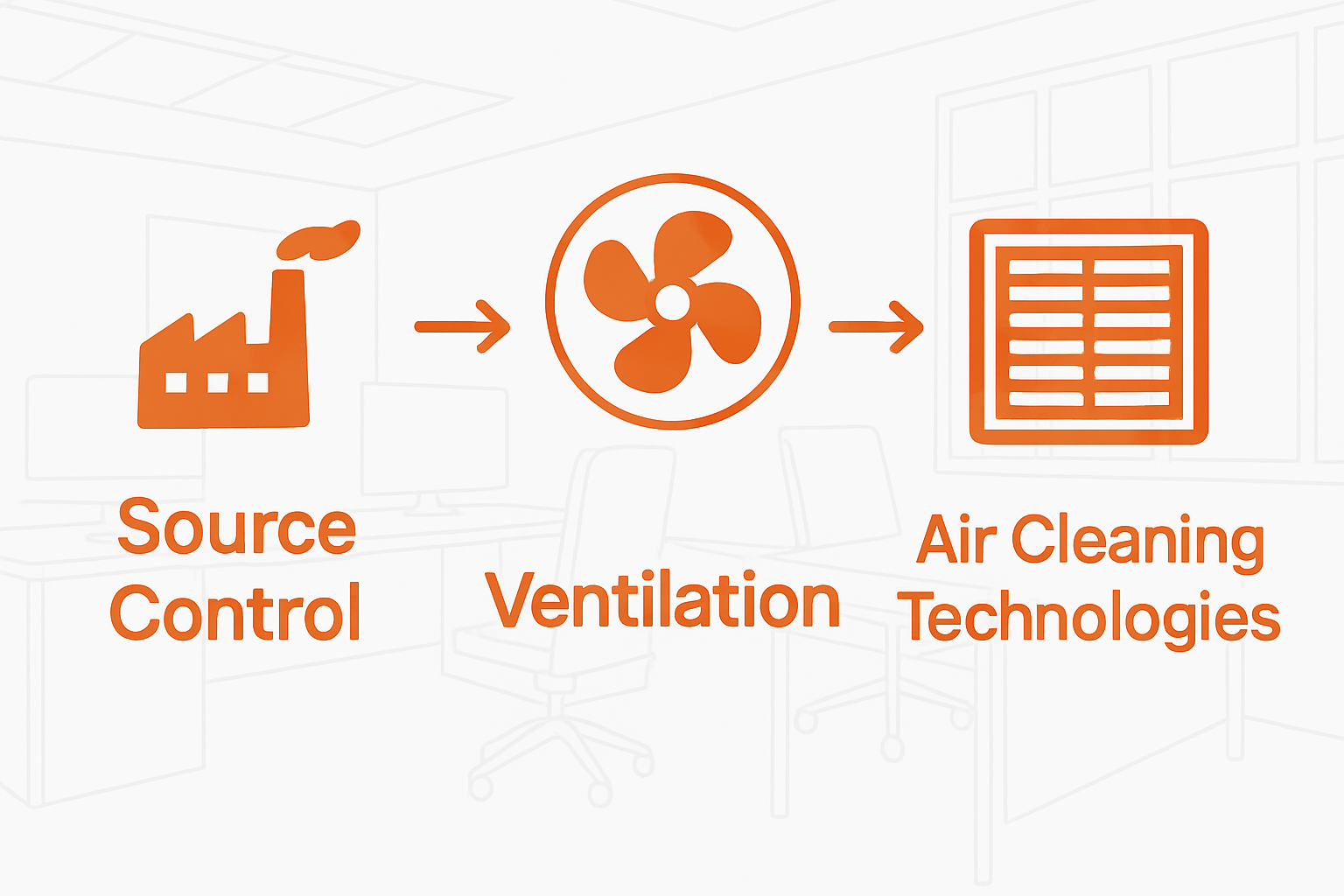
Business environments require strategic approaches to managing indoor air quality, with multiple solution types available to address pollutant reduction and air purification. According to research from the Parliamentary Office of Science and Technology, effective indoor air quality management involves three core intervention strategies: source control, ventilation enhancement, and air cleaning technologies.
Source Control Solutions focus on minimising pollutant generation and include:
- Selecting low-emission building materials
- Using environmentally friendly cleaning products
- Implementing strict smoking prohibition policies
- Controlling humidity levels
- Regular maintenance of HVAC systems
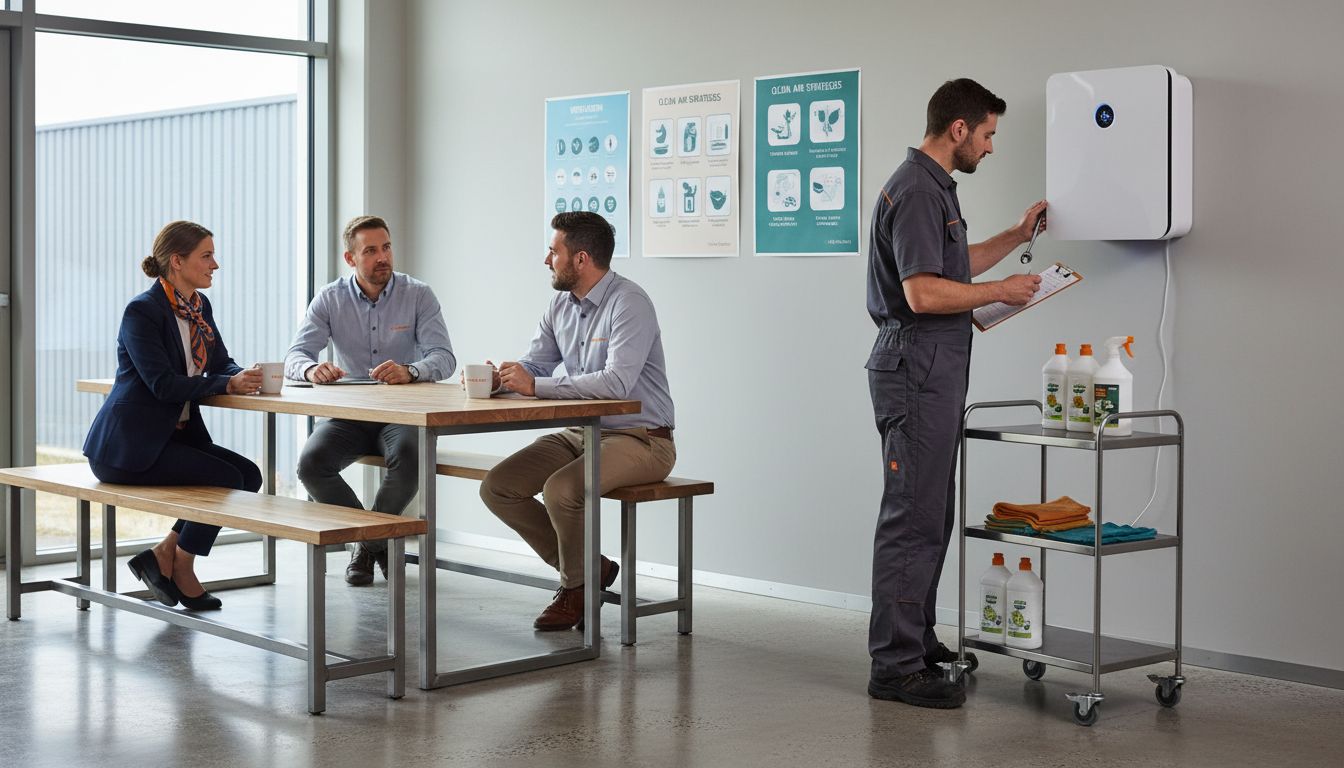
Ventilation strategies represent another critical approach to indoor air quality management. These solutions involve improving air exchange rates, installing high-efficiency air filters, and creating pathways for external air circulation. Advanced ventilation systems can significantly reduce indoor pollutant concentrations by continuously introducing fresh air and removing contaminated air.
Air cleaning technologies offer sophisticated solutions for businesses seeking comprehensive indoor air quality management. These technologies include High-Efficiency Particulate Air (HEPA) filters, activated carbon filtration systems, ultraviolet germicidal irradiation (UVGI) devices, and electrostatic air purifiers. Each technology targets specific pollutant types, providing multi-layered protection against airborne contaminants.
To support your indoor air quality improvement efforts, we recommend exploring our understanding indoor air quality improvement guide, which provides detailed insights into practical implementation strategies for UK businesses.
Key Technologies For Air Quality Improvement
Advanced technological solutions are transforming indoor air quality management, offering businesses sophisticated methods to monitor, analyse, and improve environmental conditions. Innovative monitoring technologies are particularly crucial in this landscape, with research from arXiv highlighting the emergence of low-cost sensor networks that enable real-time pollutant assessment and timely interventions.
Monitoring Technologies represent the foundational layer of air quality improvement, encompassing:
- Wireless Sensor Networks: Providing continuous, real-time environmental data
- IoT-enabled Air Quality Monitors: Delivering instant pollutant concentration measurements
- Multi-parameter Sensing Devices: Tracking temperature, humidity, particulate matter, and volatile organic compounds
- Cloud-connected Monitoring Systems: Enabling remote tracking and comprehensive data analysis
Purification technologies constitute another critical dimension of air quality management. These advanced systems include high-efficiency particulate air (HEPA) filtration, activated carbon filters, photocatalytic oxidation, and ultraviolet germicidal irradiation. Each technology targets specific pollutant types, providing multi-layered protection against airborne contaminants such as microparticles, bacteria, viruses, and chemical pollutants.
The integration of smart technologies is revolutionising indoor air quality management. Advanced systems now combine real-time monitoring with automated air purification, creating intelligent environments that dynamically respond to changing air quality conditions. Machine learning algorithms can predict potential air quality issues, trigger appropriate filtration mechanisms, and provide detailed analytical reports, empowering businesses to maintain optimal indoor environmental conditions.
To support your journey in implementing cutting-edge air quality solutions, we recommend exploring our business energy saving tips, which provide complementary insights into creating sustainable and healthy workplace environments.
Legal Standards And Workplace Requirements
Workplace air quality in the United Kingdom is governed by a comprehensive framework of legal standards and regulations designed to protect employee health and safety. According to the House of Commons Library, recent legislative developments, including the Environmental Targets (Fine Particulate Matter) Regulations 2023, have established long-term targets for reducing particulate matter levels by 2040, significantly impacting workplace air quality management strategies.
Key Regulatory Frameworks that businesses must navigate include:
- Workplace (Health, Safety and Welfare) Regulations 1992: Mandating sufficient ventilation and thermal comfort
- Health and Safety at Work Act 1974: Establishing fundamental employer responsibilities for workplace environments
- Control of Substances Hazardous to Health (COSHH) Regulations 2002: Governing exposure to potentially harmful substances
- Environmental Protection Act 1990: Addressing broader air quality and pollution concerns
The Society of Occupational Medicine emphasises that workplace air quality standards extend beyond mere compliance, requiring a proactive approach to environmental monitoring and management. Employers must conduct comprehensive risk assessments, implement appropriate ventilation systems, and maintain detailed records of air quality measurements and mitigation strategies.
Companies face significant legal and financial risks for non-compliance, including potential enforcement actions, financial penalties, and reputational damage. The evolving regulatory landscape demands continuous adaptation, with businesses required to stay informed about emerging standards, invest in advanced monitoring technologies, and develop robust air quality management protocols that protect both employee health and organisational interests.
To support your understanding of these complex requirements, we recommend exploring our business energy saving tips, which provide additional insights into creating sustainable and compliant workplace environments.
Benefits For Commercial And Industrial Spaces
Improving indoor air quality represents a strategic investment with far-reaching consequences for commercial and industrial environments. Research from the Parliamentary Office of Science and Technology reveals compelling evidence that enhanced air quality delivers substantial health and economic advantages, directly impacting organisational performance and employee wellbeing.
Key Performance Benefits of superior indoor air quality include:
- Enhanced Employee Productivity: Reducing cognitive performance disruptions
- Decreased Absenteeism: Minimising health-related workplace absences
- Improved Cognitive Function: Supporting clearer thinking and decision-making
- Reduced Healthcare Costs: Preventing respiratory and environmental health issues
- Enhanced Workplace Satisfaction: Creating more comfortable working environments
Industrial and commercial spaces experience particularly significant transformations when implementing comprehensive air quality management strategies. The physiological and psychological impacts extend beyond immediate health considerations, influencing overall workplace dynamics, employee retention, and organisational reputation. Businesses that prioritise air quality demonstrate a commitment to staff welfare, which can become a competitive advantage in talent attraction and retention.
The economic calculus of air quality improvement is increasingly compelling. Advanced air management technologies not only mitigate health risks but also contribute to long-term operational efficiency. Reduced sick leave, enhanced cognitive performance, and lower healthcare-related expenses translate into tangible financial benefits. Moreover, companies investing in superior air quality position themselves as forward-thinking organisations committed to sustainable and employee-centric workplace practices.
To support your journey in creating optimal workplace environments, we recommend exploring our business energy saving tips, which provide complementary insights into developing holistic, health-conscious workplace strategies.
Common Mistakes When Implementing Solutions
Implementing effective indoor air quality solutions requires a nuanced and strategic approach, with numerous potential pitfalls that can undermine organisational efforts. According to research from the Parliamentary Office of Science and Technology, many businesses inadvertently compromise their air quality management through systematic errors that can be readily identified and addressed.
Critical Implementation Mistakes organisations frequently encounter include:
- Neglecting Source Control: Failing to address pollutant origins
- Inadequate Ventilation Design: Installing ineffective air circulation systems
- Inconsistent Maintenance: Neglecting regular filter replacements and system checks
- Overlooking Humidity Management: Ignoring moisture levels that enable mould growth
- Reactive Rather Than Proactive Approaches: Addressing air quality only after problems emerge
One of the most significant challenges lies in understanding the complex interconnections between different air quality management strategies. Businesses often adopt fragmented solutions that address singular aspects of air quality, rather than implementing comprehensive, holistic approaches. This piecemeal strategy can result in minimal improvements and wasted resources, with organisations investing in technologies that fail to deliver meaningful environmental enhancements.
Technological selection represents another critical area of potential misjudgement. Many organisations select air quality solutions based on initial cost considerations, overlooking long-term performance, energy efficiency, and maintenance requirements. The most effective interventions demand careful evaluation of specific workplace characteristics, pollutant profiles, and ongoing operational needs. Sophisticated air quality management requires a nuanced understanding of environmental dynamics, technological capabilities, and organisational context.
To support your journey in developing robust air quality strategies, we recommend exploring our business energy saving tips, which provide complementary insights into creating sustainable and effective workplace environments.
Enhance Your Indoor Air Quality with Smart Flooring Solutions
Maintaining excellent indoor air quality is essential for every UK business striving to provide a safe and healthy environment. The article highlights key challenges such as controlling pollutants at their source, improving ventilation, and applying advanced air cleaning technologies. One often overlooked yet vital factor is the impact of well-chosen floor coverings in trapping dust, reducing contaminants, and supporting cleaner air circulation.

Discover how the right mats and floor coverings at Mats4U can play a crucial role in your indoor air quality strategy. Our customisable entrance mats and anti-slip options reduce the ingress of dirt and pollutants, helping you meet workplace air quality standards while enhancing safety and comfort. Act now to upgrade your environment with durable, made-to-measure solutions designed for your industry needs. Explore our range today at Mats4U and take the first step towards a healthier workplace.
For practical guidance on protecting your workspace, do not miss our understanding indoor air quality improvement guide. Combine this knowledge with effective mat solutions to create a comprehensive approach to better indoor air. Start with improved flooring to make a measurable difference now.
Frequently Asked Questions
What is indoor air quality (IAQ)?
Indoor air quality (IAQ) refers to the condition of the air within buildings and spaces where people spend considerable time. It encompasses a mix of pollutants that can affect human health, comfort, and productivity.
What are the main sources of indoor air pollutants?
Common sources of indoor air pollutants include building materials and furnishings, heating and cooking appliances, cleaning products, occupant behaviour, and external environmental contaminants that enter through ventilation systems.
How can businesses improve their indoor air quality?
Businesses can enhance their indoor air quality through source control measures, improving ventilation systems, and implementing air cleaning technologies such as HEPA filters and activated carbon systems. Regular monitoring and maintenance are also essential.
What are some common mistakes when implementing indoor air quality solutions?
Typical mistakes include neglecting source control, inadequate ventilation design, inconsistent maintenance of air systems, and adopting reactive rather than proactive approaches to air quality management.
Recommended
- Understanding Indoor Air Quality Improvement for Businesses – Mats4U
- The Ultimate Guide to Dust Control Mats: Essential for UK Business Hyg – Mats4U
- The Ultimate Guide to Indoor Entrance Mats for UK Businesses: Elevatin – Mats4U
- Master Seasonal Allergen Management for Your Business - Probe IT
- 7-Step Lock Maintenance Checklist for Home and Business Owners


