



In the world of commercial and industrial environments, floor mats are far more than mere decorative elements. They are critical tools for safety, hygiene, and floor protection. Yet, often overlooked is one of their most fundamental components: the backing. The type of mat backing can profoundly influence a mat's performance, stability, and suitability for specific flooring types. For UK businesses, understanding the nuances between gripper and flat back matting is essential for making informed decisions that safeguard employees, customers, and investments.
This comprehensive guide delves into the intricate characteristics of gripper and flat back matting, exploring their ideal applications, distinct benefits, and crucial considerations. By the end, you'll possess the expert knowledge needed to select the perfect mat backing that aligns with your operational needs and flooring types, ensuring optimal safety and longevity.
Table of Contents
- Understanding the Foundation: Why Mat Backing Matters So Much
- Gripper Backing: The Anchor of Stability
- Flat Backing: The Versatile Protector
- The Critical Choice: Matching Backing to Your Flooring
- Enhancing Mat Performance: Beyond the Backing
- Real-World Scenarios: Applying Your Knowledge
- Common Misconceptions About Mat Backing
- Frequently Asked Questions (FAQs)
Understanding the Foundation: Why Mat Backing Matters So Much
The backing of a mat serves as its unseen engineering, a crucial layer that dictates much of its functionality. While the surface pile captures dirt and moisture, it's the backing that keeps the mat in place, preventing hazardous movement and protecting the underlying floor. Ignoring the importance of this component can lead to a cascade of problems, from persistent trip hazards to premature mat wear and even damage to your flooring.
Beyond the Surface: The Unseen Engineering
- Safety: Perhaps the most critical function of proper mat backing is preventing slips and trips. A mat that shifts or bunches can quickly become a dangerous obstacle, leading to injuries and potential liability issues for businesses. The right backing ensures the mat remains securely in its intended position, even in high-traffic areas.
- Durability and Longevity: A well-chosen backing contributes significantly to the overall lifespan of a mat. By holding the mat firmly, it reduces abrasive wear and tear caused by constant movement and friction against the floor. This stability helps maintain the mat's structural integrity and aesthetic appeal over time, extending its functional life and reducing replacement costs.
- Performance: The effectiveness of a mat in trapping dirt, moisture, and debris is directly linked to its stability. If a mat slides around, it cannot consistently perform its barrier function, allowing contaminants to be tracked further into your premises. A secure backing ensures the mat stays put, creating an effective line of defence against external elements.
- Floor Protection: Mats are designed to protect floors from scratches, scuffs, and spills. However, a mat with an inappropriate backing can ironically cause damage. For instance, certain backings used on hard floors can scratch surfaces, while others might allow moisture to get trapped underneath, leading to potential floor degradation. The correct backing acts as a protective buffer, safeguarding your valuable flooring.
- Stability: Beyond safety, stability offers a professional appearance. A mat that consistently lies flat and stays in place projects an image of attention to detail and care, contributing to the overall impression of your business environment.
Gripper Backing: The Anchor of Stability
Gripper backing is specifically engineered to provide superior stability and anti-slip properties on carpeted surfaces. It's a popular choice for environments where mats need to remain firmly anchored without the risk of shifting or bunching.
What is Gripper Backing?
Gripper backing is characterised by a series of small, raised nubs, cleats, or 'teeth' on the underside of the mat. These protrusions are designed to gently penetrate the fibres of carpet, effectively interlocking with the carpet pile to create a secure, non-slip bond. The materials typically used for gripper backings include various types of rubber, such as durable nitrile rubber or SBR rubber, and sometimes PVC, each offering different levels of flexibility and longevity.
Ideal Applications for Gripper Backing
This type of backing is the go-to solution for any area featuring soft flooring. Its design makes it uniquely suited for:
- Carpeted offices: Ensuring desk chairs and foot traffic don't cause mats to migrate.
- Reception areas: Maintaining a neat and safe entrance, even with heavy footfall.
- Hallways and corridors: Preventing long runner mats from creeping or wrinkling.
- Retail stores with carpet: Keeping display mats and entrance mats consistently positioned.
- Any high-traffic zone on carpet: Where mat movement is a critical safety and aesthetic concern, gripper backing provides the necessary assurance.
Key Benefits of Gripper Backing
Opting for gripper backing on carpeted surfaces brings a multitude of advantages:
- Superior anti-slip on carpet: The interlocking mechanism provides an unparalleled level of grip, dramatically reducing the risk of slips and falls.
- Reduced trip hazards: By keeping the mat flat and stable, gripper backing eliminates the creation of dangerous wrinkles or curled edges that can cause trips.
- Improved mat stability and longevity: A mat that doesn't move is subjected to less stress and friction, leading to a longer lifespan and maintaining its intended appearance.
- Enhanced floor protection: Gripper backing prevents the mat from 'walking' across the carpet, which can otherwise lead to premature wear or discolouration of the carpet beneath. It ensures an even distribution of pressure and protection.
Considerations and Limitations
While excellent for carpets, it's crucial to understand gripper backing's specific limitations:
- Not suitable for hard floors: The nubs of a gripper backing are ineffective on smooth, hard surfaces and can even scratch or mark them. On hard floors, a gripper-backed mat will likely slide just as easily, if not more, than a flat-backed mat, creating a significant slip hazard.
- May leave temporary indentations: On very plush or thick-pile carpets, the nubs may leave temporary indentations if the mat remains in one place for an extended period. These usually disappear with vacuuming or light steaming.
- Cleaning considerations: The nubs can sometimes accumulate minor debris, requiring more thorough cleaning of the mat's underside compared to a flat backing.
Flat Backing: The Versatile Protector
Flat backing, by contrast, offers a different set of advantages, primarily excelling on hard-surface flooring where grip is achieved through surface friction and specific material properties.
What is Flat Backing?
Flat backing features a smooth, even surface on the underside of the mat. Instead of nubs, its anti-slip properties rely on the inherent friction of the backing material, its weight, and sometimes a specially formulated non-slip coating or a slightly tacky texture. Common materials include various rubber compounds, especially high-performance nitrile rubber, and PVC. The seamless design ensures full contact with the floor, distributing weight evenly.
Ideal Applications for Flat Backing
Flat backed mats are the preferred choice for all types of hard flooring:
- Tiled entrances: Ideal for public buildings, shops, and restaurants with ceramic or porcelain tiles.
- Wood and laminate flooring: Protecting these surfaces while providing stability in offices and residential areas.
- Concrete and epoxy floors: Perfect for industrial settings, workshops, and warehouses where durability and grip on hard, often sealed, surfaces are paramount.
- Vinyl and LVT flooring: Common in commercial kitchens, healthcare facilities, and laboratories.
- Areas requiring easy cleaning: The smooth surface makes sweeping and mopping underneath significantly easier.
Key Benefits of Flat Backing
Choosing flat backing for hard floors offers distinct advantages:
- Excellent on hard floors: Provides reliable grip and prevents scratching or damage to sensitive hard surfaces. The smooth surface ensures maximum contact, optimising friction.
- Easier to clean: Without nubs or textures to trap dirt, the underside of a flat-backed mat is simpler to wipe clean, contributing to better overall hygiene.
- Provides a sleek, seamless look: Lying perfectly flat against the hard floor, these mats offer a tidy and professional appearance without any visible textures underneath.
- More versatile across different hard floor types: A high-quality flat backing, especially one made from nitrile rubber, performs consistently well across a wide array of hard surfaces, from polished concrete to delicate hardwood.
- Can incorporate specific anti-fatigue properties: The uniform thickness and density often found in flat-backed mats are conducive to integrating ergonomic anti-fatigue features, providing comfort for standing workers.
Considerations and Limitations
While superb on hard floors, flat backing also has its specific drawbacks:
- Less effective on carpet: On carpeted surfaces, a flat-backed mat will slide and bunch up, creating a significant trip hazard and failing to provide any meaningful stability.
- Quality varies significantly: Not all flat backings are created equal. The anti-slip performance can vary greatly depending on the material composition and quality of the rubber or PVC used. Inferior flat backings may still slip, especially when wet.
- Temperature and moisture can affect performance: In environments with extreme temperature fluctuations or constant moisture, the grip of certain flat backings might be compromised. High-quality nitrile rubber, however, typically offers excellent performance in these conditions.
The Critical Choice: Matching Backing to Your Flooring
The primary determinant in choosing between gripper and flat backing is the type of flooring your business operates on. A mismatch can negate the mat's intended benefits and introduce new hazards.
Hard Floor Dominance: When Flat Backing is Non-Negotiable
For any hard-surface flooring – be it tile, concrete, wood, laminate, or vinyl – a flat-backed mat is the only appropriate choice. Using a gripper-backed mat on hard floors is highly inadvisable. The nubs, designed to interlock with carpet fibres, will instead simply slide on a smooth surface, offering no grip. Worse, on softer hard floors like some laminates or polished woods, the nubs can scratch and permanently damage the surface over time. High-quality flat backings, often made from robust nitrile rubber, provide the necessary friction and adhesion without causing damage, ensuring both safety and floor preservation.
Carpeted Comfort: Why Gripper Backing Excels
Conversely, on carpeted areas, gripper backing is paramount. The very nature of carpet, with its soft, fibrous surface, demands a backing that can engage with it. Flat-backed mats on carpet will inevitably 'creep' and bunch up, becoming a persistent nuisance and a serious trip hazard. The integrated nubs of a gripper backing firmly anchor the mat, preventing movement and maintaining a smooth, safe surface, even under heavy foot traffic. It essentially makes the mat an extension of the carpet itself, providing seamless transitions and unwavering stability.
Hybrid Environments: Strategies for Mixed Flooring
Many commercial spaces feature a combination of hard and carpeted flooring. In such hybrid environments, a strategic approach is required:
- Designated Mats for Zones: The most effective solution is to use different mats with appropriate backings for each distinct flooring zone. For instance, a flat-backed entrance mat on a tiled lobby floor, transitioning to a gripper-backed mat where the flooring changes to carpet in the main office area.
- Importance of Clear Demarcation: Ensure there are clear breaks between different mat types to avoid confusion or accidental misuse. This might involve placing mats flush against a flooring transition or ensuring adequate space between them.
- Considerations for Temporary Solutions: For temporary events or mobile workstations that might move between floor types, it's crucial to either have versatile matting solutions (though these are rare for backing) or to ensure mats are always used on their intended surface. In such cases, a high-quality mat underlay designed for versatility can be invaluable.
By thoughtfully matching the mat backing to the specific flooring type, businesses can significantly enhance safety, extend the life of their mats, and protect their valuable floor surfaces.
Enhancing Mat Performance: Beyond the Backing
While backing is fundamental, several other factors contribute to a mat's overall performance, stability, and longevity. Understanding these elements allows for a more holistic approach to mat selection and maintenance.
The Role of Mat Underlays
Even with the correct backing, sometimes additional stability is required, especially on challenging surfaces or with older mats where the backing might have lost some efficacy. This is where high-quality mat underlays come into play. An underlay provides an extra layer of grip and cushioning, working in conjunction with your mat's existing backing to create an even more secure foundation. It's particularly useful for preventing lightweight mats from slipping or for adding extra protection to delicate floors.
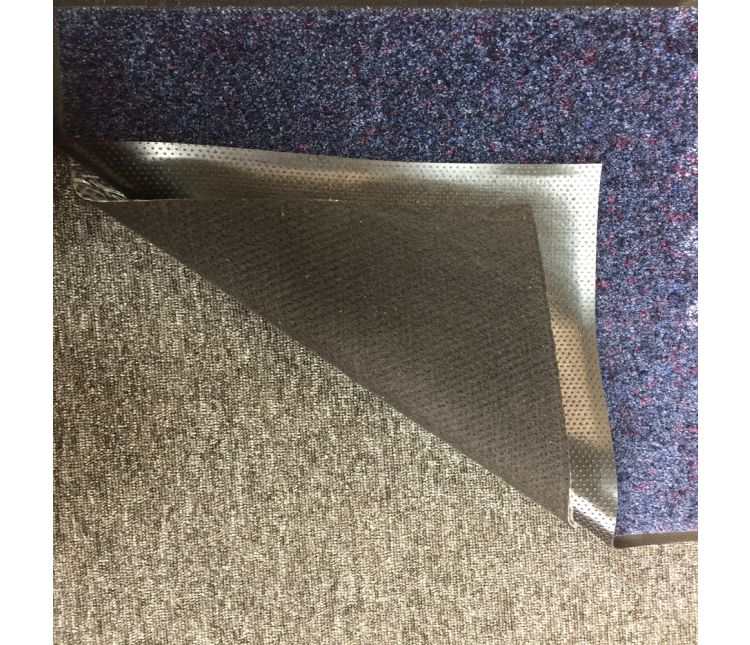
Teebaud Non-Skid Anti-Slip Mat and Rug Underlay
Price: £12.00
Ensure your mats stay exactly where you want them with the Teebaud Non-Skid Anti-Slip Mat and Rug Underlay. This innovative underlay provides exceptional grip on both hard floors and carpets, preventing slips, trips, and unsightly mat creep. Crafted from a high-quality, durable material, Teebaud extends the life of your mats by reducing wear caused by movement. It's breathable, washable, and won't stain or discolour your flooring, making it an essential addition for safety and stability in any commercial or residential setting.
View ProductMaterial Matters: Rubber vs. PVC
The choice of material for the mat backing significantly impacts its performance characteristics. Nitrile rubber is often considered the premium choice for commercial matting due to its superior durability, flexibility, and resistance to oils, chemicals, and extreme temperatures. This makes it ideal for industrial settings, kitchens, and high-traffic areas where longevity and robust performance are paramount. PVC backings, while more economical, may offer less flexibility and can become brittle over time, especially in very cold or hot environments. For a detailed comparison and further insights, you may find our original discussion on gripper vs. flat back mat backing helpful.
Edge Design and Bevels
Beyond the backing, the design of the mat's edges plays a crucial role in preventing trip hazards. Bevelled edges, which taper down to the floor, significantly reduce the likelihood of someone catching their foot on the mat. This feature is particularly important for mats in high-traffic areas or those that are frequently moved, enhancing safety regardless of the backing type.
Maintenance and Longevity
Proper maintenance is key to preserving the integrity of your mat backing and the mat as a whole. Regular cleaning, appropriate for the mat's material and backing type, prevents dirt and debris from accumulating and compromising grip. Regularly checking the backing for signs of wear, cracking, or deterioration allows for timely replacement, ensuring the mat continues to perform its safety and protective functions effectively.
Real-World Scenarios: Applying Your Knowledge
Let's consider how the choice of mat backing directly impacts various commercial environments in the UK.
- Retail Store Entrance: Imagine a busy retail store in London. The exterior entrance might have a concrete slab leading into a tiled lobby, which then transitions into a carpeted sales floor. Here, a flat-backed, heavy-duty entrance mat would be essential on the tiled lobby to scrape dirt and absorb moisture without slipping. As customers move into the carpeted sales area, a gripper-backed mat would then be used to define zones or provide additional branding, ensuring it stays firmly in place despite constant foot traffic. A mismatched mat in either area would create an immediate safety risk for shoppers.
- Industrial Kitchen vs. Office Break Room: A commercial kitchen in Manchester, with its inevitable spills and heavy foot traffic on a hard, often epoxy, floor, demands a durable, flat-backed mat – ideally made from nitrile rubber for oil and grease resistance. This ensures anti-slip performance even when wet and can often incorporate anti-fatigue properties. In contrast, an office break room with carpeted flooring would require a gripper-backed mat, preventing chairs from catching on the mat and eliminating frustrating repositioning.
- Sporting Venue Changing Room vs. Corporate Lobby: A changing room in a sports arena, featuring tiled or rubberised hard flooring that frequently gets wet, critically needs a robust flat-backed mat designed for wet conditions to prevent slips. Conversely, a corporate lobby with plush carpet would benefit immensely from an elegant, gripper-backed logo mat, ensuring it stays pristine and perfectly aligned, reinforcing the brand image without becoming a trip hazard.
- Workshop or Garage: In a workshop environment, where tools might drop and liquids might spill onto a concrete floor, a heavy-duty, flat-backed mat is necessary. Its stability and resistance to chemicals or oil are paramount. A gripper mat here would not only fail to grip but also potentially scratch the floor and be difficult to clean.
These examples highlight that a 'one-size-fits-all' approach to mat backing is fundamentally flawed. Each environment presents unique challenges that necessitate a specific solution, with the mat backing being a foundational component of that solution.
Common Misconceptions About Mat Backing
Despite its critical role, several misunderstandings persist regarding mat backing, often leading to suboptimal choices.
- “One backing fits all.” This is perhaps the most prevalent and dangerous misconception. As discussed, a backing designed for carpet will fail on hard floors, and vice-versa, creating significant safety issues. There is no universal mat backing solution.
- “Thicker backing means better grip.” While a thicker mat can feel more substantial, the thickness of the backing itself does not directly correlate with superior grip. The material composition, the surface texture (for gripper), and the inherent friction properties are far more important than mere thickness. A poorly designed thick backing can still be slippery.
- “All rubber backings are the same.” Rubber is a broad category. Nitrile rubber offers vastly superior performance in terms of durability, chemical resistance, and flexibility compared to cheaper SBR rubber or PVC compounds. The specific type and quality of rubber are crucial differentiators.
- “Cost is the only factor.” Opting for the cheapest mat backing might save a small amount upfront but can prove significantly more expensive in the long run. Frequent mat replacement, potential floor damage, and, most importantly, the cost associated with slip-and-fall incidents far outweigh any initial savings. Investing in the correct, high-quality backing is an investment in safety and longevity.
Frequently Asked Questions (FAQs)
Q1: Can I use a gripper-backed mat on a hard floor?
No, it is strongly advised against. Gripper backing is designed to interlock with carpet fibres. On a hard floor, the nubs will slide without providing any meaningful grip, creating a significant trip and slip hazard. Furthermore, the nubs can scratch or damage hard floor surfaces over time.
Q2: How do I know if my mat has gripper or flat backing?
Simply turn the mat over and inspect the underside. If you see a series of small, raised nubs or 'teeth', it's a gripper backing. If the underside is smooth and even, it's a flat backing. The distinction is usually very clear visually and by touch.
Q3: What's the best way to clean a mat with a gripper backing?
For gripper-backed mats, the top surface can be cleaned according to the mat's material (vacuuming, shampooing, or hosing down). For the backing itself, occasional light vacuuming of the nubs can help remove trapped dust and debris. If hosing down, ensure the mat is thoroughly dried before placing it back on the carpet to prevent moisture issues.
Q4: Do mat underlays replace the need for proper backing?
No, mat underlays complement, rather than replace, proper mat backing. An underlay provides an additional layer of grip and cushioning, enhancing the performance of an already correctly backed mat. It can be particularly useful for adding extra stability to lightweight mats or providing additional floor protection, but it won't correct the fundamental mismatch of using a flat-backed mat on carpet or a gripper-backed mat on a hard floor.
Q5: Is there an eco-friendly option for mat backing?
Yes, many manufacturers are now offering more sustainable options. Look for backings made from recycled materials, such as recycled rubber, or those made from renewable resources. Some nitrile rubber backings are also considered more environmentally friendly due to their durability and long lifespan, reducing the frequency of replacement.
Q6: How often should I replace my mat based on its backing type?
The replacement frequency depends more on the mat's overall wear and tear, traffic levels, and maintenance than solely on the backing type. However, inspect the backing regularly. If you notice cracks, brittleness, or significant loss of texture (for gripper), or if the mat starts to slip more frequently, it's a clear indication that the backing is failing, and the mat needs replacement to maintain safety standards.
For more insights into mat care and selection, revisit our foundational discussion on gripper vs. flat back mat backing.
Connect with us on social media:


